
Morocco Language: A Guide to Connecting with the Locals
Step beyond the “Salam” and discover how the rhythmic blend of Berber roots and Arabic soul defines the Morocco language experience.
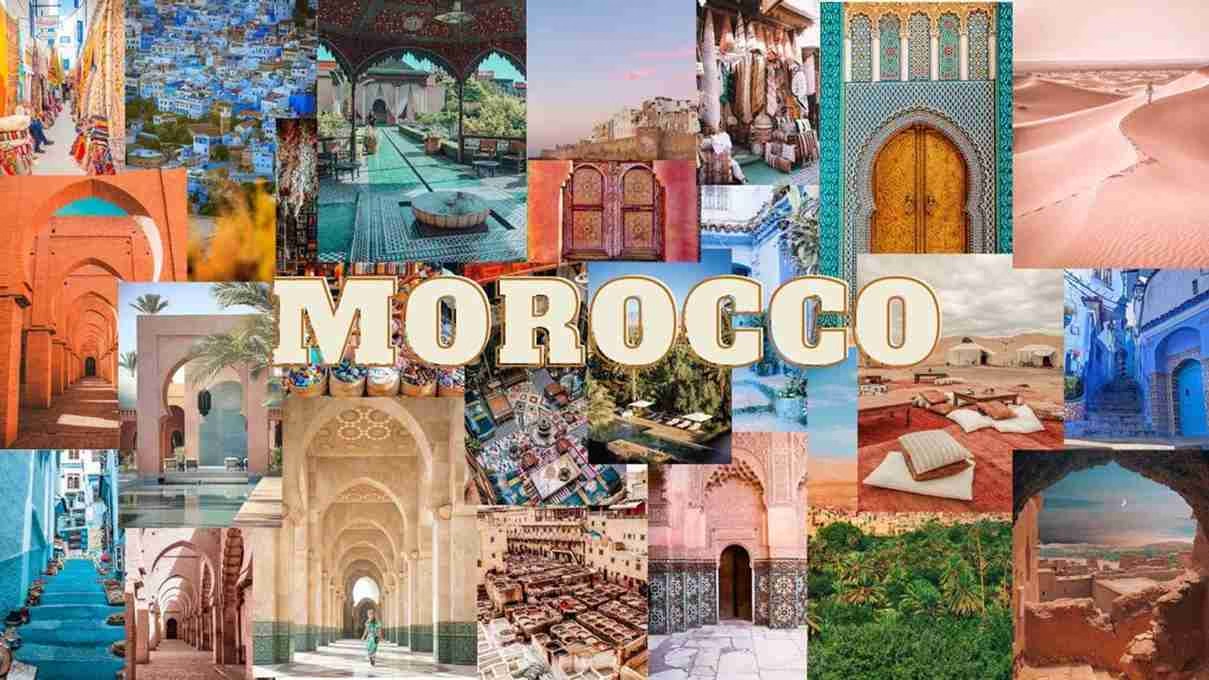
One of the most frequent questions we receive from travelers planning their private Morocco tour is: “What is the actual Morocco language?” It is a fair question, but the answer is rarely a single word. In Morocco, communication is a melodic, multi-layered tapestry that has been woven over thousands of years. From the ancient Tifinagh script carved into High Atlas stones to the rapid-fire French heard in Rabat and Casablanca’s business districts, the linguistic landscape is as diverse as the geography itself.
For the visitor, understanding the Morocco language is less about achieving fluency and more about recognizing the “codes” of hospitality. When you walk through a 1,000-year-old medina, you aren’t just hearing words; you are hearing a history of trade, conquest, and cultural resilience. Whether you are navigating a spice market or sharing tea in a remote desert camp, knowing which tongue to use, and when, is the ultimate key to unlocking a truly authentic experience.
The Official Languages: Modern Standard Arabic and Tamazight
On paper, the Morocco official language situation is clear. The constitution recognizes two primary tongues: Modern Standard Arabic (MSA) and Tamazight (the Berber language). Modern Standard Arabic is the language of the Quran, the news, and official government documents. You will see it on street signs, in newspapers, and on television. However, it is important to note that MSA is rarely used as a spoken language in Morocco for daily, casual conversation.
The second Morocco official language, Tamazight, represents the indigenous heartbeat of North Africa. For centuries, the Berber people maintained their oral traditions despite various waves of migration. In 2011, after decades of advocacy, Tamazight was elevated to official status. This was a monumental shift in the Morocco language narrative, acknowledging that the Tifinagh alphabet, with its beautiful, geometric symbols, is as fundamental to the country’s identity as the Arabic script. Today, you will see Tifinagh on bank notes and government buildings, a proud reminder of the country’s ancient Amazigh roots.
The Soul of the Street: Understanding Moroccan Arabic (Darija)
While the official tongues provide the structure, Moroccan Arabic, known locally as Darija, provides the lifeblood. If you want to know what Moroccans speak in their homes, in the cafes, and while haggling for a rug, the answer is Darija. It is a unique, expressive, and often fast-paced dialect that differs significantly from the Arabic spoken in the Middle East. In fact, many people from Cairo or Dubai find it difficult to understand the language in Morocco because of its heavy influence from Berber, French, and Spanish.
The Darija language is a linguistic survivor. It has adapted to every era, absorbing French words for “car” (tombila) and “cheese” (fromage), while maintaining an Arabic grammatical core. For a traveler, picking up even three or four words of Darija is a massive sign of respect. When you say “Labas?” (How are you?) instead of the formal Arabic “Kaifa haluk?”, you aren’t just asking a question, you are signaling that you are an traveler who cares about the local nuances of the Morocco language.
Regional Variations: From the North to the Rural South
The language in Morocco changes its “flavor” depending on which direction you drive. In the northern cities like Tangier, Chefchaouen, and Tetouan, you will notice a strong Spanish influence. Because of the historical Spanish protectorate, many older residents in the north are more comfortable with Spanish than French. It is not uncommon to hear “Hola” or “Gracias” being used alongside traditional Arabic greetings.
As you move into the rural areas, particularly the High Atlas, the Middle Atlas, and the Anti-Atlas mountains, the Morocco language shifts back toward its Berber foundations. In these remote villages, Tamazight isn’t just an official language; it is the primary way of life. While almost everyone in the tourism industry speaks multiple languages, the grandmothers and shepherds in the mountains may only speak their local Berber dialect. In these moments, the universal language of a smile and a respectful gesture becomes your most valuable tool for connection.
The Unofficial Second Tongue: The Power of French
Although it is not an official language in Morocco, French occupies a massive space in the social and professional fabric of the country. It is a legacy of the protectorate era that has transformed into a pragmatic tool for global connection. For a significant portion of the urban population, French is the language in Morocco used for business, higher education, and administration. If you visit a pharmacy, a bank, or a high-end restaurant in Marrakech’s Guéliz district, you will find that French is the primary medium of communication.
For the traveler, having a basic grasp of French can be incredibly helpful. Most menus are written in a mix of Arabic and French, and train schedules or museum descriptions often lead with it. However, it is fascinating to see how the younger generation is shifting their perspective. While they remain fluent in French to maintain professional standards, there is a growing trend of prioritizing the Darija language for cultural expression and English for international tech and tourism. This creates a fascinating linguistic environment where a single person might switch between four different tongues in a single afternoon.
The Rise of English in the Tourism Sector
The Morocco language landscape is witnessing a rapid “Anglicization” among the youth and the tourism sector. Years ago, English was a rarity, but today, it is common to find young Moroccans in the Medinas who speak impressive English alongside their native Moroccan Arabic. This shift is driven by the internet, global media, and the country’s strategic goal to become a top-tier destination for English-speaking travelers from the US, UK, and beyond.
If you are booking a private experience with Morocco Best Trips, your guides will be fluent in English, but they also act as your linguistic bridge. They help you navigate the nuances of the Morocco language when you want to speak with a nomadic family in the Sahara or a weaver in the souks. Even as English becomes more prevalent, the locals still hold a deep affection for those who try to meet them halfway. The “language of tourism” isn’t just about vocabulary; it’s about the hospitality and the effort made to understand the cultural context of the words being spoken.
Practical Tips for Navigating the Language in Morocco
You do not need to be a polyglot to enjoy your time here. The most important thing to remember is that Moroccans speak with a great deal of warmth and are generally very patient with visitors. If you find yourself in a situation where the Moroccan language feels like a barrier, keep your interactions simple and polite. Use “Insha’Allah” (God willing) when discussing future plans, it is a phrase used by everyone, regardless of their religious intensity, and it signals a local understanding of the Moroccan rhythm of life.
Another tip is to pay attention to body language. In many rural areas, a hand placed over the heart after a handshake is a way of saying “I receive you with my heart.” This silent language of gestures often conveys more respect than a perfectly pronounced sentence in Moroccan Arabic. Whether you are in a bustling port like Essaouira or a quiet oasis in the Draa Valley, being observant of these non-verbal cues will make your journey much smoother and more rewarding.
A Multilingual Future
Ultimately, the Morocco language is a reflection of the country’s soul, adaptive, resilient, and welcoming. It is a place where the Darija language keeps the culture grounded, while the official Morocco language standards keep it connected to its heritage and the wider world. As a traveler, you have the privilege of walking through these different linguistic worlds. You might wake up to the sound of the Adhan in Arabic, have a lunch discussed in French, and end your day sharing stories in English with your Berber host under the Sahara desert stars.
This diversity is exactly what makes Morocco so captivating. It challenges you to listen more closely and engage more deeply. By embracing the language in Morocco as a vital part of the experience, just like the dunes of the Sahara or the peaks of the Atlas, you ensure that your trip to Morocco is not just a vacation, but a true immersion into one of the most linguistically rich cultures on the planet.
Linguistic Insights
Can I get by with only English?
In major tourist hubs and with professional guides, yes. However, in smaller villages and local markets, a few words of French or Moroccan Arabic are very helpful.
Is Moroccan Arabic the same as Middle Eastern Arabic?
No. While they share the same roots, the Darija language has unique pronunciation and vocabulary that can be difficult for other Arabic speakers to understand.
What is the most respectful way to greet someone?
“Salam Alaikoum” is the universal greeting in the Morocco language. It is respectful, well-understood everywhere, and always met with a smile.
Explore More Culture
Start Your Conversation
Want to experience the real Morocco with a guide who speaks your language and understands the culture? Let our team design your private Morocco itinerary today.