
What to Wear in Morocco: A Guide to Respecting Local Customs
Balance personal style with deep cultural awareness as you navigate the vibrant landscapes and sacred spaces of the Maghreb.
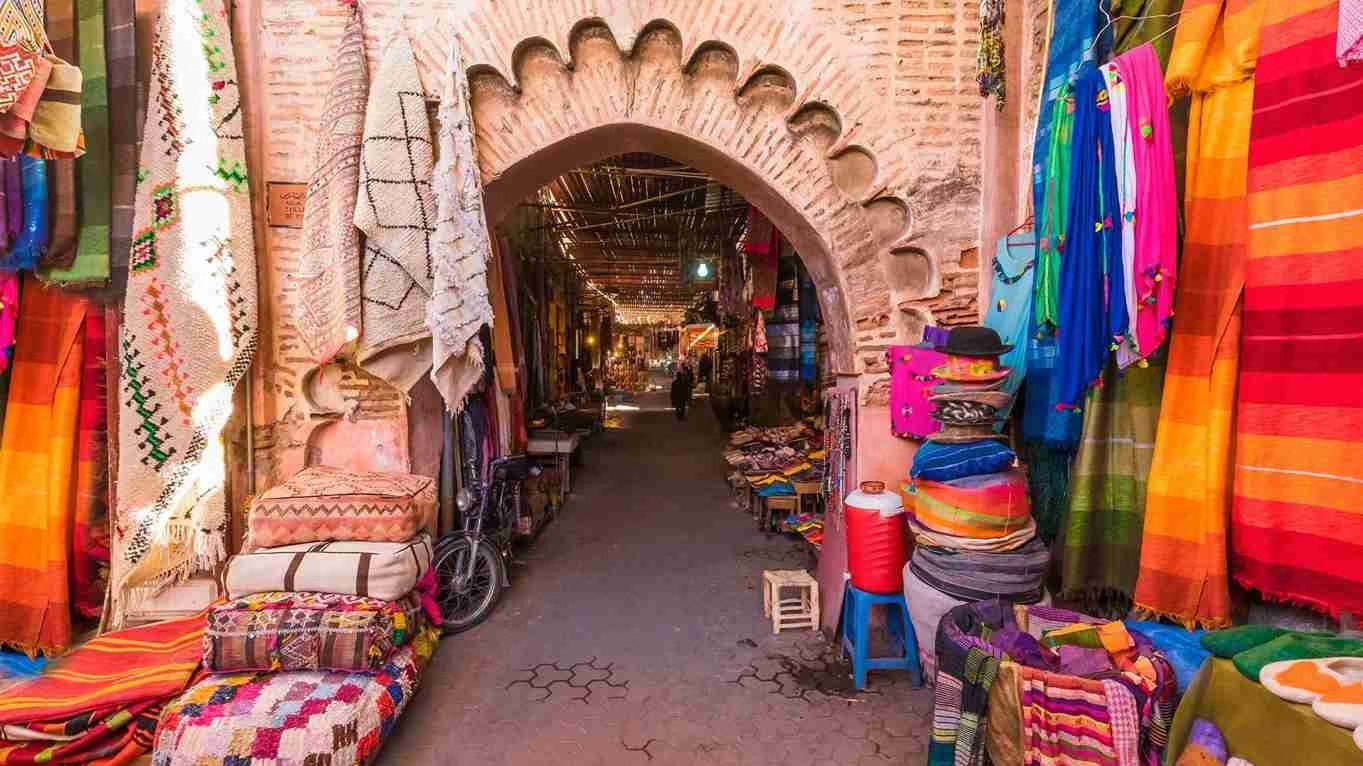
Understanding what to wear in Morocco is less about following a rigid set of rules and more about participating in a silent dialogue of respect with the people you meet. In a country where hospitality is the cornerstone of society, the way you present yourself serves as your first introduction. While cities like Casablanca or the upscale neighborhoods of Marrakech hum with a modern, global energy, the underlying social fabric remains deeply rooted in traditional values that prioritize modesty and dignity.
The philosophy of what to wear in Morocco is tied to the concept of ‘Hshuma’, a word that encompasses shame or impropriety. By choosing attire that covers the shoulders and knees, you aren’t just following a travel tip; you are signaling to your hosts that you value their heritage and social norms. This gesture of cultural alignment often opens doors that remains closed to others, leading to more authentic interactions in the tea shops of the medina or the remote villages of the High Atlas.
As we look toward the travel trends of 2026, the shift is moving away from the ‘tourist uniform’ and toward high-quality, breathable natural fibers that offer both protection from the intense North African sun and a silhouette that fits seamlessly into the local environment. Whether you are wandering through the blue streets of Chefchaouen or attending a dinner in a refined riad, your wardrobe choices act as a bridge between your world and the rich, complex history of the Kingdom.
The Golden Rule: Modesty as a Form of Connection
The primary consideration for any traveler should be the coverage of the shoulders, chest, and knees. For women, this typically means opting for maxi dresses, wide-leg linen trousers, or skirts that fall well below the knee. T-shirts are perfectly acceptable, provided they do not have a plunging neckline or exposed midriff. In more conservative rural areas or during the holy month of Ramadan, extending this coverage to the mid-calf or ankles is a thoughtful way to show extra consideration for local sensibilities.
Men also play a role in this cultural exchange. While it is common to see younger locals in shorts in the modern quarters, a more respectful approach for male travelers involves wearing chinos, lightweight trousers, or longer bermuda shorts. To truly blend in and show respect, a collared shirt or a high-quality cotton tee is preferred over sleeveless tank tops. In many traditional circles, the way a man dresses is seen as a reflection of his character and his respect for the space he is occupying.
The beauty of these what to wear in Morocco guidelines is that they are incredibly practical for the climate. Tight, synthetic clothing often traps heat and causes discomfort during the peak afternoon hours. Loose-flowing garments allow for air circulation, keeping you significantly cooler while providing a physical barrier against UV rays and the dust of the ancient trade routes. It is a rare instance where cultural tradition and practical survival perfectly overlap.
Fabric Choice and Climate Control
When selecting your items for what to wear in Morocco, the material is just as important as the cut. Linen is the undisputed king of the Moroccan summer. Its ability to wick moisture and dry quickly makes it ideal for long days of exploration. Cotton and silk blends also perform exceptionally well, offering a softness that is gentle on the skin after a day in the dry heat of the interior. Avoid heavy denim where possible, as it can become restrictive and uncomfortably warm during the trek between cities.
For those visiting during the winter months, layering becomes the essential strategy for what to wear in Morocco. While the afternoons can still feel like a mild spring day, the temperatures in the desert and the mountains drop sharply once the sun sets. A light wool sweater or a stylish pashmina is not just a fashion accessory; it is a vital tool for staying comfortable. The pashmina, in particular, is perhaps the most versatile item a traveler can carry. It serves as an extra layer of modesty when visiting a mosque (where permitted), a shield against a sudden sandstorm, or a makeshift pillow during a long drive through the Draa Valley.
Footwear requires a balance of durability and ease. The cobbled paths of the ancient medinas are often uneven and slippery. High-quality walking sandals with a secure back-strap or breathable leather loafers are excellent choices. While sneakers are practical for long walks, ensure they are clean, as footwear is often removed when entering homes or certain carpeted areas of a riad. Being prepared to slip your shoes on and off gracefully is part of the rhythm of daily life here.
Coastal Breezes vs. High Atlas Altitudes
One of the most common oversights is treating the entire Kingdom as a single climatic zone. While the Atlantic coast, stretching from the ramparts of Essaouira down to the surf breaks of Taghazout, enjoys a relatively temperate maritime climate, the interior is a theater of extremes. In the coastal regions, the humidity and constant breeze mean that lightweight cotton knits and linen blends are your best allies. Here, the atmosphere is slightly more relaxed, reflecting the laid-back nature of fishing communities and international surf culture. However, even on the beach, a transition from swimwear to a modest cover-up is expected the moment you step off the sand and onto the sidewalk or into a cafe.
The High Atlas presents a completely different challenge. If you are trekking through the Toubkal National Park or visiting the stone villages of the Imlil Valley, your choices must prioritize utility and temperature regulation. During the day, the high-altitude sun is piercingly bright, requiring long sleeves to prevent severe burns, yet as soon as the shadows stretch across the peaks, the temperature can plummet by twenty degrees. Sturdy, closed-toe hiking boots are a non-negotiable requirement for the rocky, uneven mule paths. When staying in a local village guest house, or ‘Gite,’ wearing a warm, high-quality fleece or a wool djellaba, a traditional hooded robe, is both practical and a sign of respect for the local mountain lifestyle.
In the Sahara, the environment is defined by its hostility to exposed skin. The Berbers have perfected the art of desert survival over millennia, utilizing layers of loose indigo cotton to create a micro-climate against the skin. For the traveler, this means avoiding shorts at all costs. The sand is abrasive, the sun is relentless, and the wind can carry fine dust that permeates every pore. A large, breathable cotton turban or scarf is not a costume; it is an essential piece of equipment that protects your neck, face, and hair. By adopting these functional elements of local dress, you find that the heat becomes much more manageable, allowing you to focus on the shifting colors of the Erg Chebbi dunes rather than your physical discomfort.
The Nuance of Accessories and Jewelry
In Moroccan culture, accessories often carry symbolic weight. Gold and silver jewelry are not merely decorative; they are often seen as a form of portable wealth and a marker of social status or tribal identity. For the visitor, keeping jewelry understated is a wise move, especially when navigating the crowded souks where flashiness can attract unwanted attention or complicate the negotiation process. A simple leather watch or a piece of locally crafted silver filigree is a subtle way to complement your outfit without appearing ostentatious. It is also worth noting that many traditional designs, such as the ‘Khamisa’ or Hand of Fatima, are deeply respected symbols of protection, and wearing them shows an appreciation for the spiritual heritage of the region.
Sunglasses are an absolute necessity for eye health, given the high albedo of the white and ochre buildings reflecting the desert sun. However, it is polite to remove them when speaking directly to someone, especially an elder or a shopkeeper. Eye contact is a vital component of Moroccan communication, and hiding behind dark lenses can sometimes be perceived as a barrier to honest interaction. Similarly, while hats are practical for sun protection, they should be removed when entering a private home or a sacred space. Observing these small gestures of etiquette transforms you from a mere observer into a participant in the social harmony of the community.
Bags and backpacks should be chosen with both security and style in mind. A crossbody bag with a secure zip is the gold standard for navigating the narrow alleys of Fes or Marrakech. It keeps your hands free to examine textiles or hold a glass of mint tea while ensuring your belongings are tucked safely against your body. In a country where craftsmanship is celebrated, carrying a locally made leather satchel is a wonderful way to support the artisan economy. These pieces are built to last a lifetime and only look better as they develop a patina from the dust and sun of your travels through the various provinces.
Formal Evenings and Riad Etiquette
While the daytime is about practicality and sun protection, evening dining in the major cities often calls for a touch of coastal sophistication. If you are invited to a traditional home for a ‘Diffa’ (feast) or are dining in one of the upscale palaces of the Palmeraie, dressing up is a sign of high regard for your host. For women, a silk kaftan or a sophisticated maxi-tunic with embroidery is a perfect choice. For men, a light linen blazer over a crisp button-down shirt strikes the right balance between casual comfort and formal respect. In these settings, the environment is often climate-controlled, allowing for slightly more structured fabrics that might feel too heavy during a midday walk.
Inside a riad—the traditional courtyard houses that serve as the soul of Moroccan urban architecture—the rules are slightly more relaxed but still guided by privacy. These are private sanctuaries, and while you may feel ‘at home,’ it is important to remember that staff and other guests are present. Lounging in swimwear or very revealing sleepwear in the public courtyards is generally frowned upon. A lightweight robe or a kaftan cover-up is the appropriate attire for moving between your room and the plunge pool or the rooftop terrace. This maintains the atmosphere of quiet dignity that these historic buildings are designed to foster.
Ultimately, the secret to mastering the art of what to wear in Morocco is flexibility. You might start your day in the cool shade of a mountain trail and end it under the neon lights of a Casablanca lounge. By curating a wardrobe of interchangeable, modest basics in high-quality natural fabrics, you ensure that you are prepared for every invitation and every environment. This approach allows you to move through the country with a sense of ease and confidence, knowing that your appearance is a tribute to the beauty and traditions of the land you are exploring. It is about being present in the moment, unburdened by the wrong choice of clothing, and ready to receive the legendary hospitality that has defined this corner of the world for centuries.
Common Questions
Do women need to wear a headscarf?
No, a headscarf is not required for non-Muslim women in public spaces. However, carrying a light pashmina is useful for entering mosques (where allowed) or protecting yourself from the sun and dust.
Are jeans okay to wear?
Yes, jeans are commonly worn by locals and tourists alike. However, lightweight linen or cotton trousers are much more comfortable in the heat and dry faster if they get wet.
Can I wear shorts in the cities?
In modern areas of Marrakech or Casablanca, knee-length shorts are acceptable. In the rural villages, long trousers or skirts are highly recommended to respect local customs.
More Stories from MBT
Travel with Confidence
Ready to explore the Kingdom with an expert who knows every cultural nuance? Mohamed and the team are here to curate your private journey.