
A 3-Day Sahara Tour Costs €95 or €470. Here’s Exactly What Changes.
Open five tabs for the same three days from Marrakech to Merzouga and you will be quoted €95, €150, €280 and €470. On paper the itineraries look identical. Same mountain pass, same kasbah, same gorges, same dunes. Most travellers stare at that spread, assume the difference is marketing, and pick something in the middle.
The difference is not marketing. It is the number of people in the vehicle, the amount of the day you control, and where you sleep at the end of it. Those three things change everything about how the trip feels, and none of them appear in the photographs. Here is what actually separates the two ends of the range, so you can choose deliberately rather than by guesswork.
Our private routes, priced openly
Every trip below is private: your own vehicle, your own driver, your own schedule.
From Marrakech
- Merzouga Sahara Tour3 days · 2 nights›
- Luxury Desert Trip4 days · 3 nights›
- Sahara & Atlas Mountains6 days · 1 night in the dunes›
The First Question Is Not Price. It Is How Many Seats.
Before you compare anything else, find out the maximum number of people in the vehicle. Almost every other difference between a cheap tour and an expensive one flows from this one number.
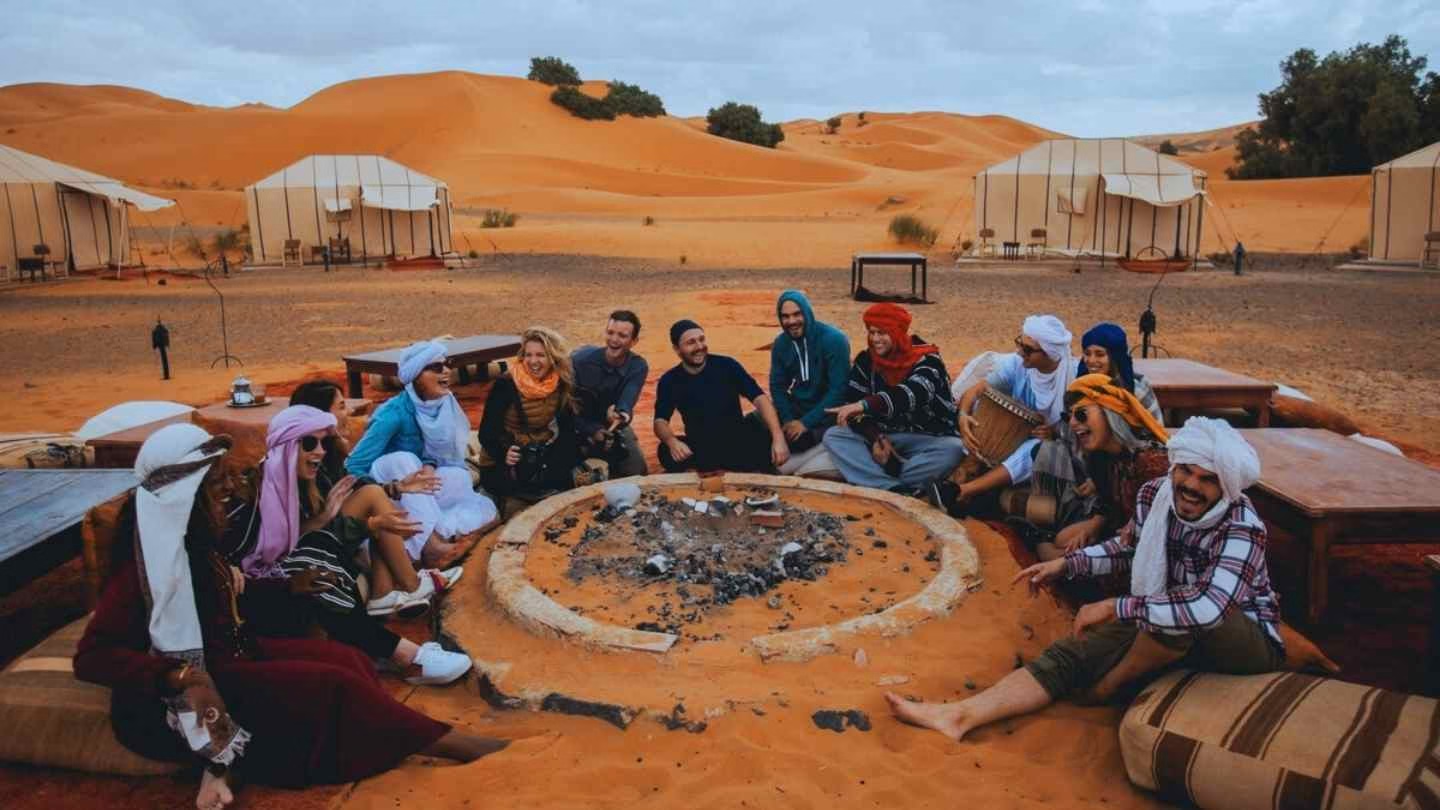
At the bottom of the range you are one of sixteen or seventeen travellers in a minibus. That is not a criticism, plenty of people have a wonderful time that way, and half of those groups are solo travellers who leave with new friends. But sixteen people means sixteen bladders, sixteen phone chargers and sixteen opinions about lunch, and the only way to keep that moving across 1,150 kilometres in three days is a schedule that cannot bend.
At the top of the range there is nobody in the car who is not with you. The vehicle is a 4×4 or a minivan, the driver is working for your family alone, and the plan is a proposal not a timetable.
What You Buy Is the Day, Not the Distance
Both tours drive the same road. What separates them is how much of that road is yours.
Departure time
A shared van leaves when the last hotel pickup is done, usually mid-morning, which means arriving at Aït Ben Haddou alongside every other van in Morocco. A private trip can leave at anytime.
Stopping
On a fixed schedule the stops are decided in advance and kept short. On a private trip you stop because the Dades gorge looks extraordinary from a particular bend, or because there is a roadside stall selling something you have never seen. This sounds like a small thing. In practice it is the difference between watching Morocco through glass and being in it.
The third day
The return to Marrakech is eight to nine hours in one push on a shared tour, because the vehicle has to be back for tomorrow’s departure. Privately, that day can be broken with a proper lunch, rerouted through the Draa Valley, or simply started later because nobody else is waiting on you.
When something changes
Someone wakes up unwell. A child decides at the last moment they do not want to get on a camel. A road closes. With your own vehicle these are inconveniences. On a full minibus they are not solvable, because fifteen other people have a schedule too.
Our 3-Day Private Sahara Tour
Your own 4×4 and driver, an early start so you reach Aït Ben Haddou before the crowds, and a camp tier you choose.
See the Full Itinerary, from €380 pp →Where You Sleep Is the Other Half of the Price
The second night is the one people remember for years, and it varies more between tiers than anything else on the trip.
At the budget end you share a tent with other travellers, sleep on a mattress laid over rugs, and walk to a communal toilet block across the sand. There is cold water, and the generator usually stops in the evening. It is perfectly survivable and a lot of people enjoy the simplicity of it.
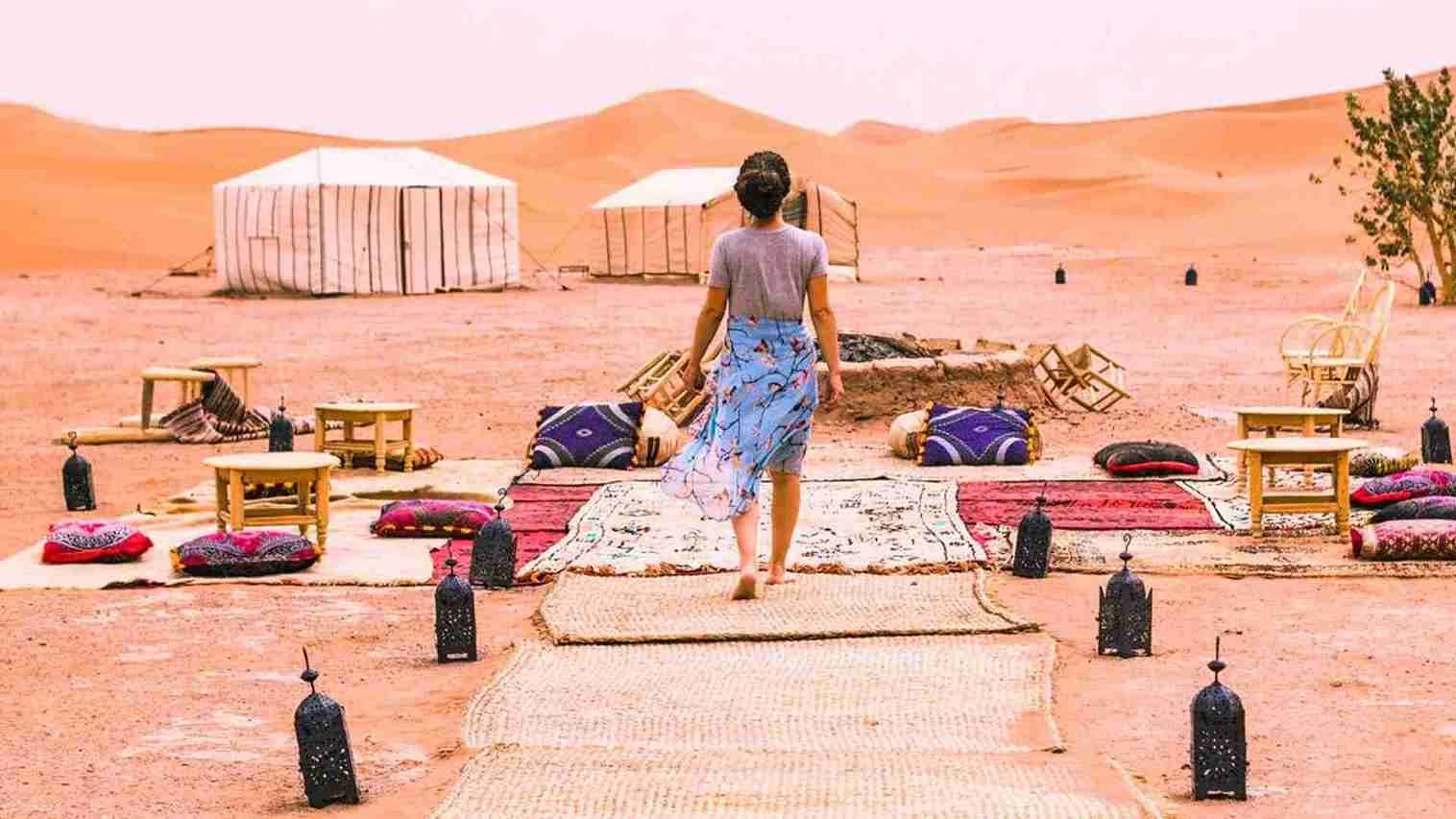
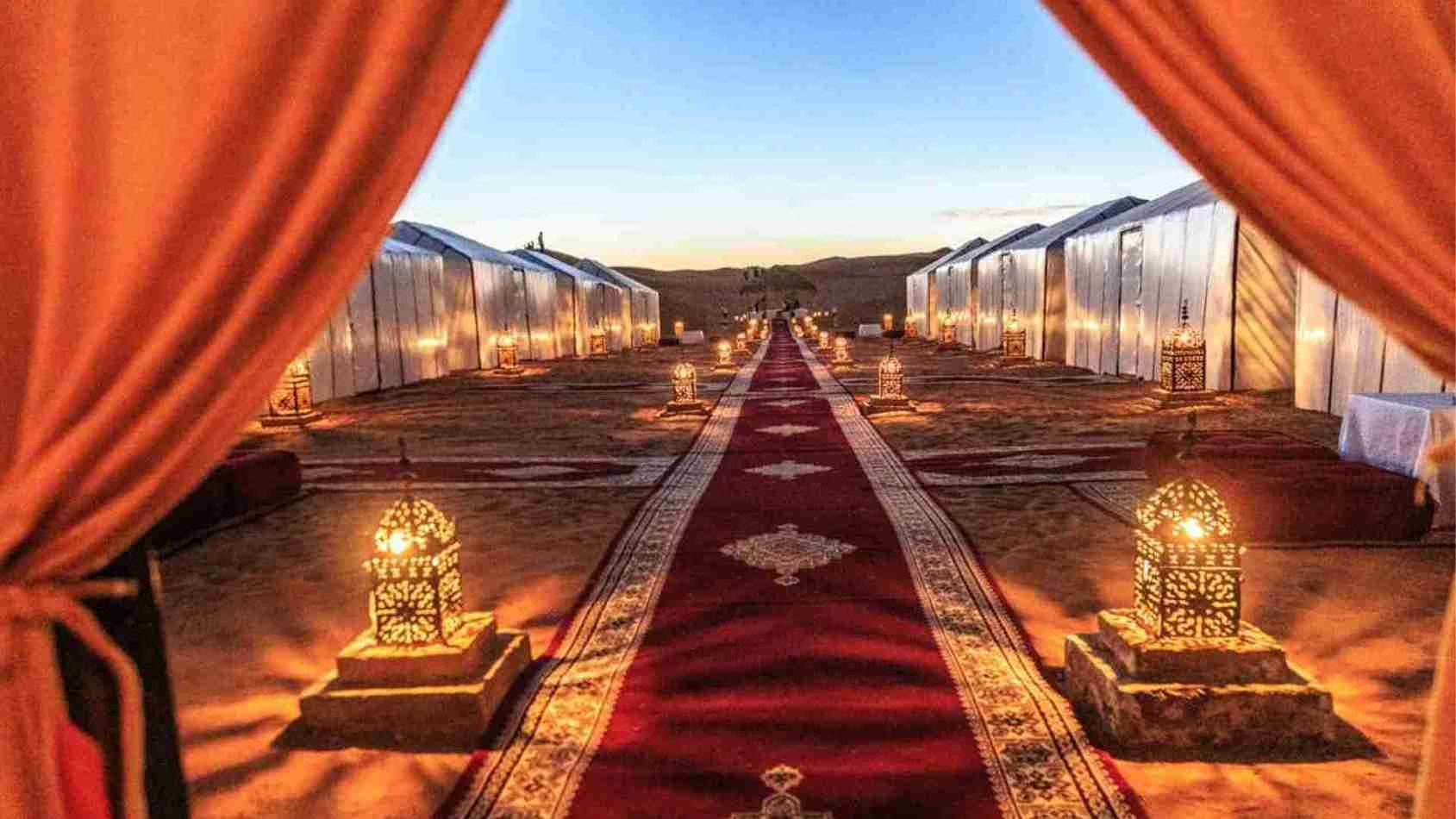
At the upper end you have a private tent with an en-suite bathroom, hot water, a proper bed with linen, power through the night, and a heater in winter. If you are travelling with children, if anyone is over sixty, or if you are visiting between December and February, that difference stops being a luxury and starts being the reason the night goes well. We have written in detail about what a night in a desert camp is actually like, including exactly what changes between tiers.
The first night matters too, and almost nobody asks about it. A shared tour typically puts you in a twin or triple room in a Dades Valley guesthouse. A private trip means your own room, which after seven hours on mountain roads is worth more than it sounds.
The Driver Is the Part You Cannot See in a Photograph
On a full minibus, the driver is managing a timetable and sixteen personalities. He is good at it, and he has very little bandwidth for anything else.
On a private trip he spends three days with your group. He is from the south, he knows which viewpoint is worth the detour, which family restaurant in Tinghir is the real one, and what the weather is going to do to the pass. He will answer questions about Amazigh history, about how the kasbahs were built, about what his own village is like.
This is the part of a private tour that is hardest to sell in advance and the part people write to us about afterwards.
Travelling as a Family or a Group?
Private costs less per person the more of you there are. Four or six people in one vehicle brings the per-head price a long way down while keeping every advantage above. Send us your numbers and we will price it properly.
Get a Private Group Price →Which One Suits Your Trip
Not everyone needs a private tour, and we would rather say so than sell you something that does not fit.
A shared departure makes sense if you are travelling solo, your dates are flexible, you are happy in a large group, and the priority is seeing Erg Chebbi as economically as possible. Many people have a genuinely good time this way.
Private is the right answer if any of the following is true, and it is true more often than people expect. You are a family with children. Someone in your party has mobility needs, a medical condition, or simply cannot face nine hours in a minibus. You are travelling in December or January, when the camp tier decides whether anyone sleeps. You are two or more people, in which case the gap between shared and private is smaller than you assume. Or your time in Morocco is short and you would rather spend it well than cheaply.
That last one is the honest core of it. Most people visiting the Sahara will do it once. Three days is not long. What you are really deciding is whether those three days run on your terms or on a timetable built for a full vehicle.
Questions Worth Asking Any Operator
Whoever you book with, these five answers tell you more than any price does. We answer all of them in writing before you pay anything.
What is the maximum number of people in the vehicle? “Small group” is not a number. Ask for one.
Will my departure run if it does not fill? Worth knowing before you build flights around it.
Which camp, and can I see photos of the actual tent I will sleep in? Not the gallery, the tent.
Is the bathroom inside the tent or in a shared block? The single biggest comfort variable of the whole trip.
What exactly is included, itemised? Vehicle, driver, nights, which meals, entrance fees. A clear answer here predicts everything else about how the trip will run.
What Is Not Included, at Any Price
These sit outside the tour price almost everywhere in Morocco, so budget for them whichever option you choose.
Lunches. Three of them, taken at roadside restaurants along the route.
Tips for your driver and the camp staff. Not obligatory, widely expected, and worth carrying cash for since there is no cash machine near the dunes.
Entrance fees and local guides at sites such as Aït Ben Haddou.
Extras bought at camp, such as sandboarding or quad hire.
Set aside €40 to €60 per person across the three days and you will not be caught out.
Ask Us Anything Before You Book
Send us your dates and group size and we will come back with a full itemised itinerary, the camp we would put you in, and an honest answer on whether the trip suits what you are after.
Plan Your Trip →How We Work
We run private tours almost exclusively, and we price them openly on every tour page rather than making you enquire to find out. Your quote is itemised before you pay anything, so you can see precisely what you are getting and what sits outside it.
If your dates or your budget point somewhere other than what we offer, we will say so. We would rather lose a booking than have someone spend three days in the wrong trip.
Sahara Tour Pricing FAQ
Why do 3-day Sahara tour prices vary so much?
Mostly group size, how much of the schedule you control, and the standard of the desert camp. The route is the same; the experience of travelling it is not.
Is a private desert tour worth the extra?
It is if you are a family, travelling with anyone who has mobility or medical needs, visiting in winter, or short on time in Morocco. For a flexible solo traveller in spring, a shared departure may serve you perfectly well.
How many people are in a shared tour vehicle?
Commonly sixteen or seventeen in a minibus. Always ask for a maximum number rather than accepting the phrase “small group”, which is not defined anywhere.
Does private get cheaper with more people?
Yes, considerably. The vehicle and driver are priced for the trip, so four or six travellers sharing one 4×4 brings the per-person figure down a long way while keeping every advantage of a private tour.
What is not included in a 3-day Sahara tour cost?
Lunches, tips, entrance fees and local guides at sites such as Aït Ben Haddou, and extras sold at camp. Budget €40 to €60 per person across three days.
How far ahead should I book?
Two to four weeks is comfortable for most of the year. For March to May, October, Christmas and New Year, book earlier, the better camps fill first and the good tents go before the ordinary ones.
More Stories from MBT
Tell Us What You Want From The Three Days
Send us your dates and group size and we’ll come back with a full itemised itinerary, the vehicle, the camp we’d put you in, what’s included and what isn’t. If what you’re after doesn’t match what we run, we’ll say so.