
El Jadida
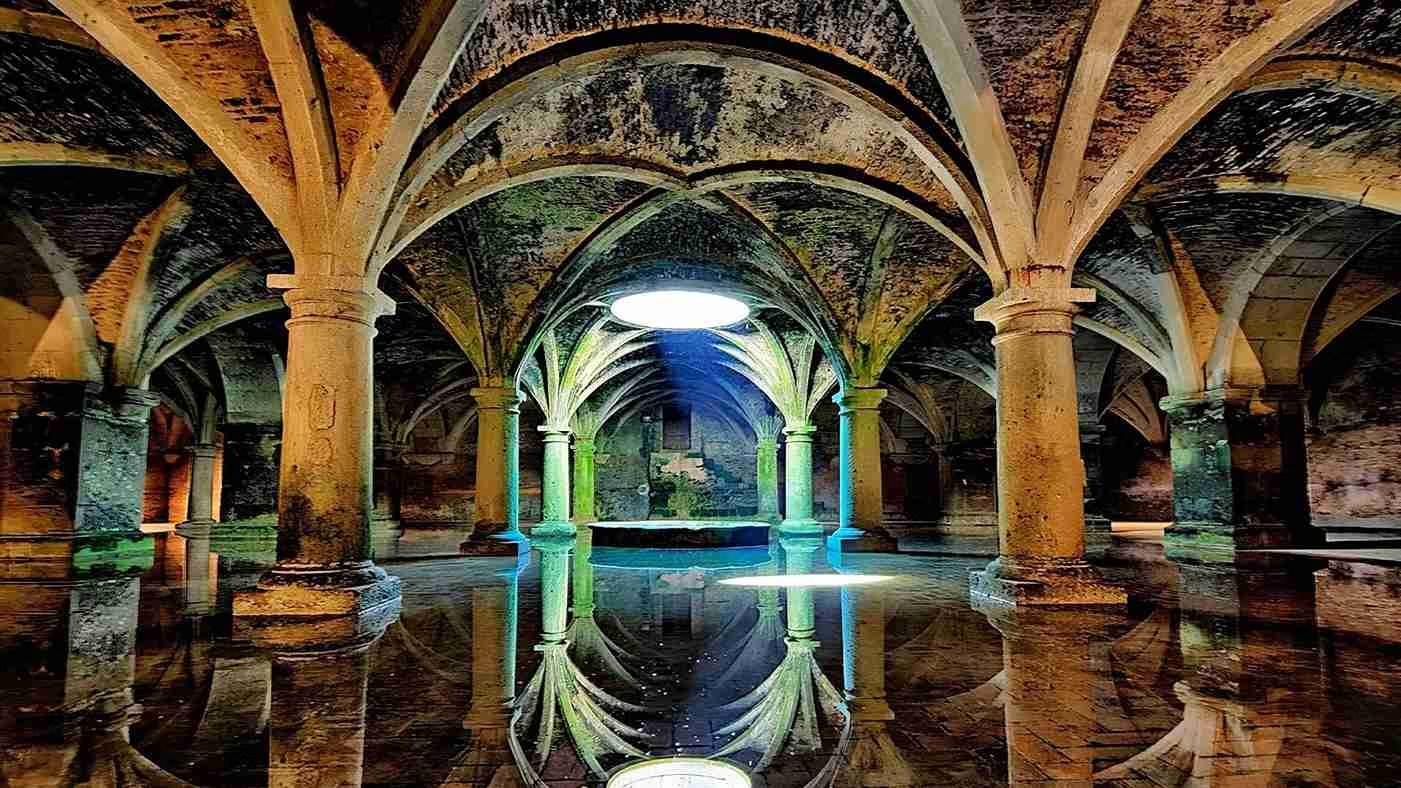
Portugal held this stretch of Atlantic coast for two hundred and fifty years, longer than it held almost anywhere else on this side of Africa, and what’s left behind is the most intact Portuguese fortress in Morocco. Underneath the citadel sits a cistern built in 1514 as an armoury, flooded a few decades later, and never quite drained since: a single round opening in the ceiling drops light onto a thin sheet of water below, turning a 16th-century storage room into one of the most photographed interiors in the country. Sultan Mohammed ben Abdallah, the same ruler who built Essaouira a few years later, finally forced the Portuguese out in 1769, and the town that replaced theirs took the name El Jadida, the new one.
The Fortress Portugal Held Longest
Portuguese forces built the first permanent structure here in 1514, a fortified citadel meant to secure a stop on the maritime route to India, decades before most of the colonial architecture elsewhere on Morocco’s coast existed. They called the settlement Mazagan, expanded the fortress into its current bastioned form by 1541, and built a vaulted underground chamber beneath the citadel, originally meant as an armoury or storeroom, that was converted into a cistern that same year. A single round opening in the ceiling lets in the only natural light, and the thin layer of water that has covered the floor for nearly five centuries reflects it back across the vaulted brick ceiling above.
Mazagan stayed under Portuguese control for roughly two hundred and fifty years, one of the longest holds Portugal maintained anywhere on this coast, and the fortress is now considered the most intact example of Portuguese Renaissance military architecture left in Morocco; most of Portugal’s other forts here were rebuilt or absorbed beyond recognition by later rulers. That ended in 1769, when Sultan Mohammed ben Abdallah, the same ruler who would found Essaouira’s planned port city a few years later, besieged Mazagan until Portugal evacuated. Moroccan authorities resettled the abandoned fortress in the 1820s under a new name, El Jadida, meaning the new one, and built a mosque directly across from the old Portuguese church, its minaret converted from what had originally been a Portuguese watchtower.
What survives from the Portuguese period reads almost like a checklist: the ramparts and their bastions, largely intact; the Church of the Assumption, built in the late Gothic Manueline style rarely seen outside Portugal itself; and the cistern, whose reflective floor has drawn film crews for decades, including Orson Welles, who used it for a fight scene in his 1952 Othello, a different stretch of the same production that filmed most of its Moroccan scenes down the coast in Essaouira. El Jadida’s tourism history runs deeper than most: the French built a casino here in the 1930s, making it one of the country’s earliest seaside resort towns, well before Marrakech or Agadir had any equivalent.
One detail to plan for: the Portuguese Cistern has periodically closed to the public for conservation work, so confirming it’s open before visiting saves a wasted trip into the citadel. Most visitors see El Jadida as a day trip from Casablanca, about ninety minutes away, sometimes paired with the smaller Portuguese fort at nearby Azemmour.
What To See In El Jadida
Six places that trace two hundred and fifty years of Portuguese rule and what Morocco built in its place.
The Portuguese Cistern
A flooded 16th-century storeroom turned underground reservoir, lit by a single oculus that drops light onto a thin sheet of water below. It’s one of the most photographed interiors in Morocco, and one of the most atmospheric.
The City Ramparts
Star-shaped Renaissance fortifications considered the most intact Portuguese military architecture left in the country. Walking the bastions gives ocean views on one side and the compact old town on the other.
Church Of The Assumption
A late Gothic Manueline church built when the fortress expanded in the 1540s, a style almost never seen outside Portugal itself. Sections were damaged in the 2023 earthquake, and repair work has continued since.
The Grand Mosque & Its Repurposed Minaret
Built directly across from the old Portuguese church after Morocco retook the city in 1769, its minaret converted from a watchtower the Portuguese had originally built for defence rather than prayer.
The Old Mellah
El Jadida’s historic Jewish quarter, evidence of a merchant community that helped run the city’s Atlantic trade for generations. A former synagogue in the area has since been repurposed as a cultural space.
El Jadida Beach & The Sidi Bouafi Lighthouse
A working beach town’s actual beach, with a lighthouse that’s guided ships into the harbour for close to a century. It’s where El Jadida residents spend an evening, not just where tourists take a photo.
Tours That Visit El Jadida
Itineraries below all include El Jadida, whether as a single-day stop or part of a longer coastal route.


Planning Your Visit
Best Time To Go
April through June and September through November bring the most comfortable coastal weather. Summer draws Moroccan beach crowds and stays warm rather than punishing thanks to the Atlantic; winter is mild but can be wet and windy.
Getting To El Jadida
About ninety minutes and 100 kilometres from Casablanca by road or train, making it one of the more straightforward day trips on the Atlantic coast. There’s no direct flight connection; Casablanca’s airport is the nearest option.
Visiting The Citadel
The walled old town is compact enough to cover in two to three hours, including the cistern, ramparts and church. Confirming the cistern’s opening hours in advance is worth doing, since it periodically closes for conservation work.
What To Wear & Bring
The cistern’s stone steps can be slick near the water, so grippy shoes matter more than they might seem to. A light jacket helps along the exposed ramparts even when the rest of the day feels warm, given the steady Atlantic wind.
Frequently Asked Questions About El Jadida
What travelers actually search before adding El Jadida to a Morocco itinerary.
Is El Jadida worth visiting?
Yes, particularly for the Portuguese Cistern alone, one of the more visually striking interiors in Morocco. The rest of the walled old town adds a genuinely different colonial chapter from anywhere else on the coast, since this is Morocco’s most intact Portuguese, not French or English, heritage site.
How long was El Jadida under Portuguese control?
Roughly two hundred and fifty years, from the early 1500s until 1769, one of the longest periods of Portuguese rule anywhere on Morocco’s coast.
What is the Portuguese Cistern, and can you visit it?
An underground chamber built in 1514, originally as a storeroom, converted into a water reservoir by 1541. It’s open to visitors, though it periodically closes for conservation work, so checking ahead is worth it.
Was El Jadida used as a film location?
Yes, most notably for Orson Welles’ 1952 Othello, which used the cistern’s vaulted chamber for a fight scene; most of the film’s other Moroccan scenes were shot down the coast in Essaouira.
How far is El Jadida from Casablanca?
About 100 kilometres, roughly ninety minutes by road or a similar duration by train, making it a common day trip from the city.
What does “El Jadida” mean, and why did the name change?
El Jadida means “the new one” in Arabic. The town was resettled and renamed in the 1820s after the Portuguese, who had called it Mazagan, evacuated following a Moroccan siege in 1769.
Is there a beach in El Jadida?
Yes, a working town beach used by locals as much as visitors, along with nearby Sidi Bouzid and a large resort area built more recently outside the old city.
What’s the best time of year to visit El Jadida?
April through June and September through November for the most comfortable coastal weather, avoiding the wetter, windier stretches of winter.
Plan Your Trip To El Jadida
Tell us your dates and how much Portuguese history interests you, and we’ll fold El Jadida into a day trip or a longer coastal route. Continuing on from here? We also cover Casablanca, about ninety minutes away, and Essaouira further down the same coast.