
Why Is Fes Important for Educational Tours?
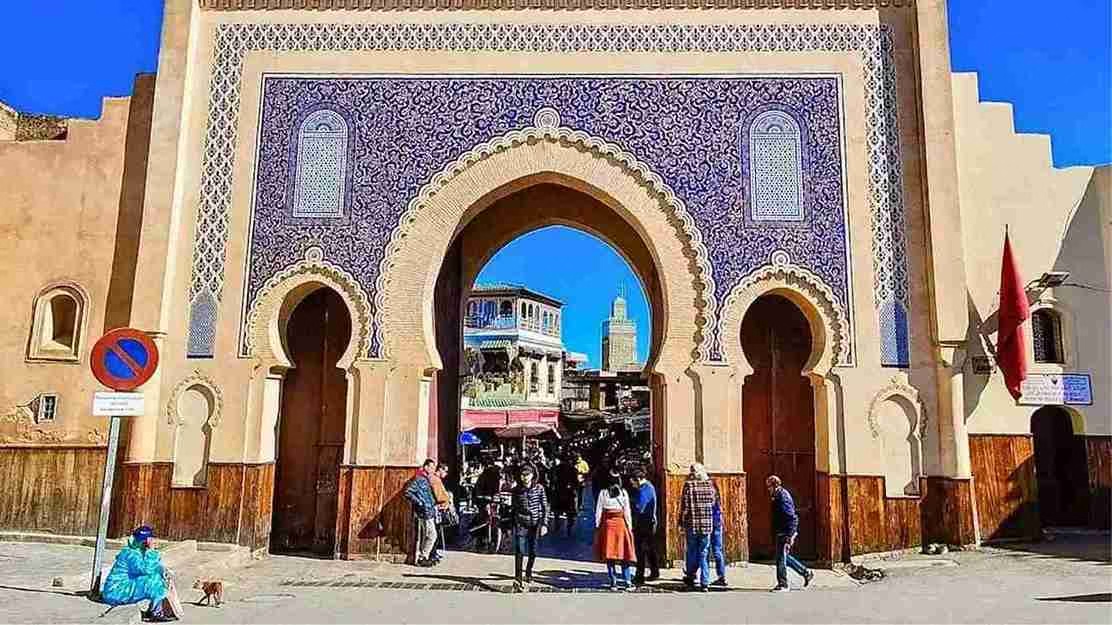
Fes matters academically because it never stopped working. The medina is not a preserved quarter inside a modern city, it is a functioning medieval city of roughly a hundred thousand people, with the trades, water system, guilds and street plan still doing the jobs they were built for.
That single fact is what separates educational tours in Fes from a sightseeing itinerary. Students are not looking at a reconstruction. They are walking through a live example of how a pre-industrial city organises labour, water, faith and space, and then arguing about it over dinner.
Routes that start or end in Fes
Private group itineraries for university and study abroad programs.
Short Programs
- Fes to the Desert3 days · student route›
- Fes to Merzouga Dunes3 days · 2 nights›
- Northern Morocco4 days · Fes & the Rif›
The World’s Oldest University Is Still Open
The University of al-Qarawiyyin was founded in 859 CE by Fatima al-Fihri, a merchant’s daughter who spent her inheritance on it. UNESCO and Guinness World Records both recognise it as the oldest continuously operating degree-granting institution anywhere in the world.
It has been teaching for more than eleven centuries without interruption. It was founded by a woman, in North Africa, two hundred years before Oxford took a single student. For any group studying the history of education, Islamic scholarship, or the transmission of knowledge between the Arab world and Europe, standing outside that door reframes an entire syllabus.
A practical note for planning: the prayer hall is not open to non-Muslims. The library, the courtyard views and the surrounding madrasas are, and a good local guide can get considerably more out of that visit than a self-guided group will.
What Different Disciplines Get Out of It
Fes is unusual in that it serves several departments at once, which matters when a faculty-led program has mixed cohorts.
History and Islamic studies: the Marinid madrasas, Bou Inania and al-Attarine, are fourteenth-century teaching institutions you can stand inside, complete with student cells.
Architecture and design: zellige, carved cedar and stucco at close range, plus the courtyard logic that shaped domestic building across the Maghreb and al-Andalus.
Urban planning and geography: one of the largest car-free urban areas on earth, with a medieval water distribution network still feeding fountains and workshops.
Anthropology and sociology: functioning craft guilds with apprenticeship structures that have outlived every economic system imposed on them.
Religious studies: the mellah and the Ibn Danan synagogue sit a short walk from the madrasas, which makes the history of Muslim and Jewish coexistence in Morocco concrete rather than theoretical.
Planning a Faculty-Led Program?
Tell us your discipline, your cohort size and your dates. We will build the itinerary around your learning objectives rather than around a standard sightseeing route.
Discuss Your Program →The Medina Is the Teaching Tool
Fes el-Bali has been a UNESCO World Heritage site since 1981, and the thing that makes it valuable academically is also the thing that makes it hard work: nothing has been cleared to make it legible.
Trades are still clustered by street, as guild cities always organised them, metalworkers here, dyers there, carpenters somewhere else, each announced by sound and smell before you see it. Deliveries move by mule because nothing wider fits. The Chouara tannery has been working the same pits with the same process since roughly the eleventh century, and students can watch the whole sequence from a terrace above it.
Nobody arranged any of this for visitors. That is precisely the pedagogical value, and it is the thing a lecture cannot deliver.
Fes or Marrakech for a Study Trip?
Both cities are worth a program. They are not interchangeable, and the distinction matters when you have limited days.
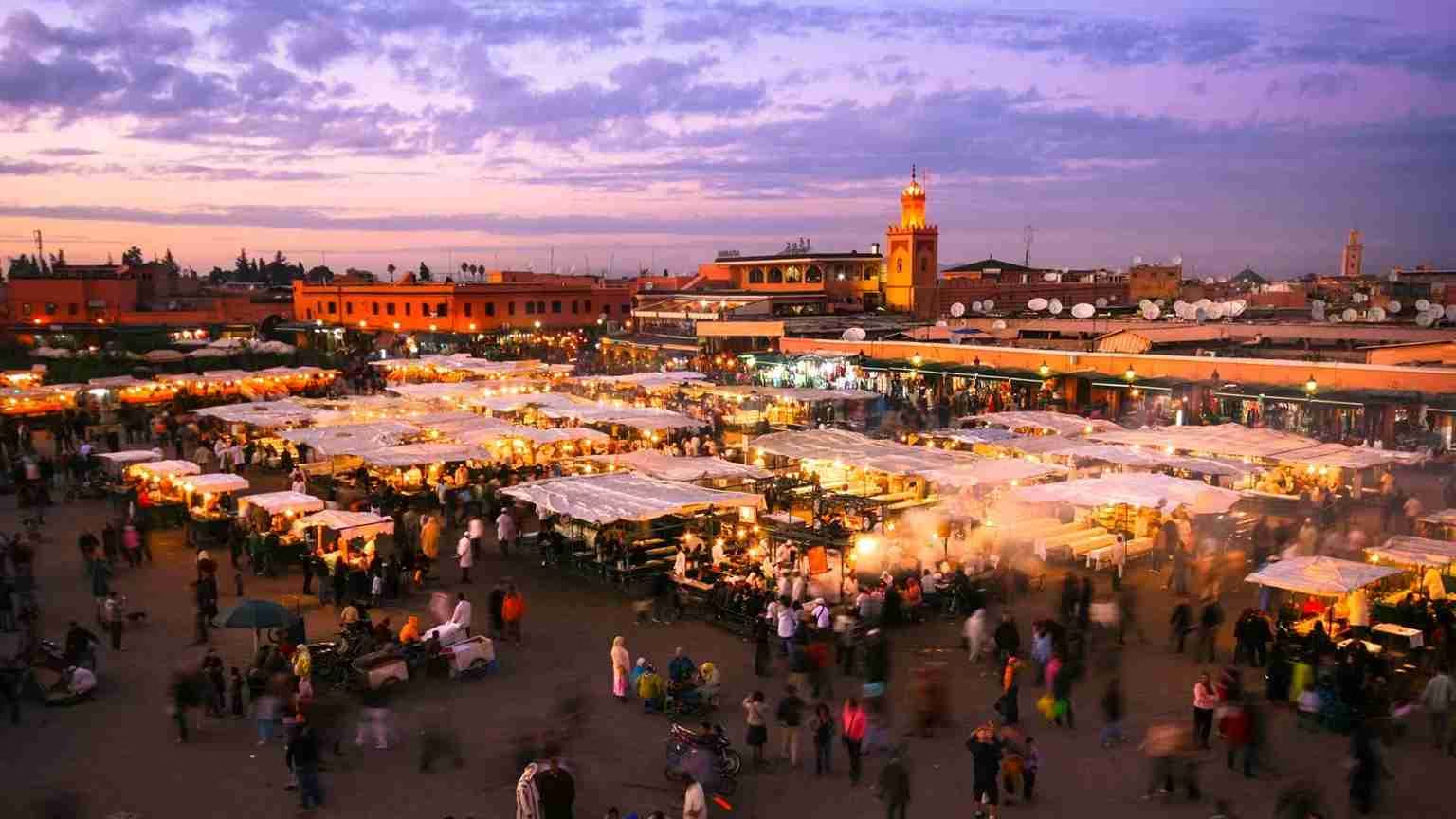
Marrakech has a tourism economy. It is easier to reach, easier to move around, better supplied with hotels, and more accustomed to visitors, all genuine advantages for a first-time group or a short port stay. But a large part of what a student sees there is a performance staged for people like them.
Fes has an economy that mostly ignores tourism. It is harder work, the medina is genuinely disorienting, and there is less English spoken. In exchange, the interactions are unrehearsed. Students who need Arabic or Darija immersion, or who are studying something that requires observing ordinary life rather than a curated version of it, get more from Fes.
If the program allows both, the standard pairing runs Fes for depth and Marrakech for contrast, with the desert between them.
Fes, the Sahara and Back
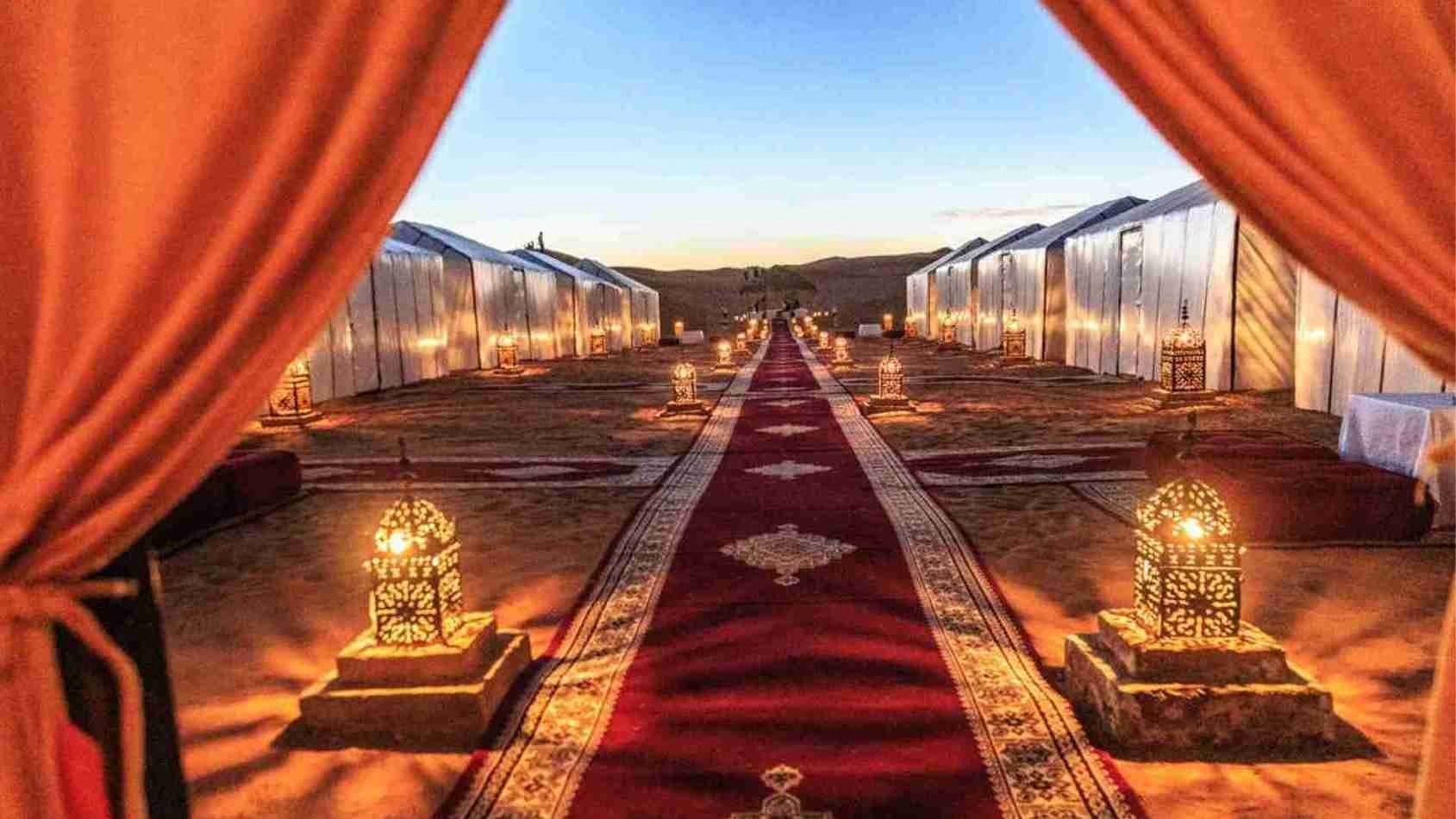
Our most requested academic route pairs two days in the Fes medina with the drive south through the Middle Atlas cedar forests and the Ziz Valley to Erg Chebbi.
See the Fes to Desert Route →What a Group Actually Needs in Fes
Four things determine whether educational tours in Fes work or turn into a long afternoon of counting heads.
A licensed local guide, not a general one. The medina has thousands of lanes and no reliable phone signal in the deeper sections. A guide who can also answer a third-year history student’s question is a different hire from one who can find the tannery.
Realistic pacing. Half a day in the medina is enough for most cohorts. It is loud, hot, and demands constant attention. Groups that try a full day lose them by three o’clock.
Accommodation inside the walls. Staying in the medina rather than the Ville Nouvelle means students experience the city at night and at dawn, which is when it is most itself.
A vehicle for everything else. The medina is walked, but the Merenid tombs, the potteries, Volubilis and the route south all need transport that waits for you.
Educational Tours in Fes: FAQ
How many days does a group need in Fes?
Two full days covers the medina, the madrasas, the tanneries and a craft workshop at a pace that does not exhaust people. Three allows a day trip to Volubilis and Meknes.
Can students enter al-Qarawiyyin?
The prayer hall is restricted to Muslims. The restored library, the exterior and the surrounding Marinid madrasas are accessible and are where most of the teaching value sits anyway.
Is Fes suitable for a first trip to Morocco?
With a guide, yes. Independently it is demanding, which is why faculty-led groups almost always route through a local operator rather than improvising.
What size groups do you handle?
From small seminar cohorts to full course groups. Larger numbers are split across vehicles with coordinated timing so no one is left waiting at a stop.
When is the best time for an academic program?
March to May and late September to November. The medina is punishing in high summer, and January mornings are colder than most groups expect.
Can you build the itinerary around a syllabus?
Yes, and it is what we prefer. Send the learning objectives and we will propose sites, workshops and contacts that serve them rather than a generic city tour.
More Stories from MBT

Send Us The Syllabus, Not Just The Dates
Tell us what the program is meant to teach and how many students are coming. We’ll propose an itinerary built around those objectives, with licensed guides, vetted accommodation inside the medina, and a full itemised cost you can take to your department.