
Essaouira
Most Morocco itineraries treat Essaouira as a single afternoon stop on the way back from somewhere else, which barely covers the harbor. This walled Atlantic port spent the better part of two centuries as Morocco’s busiest trading gateway to Europe, its grid-planned medina built almost exactly as a French royal engineer drew it up in 1764. Add steady ocean wind, a fishing fleet that still hauls in the morning’s catch by hand, and streets you can actually navigate without a map.
A Port City That Was Designed, Not Just Built
Essaouira’s site has been useful to outsiders for longer than its current walls suggest. Phoenician traders set up a post here around the 7th century BC, drawn by the sheltered bay and the small islands just offshore; Portuguese sailors later fortified the same spot in the 1500s and called it Mogador. Neither stayed long. The city’s real shape came later, in 1764, when Sultan Sidi Mohammed ben Abdallah hired a French military engineer, Théodore Cornut, to rebuild the port from the ground up. Cornut laid the medina out on a grid, an almost unheard-of choice in Morocco, and ringed the town in sea-facing ramparts modeled on the same fortification style used at Saint-Malo.
That grid is still the reason Essaouira’s medina is easier to navigate than most: wide straight lanes instead of the looping alleys found in Fes or Marrakech. For close to a century afterward, this was Morocco’s busiest trading port, the link between Saharan caravan routes and European shipping, run by a working mix of Arab, Amazigh, European and Jewish merchants. Casablanca took over that role once the French protectorate began building its own deep-water port in the early 1900s, and Essaouira settled into a quieter identity. The town adopted its current name, roughly translating to “the ramparts,” in 1960, and UNESCO added the walled medina to its World Heritage list in 2001.
What draws people here now has less to do with empire and more to do with wind. A steady Atlantic current called the Alizé blows through for most of the year, hard enough that windsurfers and kitesurfers treat Essaouira as one of Africa’s best launch points, and cool enough that the town rarely gets as hot as Marrakech in summer. Add a film history running from Orson Welles shooting Othello at the port in 1951 to a Game of Thrones crew using the harbor fortress decades later, plus an annual Gnaoua World Music Festival every June, and the list of reasons to stay past one afternoon adds up fast.
Good to know: Essaouira sits close enough to Marrakech that it’s one of the most common add-ons to a longer Morocco route. Most travelers treat it as a day trip or an overnight extension built onto a trip from Marrakech.
What To See In Essaouira
Six places that cover the harbor, the walls and the wind, all within about fifteen minutes’ walk of each other.
Skala de la Ville
An 18th-century sea rampart along the medina’s northern wall, still lined with its original bronze and iron cannons. Walk it close to sunset for a clear view of the Mogador archipelago just offshore.
Skala du Port
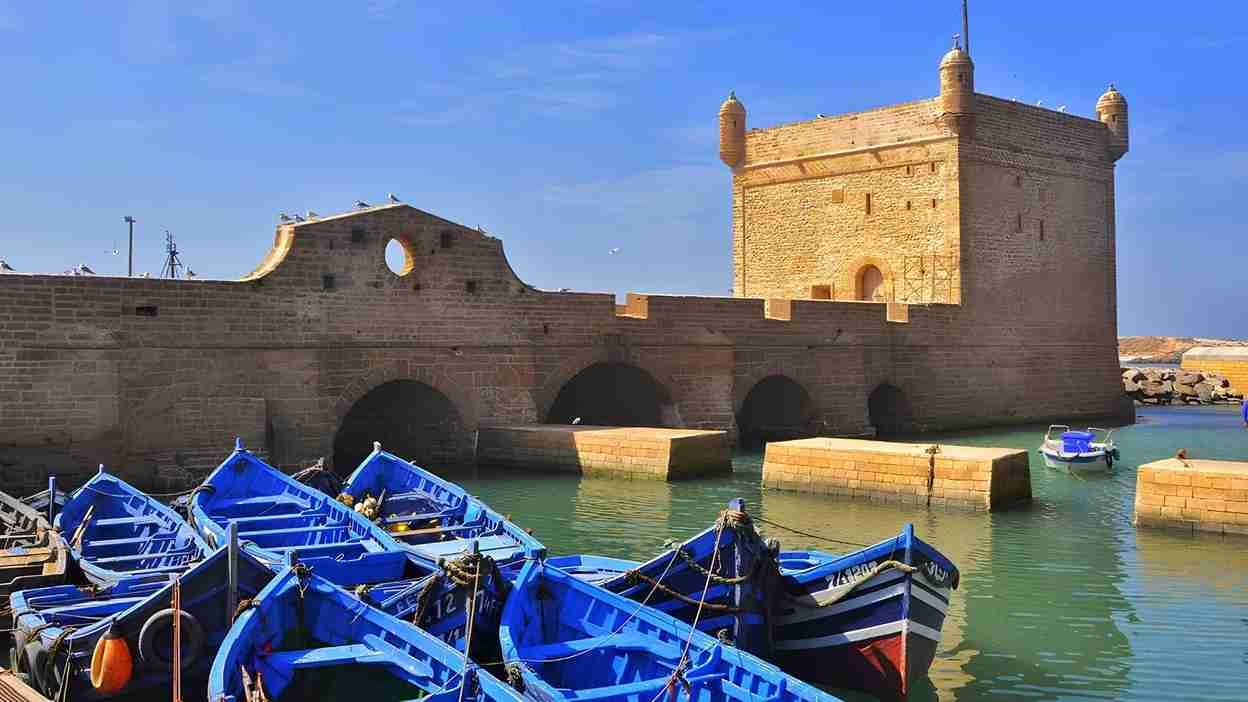
The fortified gate at the harbor entrance, recognizable to Game of Thrones viewers as the slave gates of Astapor. Climb the stone steps for a view of the medina framed through the old cannon ports.
The Fishing Port & Fish Market
Blue wooden boats unload the day’s catch most mornings, right beside stalls grilling sardines and sea bream on the spot. Arrive before midday to see the auction still in full swing.
The Medina Souks
Laid out on a rare grid plan instead of the usual maze, these souks specialize in thuya wood marquetry, a craft particular to this stretch of coastline, alongside silver jewelry and woven wool rugs.
The Mellah & Bayt Dakira
The former Jewish quarter, once home to a merchant community that helped build Essaouira’s trade links with Europe. Bayt Dakira and the restored Haim Pinto Synagogue both cover that history in detail.
Essaouira Beach & The Atlantic Wind
A long sandy crescent south of the medina, where the same trade winds that built the city’s old trade routes now fill kitesurfing sails. Horse and camel rides run along the sand most afternoons.
Tours That Visit Essaouira
Itineraries below all include Essaouira, whether as a single-day stop or part of a longer route through Morocco.
Planning Your Visit
Best Time To Go
April through June and September through October bring the steadiest mix of sun and manageable wind. Midsummer brings the strongest gusts, great for kitesurfing but cool enough on the beach that a jacket stays useful even in August. Winter is mild by day, wetter and windier after dark.
Getting To Essaouira
Most visitors arrive via Marrakech, about 190 km and 2.5 to 3 hours away by car, Supratours bus, or private transfer along the R207. There’s no rail line, but Essaouira-Mogador Airport runs a handful of seasonal routes direct from Europe.
Getting Around
The medina’s grid layout, unusual for Morocco, makes walking the obvious choice, the port, ramparts and souks all sit within about fifteen minutes of each other on foot. Petit taxis cover the beach and nearby Diabat for a few dirhams.
What To Wear & Bring
Pack a windbreaker regardless of season; the coastal breeze rarely fully drops, even in summer. Closed shoes help on the ramparts’ uneven stone, and a scarf doubles as useful protection on the windier beach days.
Frequently Asked Questions About Essaouira
Quick answers to what people ask us most before adding Essaouira to their Morocco itinerary.
Is Essaouira worth visiting?
Yes, particularly if Marrakech’s heat and crowds have worn you down. Essaouira trades narrow alleys for a planned grid of streets, swaps souk hustle for a working fishing harbor, and stays noticeably cooler thanks to the Atlantic wind.
How long does it take to get from Marrakech to Essaouira?
About 2.5 to 3 hours by car or private transfer along the R207. There’s no train connection between the two cities.
Is a day trip from Marrakech enough, or should I stay overnight?
A single day covers the ramparts, the port and a walk through the medina comfortably. Staying one or two nights adds the beach and the calmer version of the town that only shows up after the day-tour buses leave.
What is Essaouira known for?
Its 18th-century fortified medina, designed on an unusually orderly grid by a French engineer; the Alizé winds that make it one of Africa’s top windsurfing and kitesurfing spots; and the annual Gnaoua World Music Festival every June.
Is Essaouira good for surfing and windsurfing?
Yes, consistently. The same steady trade winds that gave the city its “Wind City of Africa” nickname draw windsurfers and kitesurfers most of the year, with several schools along the main beach offering lessons for beginners.
Can you visit the Game of Thrones filming locations in Essaouira?
Yes. Skala du Port, the fortress at the harbor entrance, was used as the slave gates of Astapor in Season 3. It’s open to the public daily.
What’s the best time of year to visit Essaouira?
April through June and September through October balance warm days with wind that’s strong but not overwhelming. Peak summer brings the most reliable conditions for watersports, paired with noticeably cooler air than inland Morocco.
Is Essaouira more expensive than Marrakech?
Generally no. Accommodation and food run similar to or slightly cheaper than Marrakech outside the Gnaoua festival week in June, when hotel prices climb sharply across the whole town.
Plan Your Trip To Essaouira
Tell us your dates, group size and what you’d like to see, and we’ll suggest a route or work Essaouira into a longer Morocco itinerary. Continuing on from here? We also run tours to Marrakech, Fes, Casablanca, Tangier and the Sahara.