
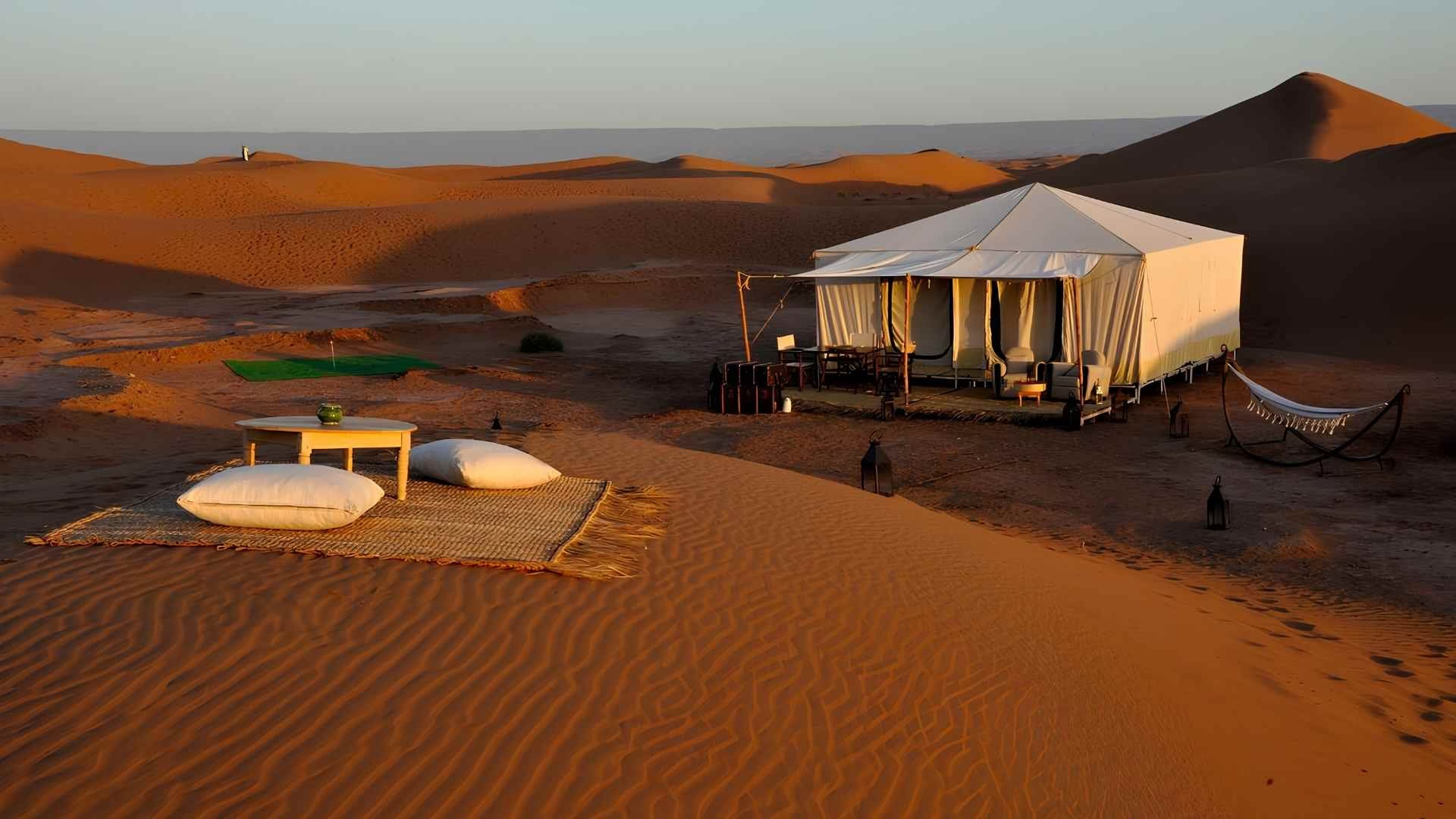
Erg Chigaga
The paved road stops a few kilometres past M’Hamid, and from there the only way into Erg Chigaga is sand. Morocco’s largest sea of dunes stretches roughly forty kilometres across the southern Sahara, climbing higher in places than any other erg in the country. Reaching it still takes two to three hours by 4×4 over open track, which is exactly why it has fewer camps, fewer vehicles, and noticeably more silence than the dunes near Merzouga.
Morocco’s Largest Erg Is Also Its Least Visited
Erg Chigaga is the biggest sand sea in Morocco, a stretch of dunes roughly forty kilometres long and fifteen wide, with some peaks rising past fifty metres. It sits inside Iriqui National Park, a 123,000-hectare reserve created in 1994 to protect what’s left of Lake Iriqui, a seasonal lake that mostly dried up after the Drâa River was dammed upstream in the 1970s. The lakebed still floods on rare occasions, most recently in 2024 after unusually heavy rain, turning a flat salt pan into open water for the first time in decades.
None of this is easy to reach, and that’s the point. The closest town, M’Hamid El Ghizlane, sits where the asphalt ends, roughly two to three hours of off-road driving from the dunes themselves. Tracks shift after every windstorm, GPS coordinates drift, and most visitors hire a local driver rather than attempt the crossing alone. Erg Chebbi, the dune field near Merzouga, gets compared to Chigaga constantly, mostly because it’s the opposite in almost every practical sense: paved access, a town at the edge of the sand, and far more company once you arrive.
The land itself belongs, historically, to the Aït Atta, a nomadic confederation that has moved livestock through this stretch of desert for generations along set seasonal routes. Iriqui National Park protects more than empty sand: dorcas gazelle, fennec foxes and the endangered houbara bustard all live in the acacia scrub around the dunes, and the park holds one of the largest acacia forests left in North Africa.
Before you book: Erg Chigaga isn’t a day trip from anywhere. Most itineraries route through Marrakech, Ouarzazate or Zagora first, often as part of a longer Sahara desert circuit, with M’Hamid as the last stop before the open sand.
What To Expect At Erg Chigaga
Six things that make up most of a stay here, since there’s no medina or monument list to work through.
Camel Trekking
The traditional way in, and still the most common: multi-day treks follow routes nomadic traders used for centuries, ending each evening at a different camp.
Sandboarding The Dunes
Erg Chigaga’s tallest dunes give a longer run than most other Moroccan ergs. Camps generally provide boards.
A Night At A Desert Camp
Tents here range from simple canvas to fully furnished structures with real beds. Some hold up to fifty guests; most are far smaller.
Stargazing
No nearby town means no light pollution, which makes Erg Chigaga one of the darkest skies reachable by road in Morocco. Most camps skip electric lighting after dinner on purpose.
Iriqui National Park Wildlife
Dorcas gazelle, fennec foxes and the houbara bustard live in the acacia scrub bordering the dunes. Sightings aren’t guaranteed, but guides know where tracks and water sources tend to concentrate them.
The Dried Bed Of Lake Iriqui
A vast salt flat west of the dunes, dry for most of the last fifty years except for a rare 2024 flood. Walking it feels closer to a different planet than to the rest of Morocco.
Tours That Visit Erg Chigaga
Itineraries below all include Erg Chigaga, whether as one overnight camp or a longer trek into the dunes.


Planning Your Visit
Best Time To Go
October through April keeps daytime temperatures bearable and desert nights cold rather than dangerous. Summer regularly passes 45°C on the open sand, and several camps reduce or pause operations between June and August.
Getting To Erg Chigaga
Most trips start in Marrakech, roughly eight to ten hours away via Ouarzazate, Zagora and M’Hamid. The final stretch from M’Hamid runs two to three hours over unpaved track and requires a 4×4 with a driver who knows the route.
Choosing A Camp
Options range from simple shared tents to private camps with real beds and plumbing. Distance from M’Hamid affects price more than comfort level does, since every camp depends on the same off-road transfer.
What To Pack
Bring layers for a temperature swing that can exceed 25°C between afternoon and night, a headscarf for wind-blown sand, and a physical map or downloaded offline maps, since phone signal disappears well before the dunes do.
Frequently Asked Questions About Erg Chigaga
What travelers actually need to know before committing to the trip out here.
How do you get to Erg Chigaga?
By 4×4, with no real alternative. The drive from Marrakech takes eight to ten hours including stops, ending in a two- to three-hour off-road transfer from M’Hamid El Ghizlane, where the paved road stops.
What’s the difference between Erg Chigaga and Erg Chebbi?
Mostly access and crowd size. Erg Chebbi, near Merzouga, sits beside a paved road and a town with shops and clinics. Erg Chigaga requires hours of off-road driving to reach, which keeps visitor numbers, and infrastructure, much lower.
Is Erg Chigaga safe to visit?
Yes, with a guide. The danger isn’t crime, it’s the terrain: tracks shift after windstorms and GPS isn’t reliable in the dunes, so getting lost without local knowledge is the real risk, not anything else.
How many days do you need at Erg Chigaga?
Two days covers one overnight camp, a camel trek and a sunrise over the dunes. Longer trips of four to seven days allow for multi-day camel treks deeper into the erg or into Iriqui National Park.
Can you see wildlife at Erg Chigaga?
Sometimes. Iriqui National Park is home to dorcas gazelle, fennec foxes and the houbara bustard, though sightings depend on timing and luck, not guaranteed on any given visit.
Is Erg Chigaga better than Erg Chebbi for stargazing?
Generally yes, simply because it’s further from any town. Less ambient light means a darker sky, though both ergs offer genuinely good stargazing compared to almost anywhere outside the Sahara.
Do you need a 4×4 to visit, or can a normal car make it?
A 4×4 is necessary past M’Hamid. The track isn’t maintained, shifts after wind, and an ordinary car has no realistic chance of crossing it without getting stuck.
What’s the best time of year to visit Erg Chigaga?
October through April. Summer heat on open sand regularly passes 45°C, and several camps scale back operations during the hottest stretch of the year.
Plan Your Trip To Erg Chigaga
Tell us your dates, group size and how remote you want to go, and we’ll suggest a route or fold Erg Chigaga into a longer Sahara trip. Continuing on from here? We also cover Zagora, run tours from Marrakech and Ouarzazate, and cover the other side of the Sahara at Merzouga.