
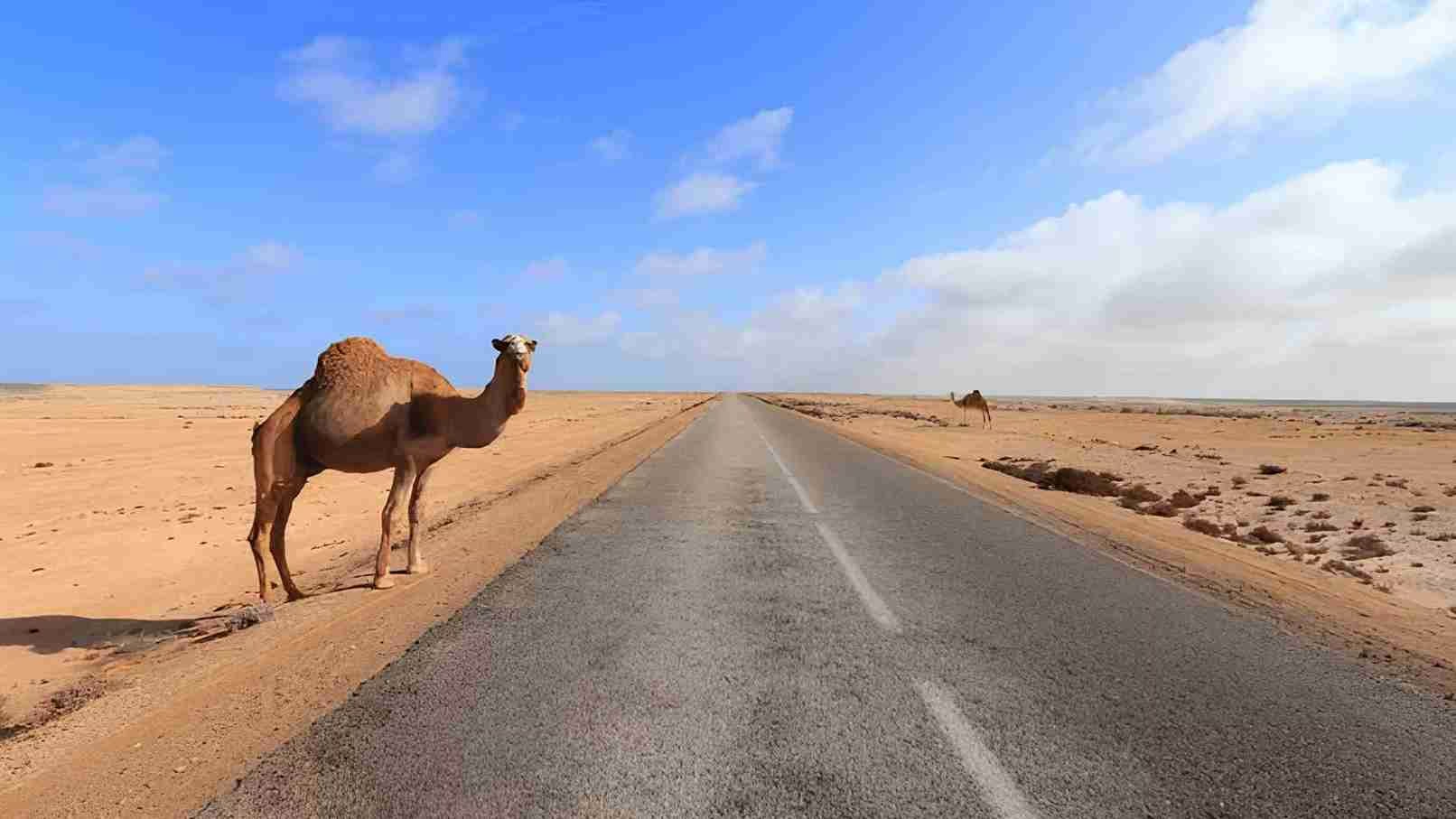
Zagora
A weathered sign on Zagora’s edge once read Tombouctou, 52 jours: fifty-two days by camel to reach Timbuktu. The current sign is a replacement, but it still marks where trans-Saharan caravans loaded with gold and salt set out into open desert for centuries. The town itself sits in Morocco’s longest river valley, with date palm groves running south toward dunes that take longer to reach, and draw far fewer visitors, than the ones near Merzouga.
The Town At The End Of The Caravan Road
Zagora grew up around a fortress the Almoravids built on the black hill above town in the 11th century, meant to control traffic moving along the Draa Valley toward the Sahara. For centuries afterward, this was one of the last organized stops before caravans struck out across open desert: merchants loaded camels with salt, textiles and manufactured goods here, and returned months later with gold, ivory and other goods carried up from sub-Saharan Africa, a trade that also moved enslaved people along the same routes. The modern town took its current shape mostly in the 20th century under French administration, which is why Zagora itself has more of a functional, regional-capital feel than the imperial cities further north.
What makes the area worth the drive is less the town than what surrounds it. The Drâa River carves out Morocco’s longest valley, and the palm groves that follow it south from Zagora toward M’Hamid form one of the largest stretches of cultivated oasis in the country, fed by an irrigation system some communities have maintained for generations. Amezrou, the older settlement next to modern Zagora, still has the mudbrick walls and narrow lanes of a pre-colonial Drâa Valley village, including a former Jewish quarter where silverworking families once acted as go-betweens in the same caravan trade that built the town.
Most people who come to Zagora now are heading toward sand, not history. Tinfou, a small set of dunes a short drive south, is easy to reach and easy to enjoy for an afternoon. The dunes we actually mean when we say “Zagora desert trip,” Erg Chigaga, sit much further out near the village of M’Hamid, reached by a rough track. That extra distance is the whole reason Zagora gets recommended to travelers who’ve already done a standard Merzouga trip, or who’d rather skip the crowds at Erg Chebbi altogether.
Plan around this: reaching Erg Chigaga from Zagora usually means a multi-day trip with an overnight camp, not a quick there-and-back like Tinfou. If a longer Sahara stay matters to you, building it into a wider Sahara desert itinerary is usually more efficient than treating Zagora as a single stop.
What To See In Zagora
Six places that explain why caravans stopped here, and why travelers still do.
The “Tombouctou, 52 Jours” Sign
A modern recreation of the marker that once told departing caravans how long the road to Timbuktu really was. It stands near the original departure point on the edge of town, and it’s still the single most photographed thing in Zagora.
Jbel Zagora
The dark hill the town is named after, topped by the ruins of the 11th-century Almoravid fortress that started all of this. The climb takes under an hour and ends with a view over the whole Drâa Valley.
Amezrou & The Old Mellah
Zagora’s original settlement, a mudbrick quarter that includes the former Jewish neighborhood where silversmith families once worked. Local artisans still demonstrate the filigree techniques the mellah was known for.
Tamegroute’s Quranic Library
One of Morocco’s oldest collections of religious manuscripts, some centuries old, housed at a Sufi zaouia about 20 minutes south of town. The same village is known nationwide for its green-glazed pottery, sold at workshops right outside.
Tinfou Dunes
A compact dune field a short drive from Zagora, reachable by ordinary car and manageable in an afternoon. It’s a fraction of the size of Erg Chigaga, but it’s the easiest way to stand in real Saharan sand without committing to a multi-day trip.
Erg Chigaga (via M’Hamid)
The actual destination behind most “Zagora desert tour” itineraries: a sea of dunes far past the last paved road, reached through the outpost town of M’Hamid. It takes longer to get to than Merzouga’s dunes, and that’s largely the point.
Tours That Visit Zagora
Itineraries below all include Zagora, whether as a quick stop or the base for a longer Erg Chigaga trip.


Planning Your Visit
Best Time To Go
October through April keeps daytime heat manageable and desert nights merely cool rather than punishing. Summer regularly passes 40°C in town and considerably more out on open sand, which is why most operators scale back desert programs between June and September.
Getting To Zagora
Ouarzazate is the practical gateway, about two and a half to three hours away by road. From Marrakech, expect a six-hour drive over the Tizi n’Tichka pass and down through the Drâa Valley.
Getting Around
Zagora’s town centre is small enough to cover on foot, but Amezrou, Tamegroute and the dunes all require a vehicle. Most visitors arrange transport as part of a tour rather than booking each leg separately, since public transport south of town is limited.
What To Wear & Bring
Bring layers no matter the season; desert nights drop sharply even after a hot afternoon. A headscarf helps on windy dune days, and anyone heading to Erg Chigaga should pack for a multi-day trip.
Frequently Asked Questions About Zagora
Quick answers to what people ask us most before adding Zagora to their Morocco trip.
Is Zagora worth visiting?
If you want a Sahara experience with fewer other travelers around, yes. Zagora trades the convenience of Merzouga’s dunes for a longer drive and a quieter result, which suits people who’ve already done one desert trip and want something less crowded the second time.
What’s the difference between Zagora and Merzouga?
Mainly distance and crowds. Merzouga sits right beside Erg Chebbi, so the dunes are minutes away; Zagora’s main dune field, Erg Chigaga, takes hours of driving past M’Hamid to reach. That extra effort is exactly why Erg Chigaga sees far fewer visitors.
How far is Zagora from Marrakech?
About 360 kilometres, roughly six hours by road over the Tizi n’Tichka pass. Most multi-day desert tours from Marrakech build in stops along the way.
What does the “Timbuktu 52 days” sign actually mean?
It marks how long a camel caravan once took to cross the desert from Zagora to Timbuktu, in present-day Mali. The sign itself is a modern recreation, but it sits near the spot caravans genuinely departed from for centuries.
Can you visit Erg Chigaga as a day trip from Zagora?
Not comfortably. The dunes sit well beyond M’Hamid on a rough track, which is why almost every itinerary that includes Erg Chigaga involves at least one overnight camp.
Is the Tinfou dune field the same as Erg Chigaga?
No, and mixing them up is a common mistake. Tinfou is a small, easily reached dune patch close to Zagora; Erg Chigaga is the much larger, far more remote erg near M’Hamid that most multi-day desert tours are actually built around.
What is Tamegroute known for?
Two things: a centuries-old Quranic library holding rare illuminated manuscripts, and a distinctive green-glazed pottery produced locally and sold across Morocco.
What’s the best time of year to visit Zagora?
October through April. Summer heat in the Drâa Valley regularly exceeds 40°C, which makes camel treks and dune excursions far less appealing than in the cooler months.
Plan Your Trip To Zagora
Tell us your dates, group size and how much desert you want, and we’ll suggest a route or fold Zagora into a longer Morocco itinerary. Continuing on from here? We also run tours to Ouarzazate, Marrakech, and Casablanca.