
Ait Ben Haddou
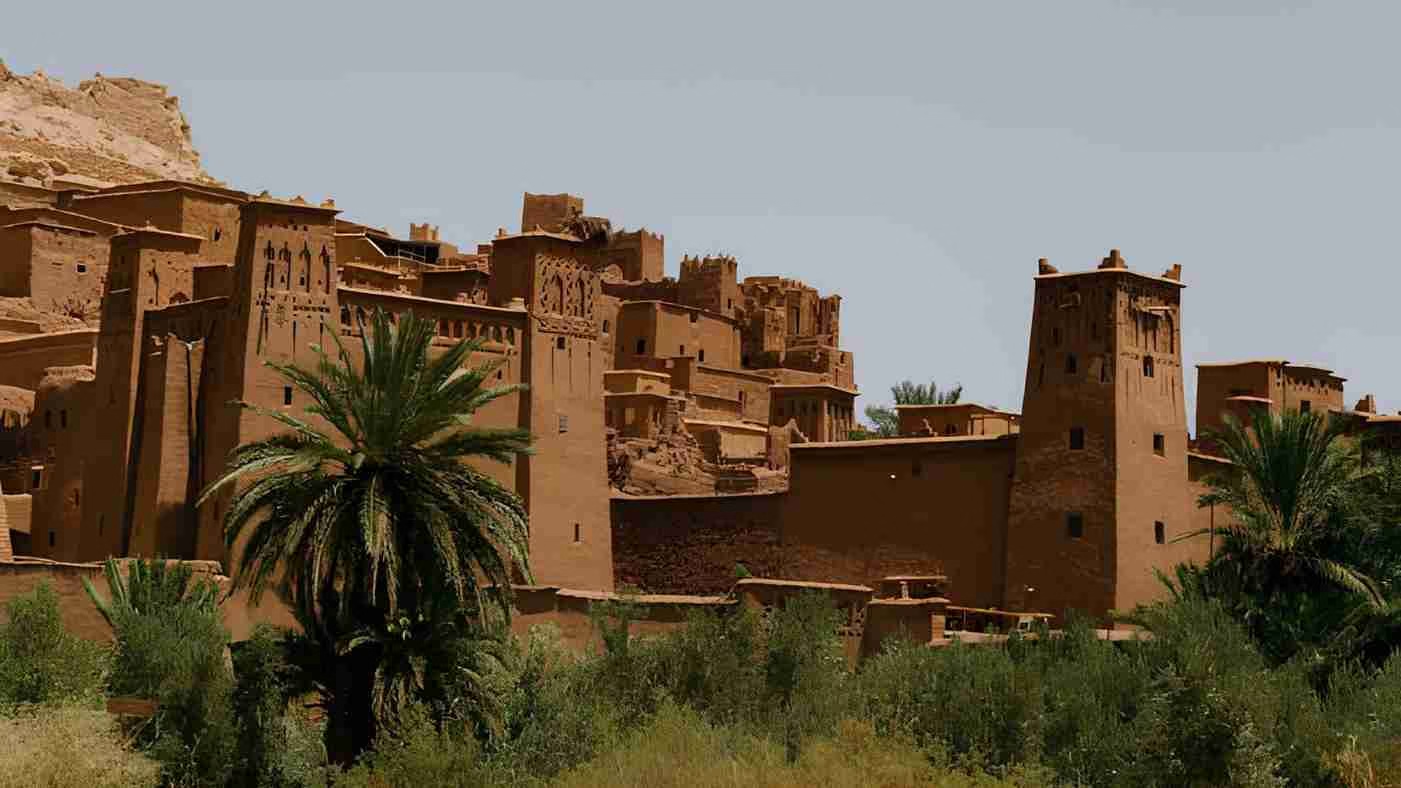
More film crews have set up here than almost anywhere else in Africa, yet Ait Ben Haddou is still, technically, someone’s home. A handful of families still live inside these thousand-year-old earthen walls, repairing the same rammed-earth towers that have stood in for ancient Rome, a fictional slave city, and Lawrence of Arabia’s desert. The ksar itself sits on the old caravan road between Marrakech and the Sahara, built from little more than mud, straw and water, and rebuilt by hand every season since.
The Ksar That Hollywood Keeps Coming Back To
Ait Ben Haddou isn’t a single building, it’s a ksar, a fortified cluster of family homes, each one technically a kasbah on its own, packed together behind one shared outer wall and a single gate. Every tower, granary and rooftop visible from the road is someone’s house, built from pisé, a mix of compressed earth, straw and water packed into wooden frames and left to dry. The technique dates back roughly a thousand years on this spot, and it requires constant upkeep; left alone, a structure like this can start crumbling within a few decades.
By the 1940s, more than ninety families lived inside these walls, trading on a caravan route that once connected Marrakech to the Sahara and, beyond it, Timbuktu. That route lost its purpose in the 20th century, and most residents eventually moved across the river to a newer village with modern materials and an easier life. UNESCO listed Ait Ben Haddou as a World Heritage Site in 1987, partly for the architecture and partly to flag a way of building that was disappearing along with the people who knew how to maintain it.
What actually paid for a lot of that upkeep was film production. David Lean shot scenes for Lawrence of Arabia here in 1962, and the productions never really stopped: The Mummy, Kingdom of Heaven, Babel, Gladiator, and Game of Thrones, where the ksar played the slave city of Yunkai, all used these same walls. Anything built for a film before the 1987 UNESCO listing was generally allowed to stay, which means a few structures visible today aren’t medieval at all, they’re props that outlasted their movies.
One detail worth knowing: there’s no official entrance fee since this is still a working village, though hiring a local guide for an hour or two adds real context on the architecture and film history that’s easy to miss walking through alone. The site pairs naturally with a stop at Ouarzazate, about thirty minutes away.
What To See At Ait Ben Haddou
Six things worth slowing down for, on a site small enough to cover properly in under two hours.
The Communal Granary (Agadir)
The highest point in the ksar, originally used to store grain safely above flood level and away from raiders. The climb is short and steep; the view over the Ounila Valley at the top is the main reason most people make it.
The Pisé Towers
Earthen towers built in layers, rammed earth at the base and lighter adobe higher up, designed to carry their own weight without collapsing. Look closely at the eroded sections and you can see the individual layers, each one a separate day’s work centuries ago.
The Single Fortified Gate
Every ksar of this kind traditionally had one way in and out, easy to defend and impossible to surprise. The narrow original entrance still funnels visitors the same way it funneled caravans centuries ago.
The Inhabited Quarter
A handful of families still live inside the walls and maintain a few houses as small private museums, often for a small donation. These are the only original interiors most visitors will actually see inside the ksar.
The Old Caravanserai & Threshing Floors
Flat open ground just inside and outside the walls once handled grain threshing and incoming caravan goods, evidence that this was a working trade stop long before it was a film set.
The Gladiator Arena Site
An unmarked patch of open ground just outside the ksar walls, used to build a 30,000-seat mud-brick arena for Gladiator’s first battle scene. Nothing remains today except the view that made it work on screen.
Tours That Visit Ait Ben Haddou
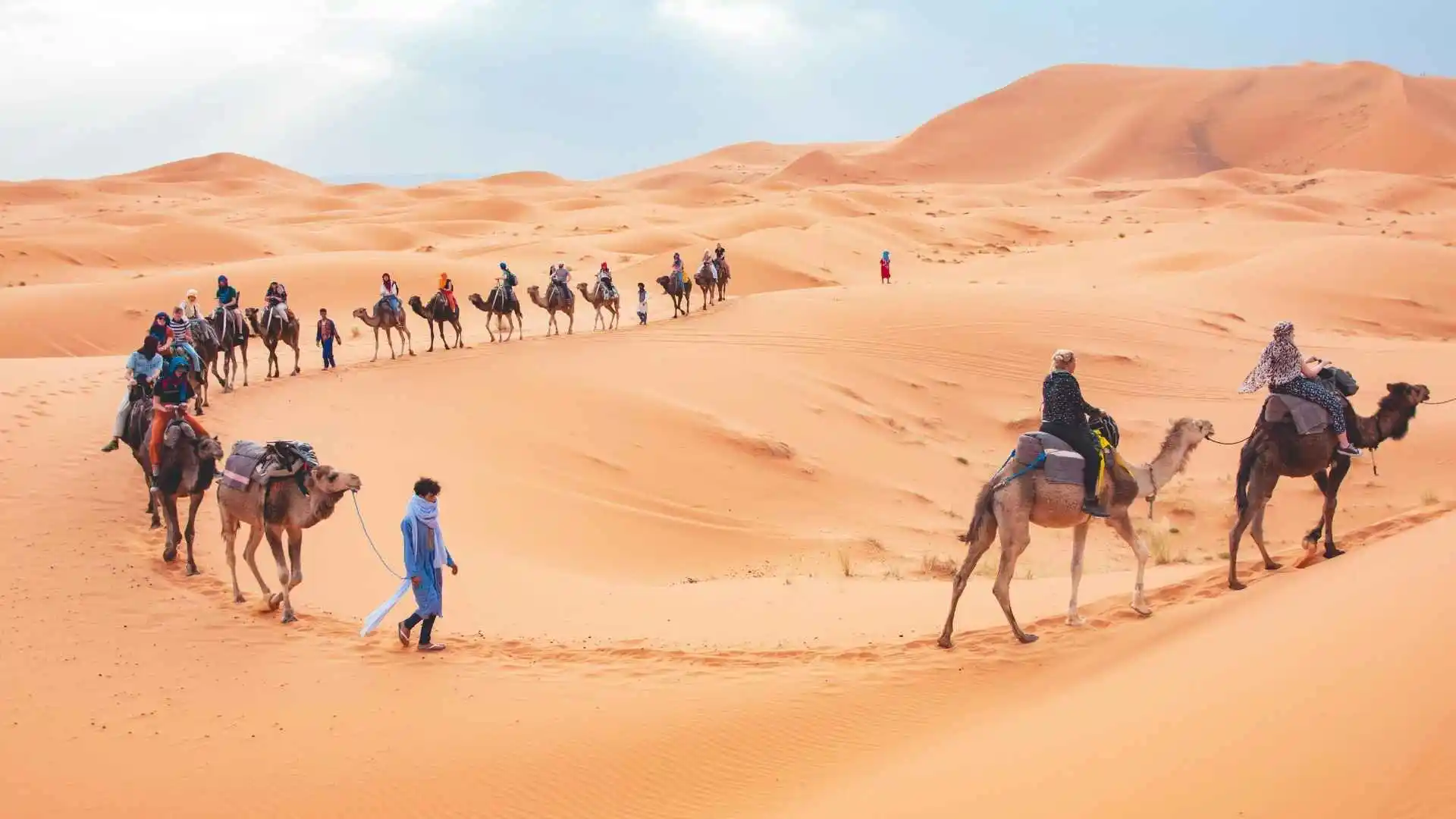
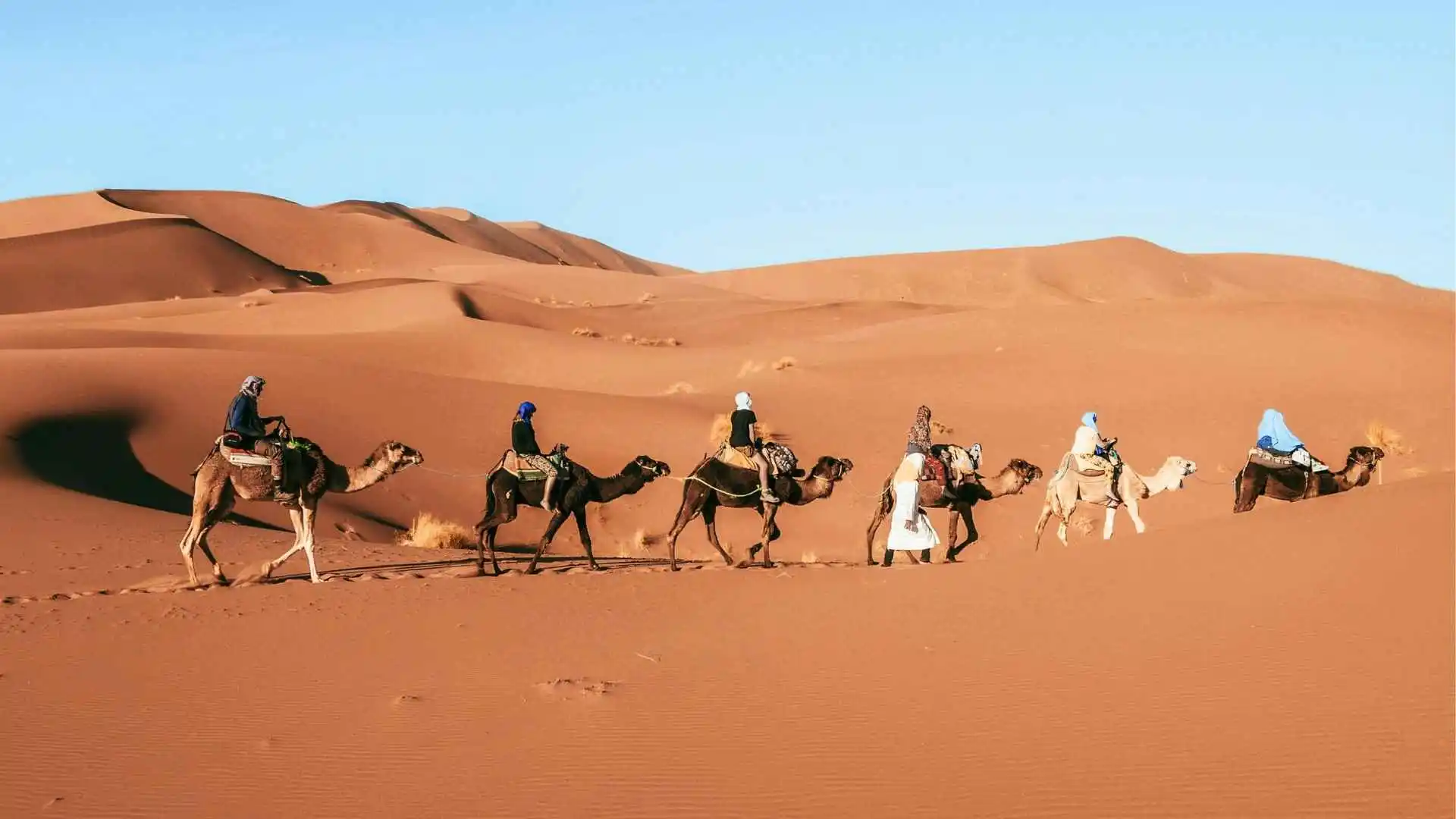
Itineraries below all include Ait Ben Haddou, whether as a single stop or part of a longer southern route.
Planning Your Visit
Best Time To Go
March through May and September through November bring mild daytime temperatures and the clearest light for photos. Late afternoon works best year-round, since the low sun turns the earthen walls a deeper red than the flat light of midday.
Getting There
Most visitors arrive on the way between Marrakech and Ouarzazate, about thirty minutes off the main N9 road. A day trip from Marrakech runs three to four hours each way over the Tizi n’Tichka pass, making it a long single day or a natural stop on a longer southern route.
Visiting The Ksar
There’s no entrance fee, though a local guide is worth hiring for the architecture and film history. A footbridge crosses the Ounila River from the parking area; expect ninety minutes to two hours to see the site properly, longer if you climb to the granary.
What To Wear & Bring
Closed shoes handle the uneven earthen stairs better than sandals, and there’s very little shade inside the walls, so sun protection matters even on a short visit. Small bills help for guide fees or museum-house donations.
Frequently Asked Questions About Ait Ben Haddou
Quick answers to what people ask us most before adding Ait Ben Haddou to their Morocco itinerary.
Is Ait Ben Haddou worth visiting?
Yes, especially if you’re already driving between Marrakech and Ouarzazate. It’s one of the best-preserved earthen ksour in Morocco, a UNESCO World Heritage Site, and the backdrop for an unusually long list of well-known films.
What’s the difference between a ksar and a kasbah?
A kasbah is a single family’s fortified house; a ksar is a cluster of kasbahs sharing one outer wall and gate, built for a whole community rather than one household. Ait Ben Haddou is technically a ksar, even though it’s often called a kasbah informally.
Is there an entrance fee for Ait Ben Haddou?
No official fee, since it remains a working, inhabited village rather than a museum or ruin. Some resident families open a room or two as small private museums and welcome a donation for the visit.
How far is Ait Ben Haddou from Marrakech?
About 190 kilometres, roughly three and a half to four hours by road over the Tizi n’Tichka pass. Many visitors combine it with Ouarzazate, thirty minutes further on.
Which movies were filmed at Ait Ben Haddou?
Lawrence of Arabia in 1962 was the first major production, followed by The Mummy, Kingdom of Heaven, Babel, Gladiator and Gladiator II, and Game of Thrones, where the ksar appeared as the city of Yunkai.
Do people still live inside Ait Ben Haddou?
Yes, a small number of families, generally cited as four to six, still live within the walls and carry out the seasonal maintenance that keeps the earthen structures from eroding.
How long does it take to visit Ait Ben Haddou?
Around ninety minutes covers the main route through the ksar up to the granary at the top. Add extra time for a guided tour or for photographing the site in the late-afternoon light most photographers wait for.
Can you combine Ait Ben Haddou with Ouarzazate’s film studios in one day?
Yes, easily. The two sites sit about thirty minutes apart, and pairing a ksar visit with a studio tour is one of the most common single-day routes in the region.
Plan Your Trip To Ait Ben Haddou
Tell us your dates and how much time you have, and we’ll fold Ait Ben Haddou into a day trip or a longer southern route. Continuing on from here? We also run tours from Marrakech, cover Ouarzazate just down the road, and reach the Sahara at Merzouga.