
Marrakech
Jemaa el-Fnaa is the only square in Morocco that UNESCO protects for what happens on it: storytellers, snake charmers and food stalls that set up every evening have been recognized as living heritage since 2001. Marrakech has been doing this since 1062, when Almoravid rulers picked a patch of desert plain below the Atlas Mountains and built a capital from the ground up. Almost a thousand years later, it’s still the city most people mean when they say they’re going to Morocco.
The Capital That Keeps Changing Hands
Marrakech began in 1062, when the Almoravid leader Abu Bakr ibn Umar chose an empty plain below the High Atlas Mountains and started building a capital almost from nothing. His successor, Yusuf ibn Tashfin, finished the job: walls, a palace, and a water system of underground channels, khettaras, that pulled snowmelt down from the mountains to irrigate a city sitting on the edge of true desert. The Almoravids didn’t keep it for long. Within a century the Almohad dynasty took over, tore down much of what existed, and rebuilt Marrakech as their own capital, including the Koutoubia Mosque, whose minaret still anchors the skyline today.
The city’s richest stretch came centuries later, under the Saadian dynasty in the 1500s and 1600s, when sugar and trans-Saharan gold trade paid for palaces, mosques and the underground burial chambers known today as the Saadian Tombs. One of those palaces, El Badi, was reportedly built using gold from a single ransom payment after a Portuguese defeat; within decades, the Alaouite sultan Moulay Ismail had it stripped down to bare walls so the marble and cedar could be hauled north and reused in his own building project at Meknes. What’s left of El Badi today is mostly the scale of what was taken.
What pulls people to Marrakech now is less any single monument than the density of the old city itself: a medina where a tannery, a spice stall and a centuries-old Quranic school can sit on the same block, opening onto Jemaa el-Fnaa each evening as the square fills with food carts and performers. Outside the walls, French-era boulevards and a steady stream of new riads and hotels have kept Marrakech the country’s most visited city by a wide margin, the place most travelers either start from or end up reaching no matter where else their Morocco trip goes.
One thing to plan for: Marrakech works as a long weekend on its own or as the hub for almost every other destination, the coast at Essaouira, the desert routes through Ait Ben Haddou, or all the way to Merzouga. Most multi-city itineraries use it as the start or end point.
What To See In Marrakech
Six places that move from the 12th century to the 20th without ever leaving walking or taxi range.
Jemaa el-Fnaa
Morocco’s only UNESCO-recognized public square, protected for the storytellers, musicians and food stalls that have worked it for centuries rather than for any building on it. Daytime is juice stalls and snake charmers; after dark, the whole square turns into an open-air kitchen.
Koutoubia Mosque
The Almohad-era minaret that has anchored the Marrakech skyline since the 12th century, visible from most of the old city since nothing nearby is allowed to be built taller. Non-Muslims can’t enter, but the gardens around it are open and usually quiet.
Bahia Palace
A 19th-century vizier’s palace built room by room over decades, with carved cedar ceilings and zellige tilework dense enough that it took on a kind of architectural momentum of its own. Its name means “the brilliance,” and the courtyards mostly live up to it.
Saadian Tombs
A royal burial chamber sealed off and forgotten for nearly three centuries until a 1917 aerial survey spotted it from above. Alaouite rulers walled over the entrance rather than destroy a holy site outright, which is the only reason it survived at all.
Majorelle Garden
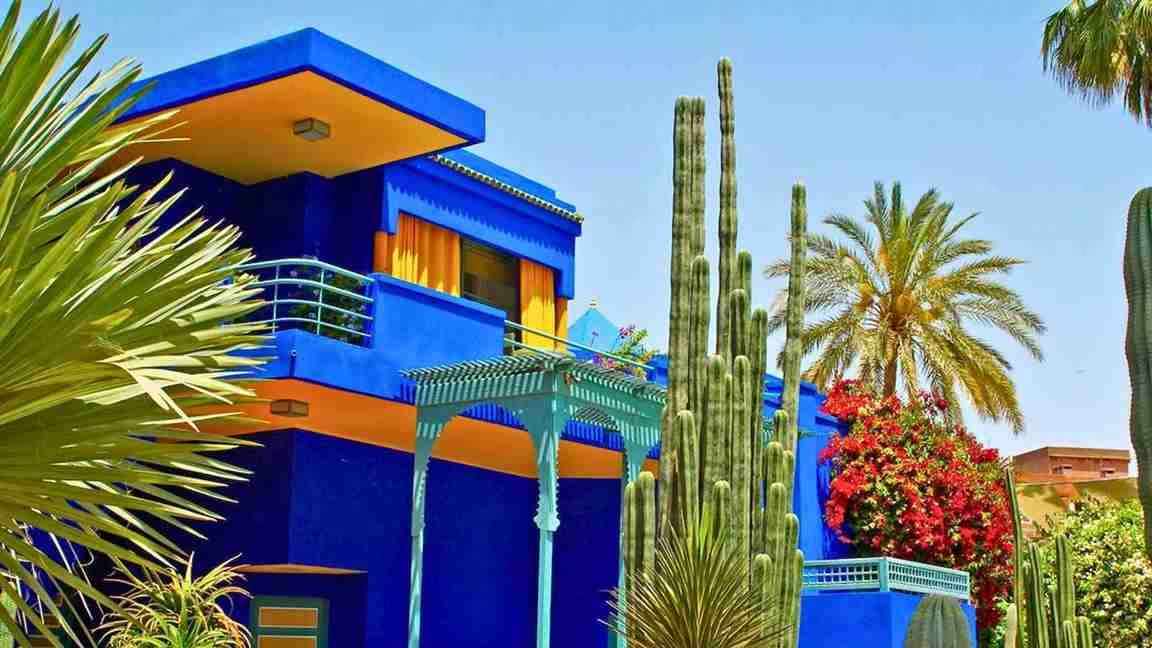
A botanical garden built by a French painter in the 1920s and 30s, known today for the saturated cobalt blue, since named after him, used on its walls and pots. Yves Saint Laurent later owned the property and is memorialized in a small museum on site.
El Badi Palace
What’s left of a Saadian-era palace once covered in gold leaf and onyx, most of it stripped for parts and hauled to Meknes within decades of being built. Storks now nest on the bare walls where the marble used to be.
Tours That Visit Marrakech
Itineraries below all include Marrakech, whether as a standalone city break or the start of a longer Morocco route.


Planning Your Visit
Best Time To Go
March through May and September through November bring warm, dry days without summer’s extremes. Summer regularly passes 40°C and empties out by early afternoon; winter stays mild during the day but cools off fast once the sun drops behind the Atlas.
Getting To Marrakech
Marrakech Menara Airport handles more international traffic than almost anywhere else in Morocco, with direct routes from most of Europe. The train station connects to Casablanca, Rabat, Fes and Tangier, and it’s also the most common starting point for road trips south toward the desert.
Getting Around
The medina is largely closed to cars and easiest covered on foot or by petit taxi for longer stretches. Outside the walls, Marrakech is spread out enough that walking between neighborhoods isn’t realistic; budget for taxis or arranged transport.
What To Wear & Bring
Comfortable shoes matter more here than almost anywhere else in Morocco given how much ground the medina covers on foot. Modest dress eases interactions in the souks, and sun protection is worth having even outside summer, since shade is limited in the main squares.
Frequently Asked Questions About Marrakech
Quick answers to what people ask us most before adding Marrakech to a Morocco itinerary.
Is Marrakech worth visiting?
It’s the most visited city in Morocco for a reason: more sights within walking distance than almost anywhere else in the country, paired with the widest choice of flights, tours and onward routes. Whether it’s worth a multi-day stay or a quick stop depends mostly on whether dense, busy cities suit your travel style in the first place.
How many days do you need in Marrakech?
Two full days cover the main sights comfortably: the square, Koutoubia, one or two palaces and a walk through the souks. Three or more allows a day trip into the Atlas Mountains or out to Essaouira without feeling rushed.
Is Marrakech a good base for visiting the rest of Morocco?
Yes, more than any other city. Its airport, train connections and road links toward the desert and coast make it the most common starting and ending point for multi-city Morocco itineraries.
What is Marrakech known for?
Jemaa el-Fnaa, the only square in Morocco UNESCO recognizes as living cultural heritage; the red-toned buildings that give the city its “Red City” nickname; and a medina dense enough with souks, palaces and gardens to fill several days on its own.
Is Marrakech safe for tourists?
Generally yes, though it’s busier and more tourism-oriented than most other Moroccan cities, which brings the usual city precautions around bags, scams and persistent vendors in the souks. Sticking to well-lit, populated areas at night is standard advice here as anywhere.
What’s the difference between the old medina and the new city?
The medina is the walled historic core, dense with souks, mosques and palaces built across nearly a thousand years. Guéliz, the newer district built during the French protectorate, has wider boulevards, modern restaurants and most of the city’s nightlife.
Can you visit the Atlas Mountains from Marrakech?
Easily. The High Atlas range starts visibly close to the city, and villages like Imlil are reachable in under two hours, making a mountain day trip one of the most common add-ons to a Marrakech stay.
What’s the best time of year to visit Marrakech?
March through May and September through November, avoiding both summer’s frequent 40°C-plus days and winter’s sharper evening chill once the sun goes down.
Plan Your Trip To Marrakech
Tell us your dates and what else is on your radar, and we’ll suggest a route built around Marrakech or a longer trip. Continuing on from here? We also cover Essaouira on the coast, Ait Ben Haddou and Ouarzazate toward the desert, and reach the Sahara itself at Merzouga.