
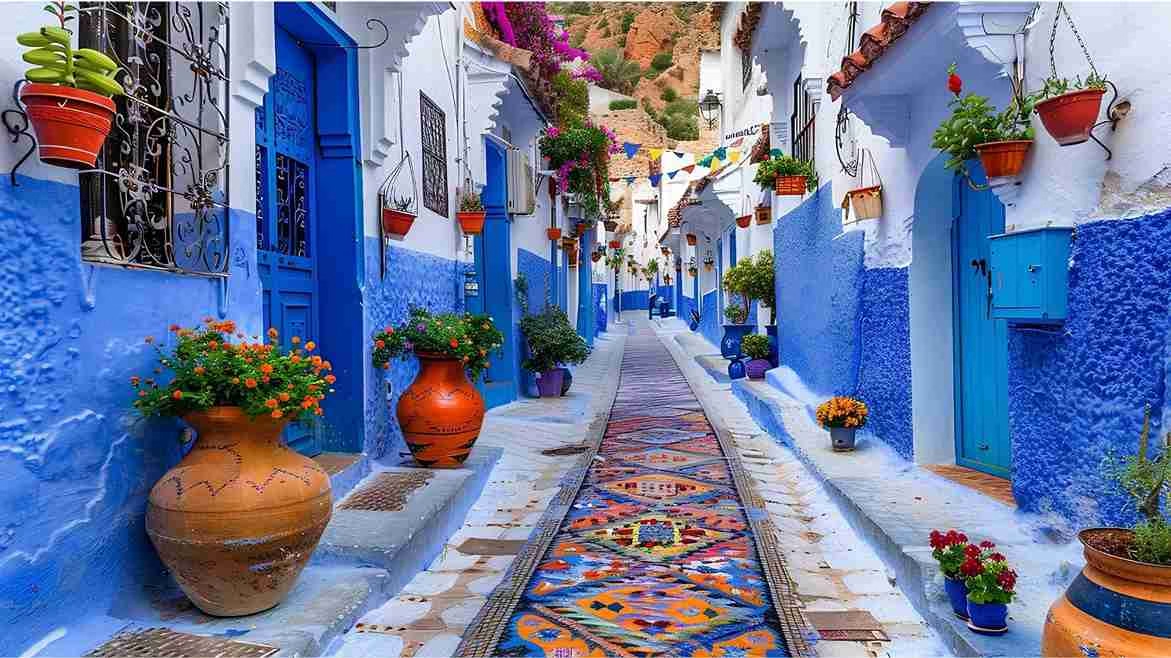
Chefchaouen
Every wall, staircase and doorway in Chefchaouen’s medina gets repainted blue at least once a year, and nobody fully agrees on why it started. Jewish refugees who settled here in the 1930s get most of the credit, though locals also point to cooler rooms, fewer mosquitoes, and simple habit. The town itself sits two hours into the Rif Mountains from Tangier, wedged between two peaks shaped enough like horns to give it its name.
A Fortress Town That Turned Itself Blue
Chefchaouen began in 1471 as a single fortress, built by Moulay Ali ibn Rashid to block Portuguese forces pushing into northern Morocco from the coast. The location did most of the work on its own: tucked between two peaks locally likened to a goat’s horns, which is where the name comes from (chef, meaning to look, plus the Berber word for horns), the fortress was hard to spot and harder to reach. Within a few decades a real town had grown up around it, settled by Andalusian Muslims and Jews fleeing the Spanish Reconquista, alongside the Ghomara Berber tribes who already lived in these mountains.
Where the blue paint actually comes from is still argued over inside the medina itself. The most repeated story credits Jewish families who arrived in the 1930s fleeing rising antisemitism in Europe, painting their quarter in a shade tied to an old tradition of dyeing prayer shawls blue as a reminder of the sky. Other residents point to more practical reasons: the colour reportedly keeps rooms cooler, discourages mosquitoes, or simply caught on once visitors started asking for it. Older locals recall a medina that was mostly white within living memory, with blue spreading from a handful of streets to the whole town only in recent decades.
Spain administered this part of Morocco from 1920 until independence in 1956, part of why Chefchaouen’s architecture reads differently from cities further south. The town itself stays small, a few thousand residents inside the medina and a newer district built up around it, which keeps it manageable on foot. Most travelers see it on the way between Tangier and Fes rather than as a final stop, though the Rif Mountains around it, with waterfalls, forest trails and views unlike anywhere else on a typical Morocco route, give the area enough to fill more than an afternoon.
Heads up: Chefchaouen has no airport or train station of its own, so almost every visit starts with a transfer from Tangier or Fes. Most travelers fold it into a Tangier-based route.
What To See In Chefchaouen
Six spots that cover the square, the spring and the hills above town, none more than a steep walk from the next.
Plaza Uta el-Hammam
The wide square at the medina’s centre, framed by the red-and-white Kasbah on one side and the Grand Mosque’s unusual octagonal minaret on the other. Cafés ring the edges for anyone happy to just watch the square fill up.
The Kasbah & Ethnographic Museum
The original 1471 fortress, the one structure in town that was never painted blue. Inside, a small museum covers the region’s history, and the courtyard garden offers one of the few shaded spots in the medina.
Ras el-Maa
The spring just outside the old walls that supplied Chefchaouen’s water long before pipes existed. Locals still wash carpets and wool here, and it’s a quieter stop than the photogenic streets a few minutes away.
The Spanish Mosque Viewpoint
A disused mosque built by Spanish colonial authorities in the 1920s and never used for prayer, reached by a steep twenty- to thirty-minute walk above town. The payoff is the clearest overview of the blue medina against the Rif Mountains, especially near sunset.
The Medina’s Blue Alleys
No single street is the famous one; the effect comes from wandering without much of a plan. Calle el-Asri near the Kasbah draws the most attention, but quieter lanes a few turns away look almost identical without the crowds.
Akchour Waterfalls & God’s Bridge
A natural rock arch and a series of waterfalls inside Talassemtane National Park, about an hour from town by road plus a hike along the river. Worth the half-day if the medina alone isn’t enough mountain scenery.
Tours That Visit Chefchaouen
Itineraries below all include Chefchaouen, whether as a single-day stop or part of a longer route through northern Morocco.


Planning Your Visit
Best Time To Go
April through June and September through October give the most comfortable mix of mountain sun and cool evenings. Midsummer can still run hot in the medina by afternoon, while winter brings rain and occasional snow on the peaks above town.
Getting To Chefchaouen
There’s no airport or train station in town. Most visitors arrive by CTM or Supratours bus, grand taxi, or private transfer from Tangier (about two hours), Fes (around four), or as a stop on a longer route from Casablanca or Marrakech.
Getting Around
The medina is built on a steep hillside and closed to cars through most of its core, so everything happens on foot. Comfortable shoes matter more here than in flatter Moroccan cities; expect stairs almost everywhere you go.
What To Wear & Bring
Layer up regardless of season; mountain evenings cool down fast even after a warm afternoon. Modest dress is appreciated in this more conservative, rural part of Morocco, and a daypack helps if you’re adding a hike to the Spanish Mosque or Akchour.
Frequently Asked Questions About Chefchaouen
Quick answers to what people ask us most before adding Chefchaouen to a Morocco itinerary.
Why is Chefchaouen painted blue?
No single explanation has ever been confirmed. The most common account credits Jewish refugees who settled here in the 1930s and painted their quarter using a colour tied to an old prayer-shawl tradition; locals also cite cooler indoor temperatures, fewer mosquitoes, and decades of repainting once the look began drawing visitors.
Is Chefchaouen worth visiting?
For most travelers, yes, and it’s often the part of a Morocco trip people remember most clearly afterward. It’s a small, walkable mountain town rather than a major city, so set expectations accordingly: a day or two covers it comfortably.
How do you get to Chefchaouen?
By bus, grand taxi or private transfer, since there’s no airport or train station here. Tangier is the closest major gateway, around two hours away; Fes takes closer to four.
How many days should you spend in Chefchaouen?
One full day covers the main square, the Kasbah and a wander through the blue alleys. A second day leaves room for the Spanish Mosque hike at sunset or a half-day trip out to the Akchour waterfalls.
Is Chefchaouen safe?
By most accounts, yes, and noticeably more relaxed than Morocco’s larger cities. Normal precautions still apply, and modest dress is worth keeping in mind given the town’s conservative, rural character.
Can you visit Chefchaouen as a day trip from Tangier or Fes?
From Tangier, yes, though it makes for a long day given the two hours of driving each way. From Fes, the round trip alone runs close to eight hours, so an overnight stay suits that route better than a single-day push.
What is there to do in Chefchaouen besides photographing the blue streets?
Hiking, mainly. The Spanish Mosque viewpoint, the Talassemtane National Park trails, and the Akchour waterfalls and rock bridge all sit within an hour or two of town, giving the area more to offer than the medina alone.
What’s the best time of year to visit Chefchaouen?
April through June and September through October balance warm days against the medina’s many staircases, without the summer heat or winter rain working against you.
Plan Your Trip To Chefchaouen
Tell us your dates, group size and what you’d like to see, and we’ll suggest a route or work Chefchaouen into a longer Morocco itinerary. Continuing on from here? We also run tours to Tangier, Fes, Marrakech, Casablanca and the Sahara.