
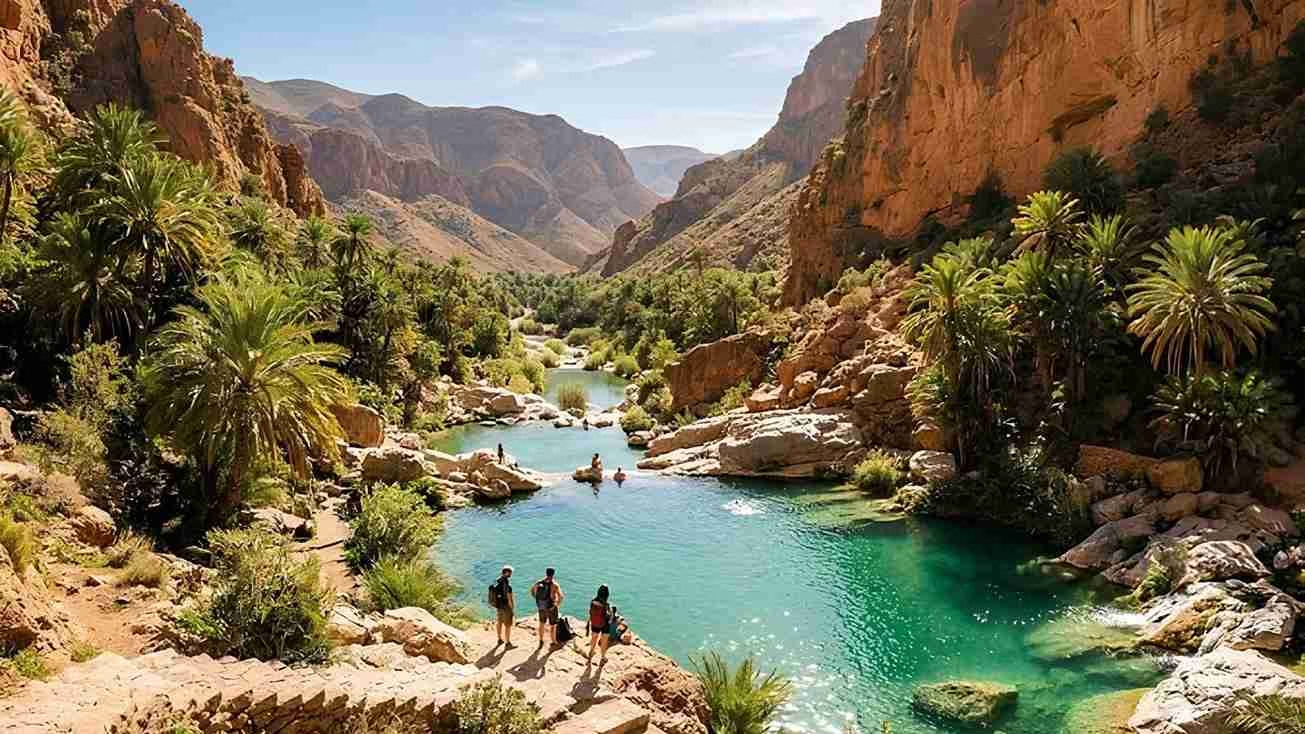
Paradise Valley
Paradise Valley isn’t this gorge’s original name, and nobody can fully agree on who gave it that one. One story credits an ailing German couple who camped here for months in the 1960s and called it paradise after the water cured what city life hadn’t; another credits Jimi Hendrix, who is said to have spent time in the valley around the same decade and even carved “Peace and Love” into a rock somewhere along the trail. What’s certain is the contrast: a river has carved a string of turquoise pools into bare rock, shaded by date palms and fig trees, in mountains otherwise dry enough that little else around them grows green at all.
The Valley That Earned Its Name In The 1960s, Probably
The Tamraght River has carved a string of basins into smooth bedrock here for long enough that the pools look almost too clean to be natural, ranging from shallow, sun-warmed shelves where families wade to deep plunge pools striking enough in colour that photos of them rarely need editing. Palm trees, fig and carob shade the valley floor in a landscape that’s otherwise dry, stony foothill country, part of the western High Atlas behind Agadir, in the commune of Imouzzer Ida Outanane. The contrast between the arid hillsides and the green ribbon running through the bottom of the gorge is the whole reason anyone calls this place paradise in the first place.
Exactly who started calling it that is genuinely disputed. One version of the story credits an ailing German couple who arrived sometime in the 1960s, camped in the gorge for months in improvised palm-leaf shelters, and left convinced the water and the climate had cured them of whatever city life had given them. A separate, more famous version credits Jimi Hendrix, said to have spent stretches of the same decade in the valley and, according to local guides, to have carved Peace and Love into a rock somewhere along the trail, a marking nobody can quite locate with certainty today. Both stories date from the same hippie-trail era that drew Western travellers through Morocco in the 1960s and 70s; neither is provable, and most locals seem happy to let the mystery stand.
What’s less romantic, and worth knowing before arriving with expectations set by photos, is that the valley draws real crowds on weekends and through summer, and water clarity depends heavily on recent rainfall; some visitors find certain pools murkier or more littered than the marketing promises. Further up the same road, the village of Imouzzer Ida Outanane sits at over 1,250 metres along what’s locally called the Honey Route, known for thyme and lavender honey and host to a week-long Honey Festival, the Moussem Imouzzer, held every August.
Set expectations honestly: some pools have muddy, slippery bottoms, and a few accidents have been reported among visitors swimming without checking conditions first. Arriving before mid-morning, ideally on a weekday, avoids both the worst crowds and the midday heat on the climb back up. Most visitors come as a day trip from Agadir, about an hour away.
What To Do In Paradise Valley
Six ways to spend time here, from a short pool visit to the full honey-route detour further up the mountain.
Swim In The Natural Pools
Turquoise basins carved into bedrock by the Tamraght River, ranging from shallow wading spots to deep plunge pools. Rocks near the water can be slick, and a guide’s local knowledge of which pools are safest is worth having.
Cliff Jump (Experienced Only)
A few pools have rock ledges popular for jumping, with heights varying considerably between spots. Water depth and submerged rocks aren’t always obvious from above, so this is one for confident swimmers who scout first.
Hike The Gorge Trail
A path descends from the road into the canyon, with the first pools reachable in around half an hour and the full valley taking most of a day for anyone covering it end to end. Sturdy shoes matter more than the short version of the walk suggests.
Visit An Argan Oil Cooperative
Women-run cooperatives along the road press argan oil using traditional methods, often pairing a demonstration with bread, honey and mint tea. Most day tours build in a stop here on the way back to Agadir.
Drive The Honey Route To Imouzzer
A scenic continuation of the same road climbing to the village of Imouzzer Ida Outanane, over 1,250 metres up, known for thyme and lavender honey and a seasonal waterfall of its own near the village.
The Honey Festival (Moussem Imouzzer)
A week-long celebration in Imouzzer bringing beekeepers, herbalists and traditional Berber music together for tastings and trade. It draws a genuinely local crowd rather than a staged tourist event.
Tours That Visit Paradise Valley
Itineraries below all include Paradise Valley, whether as a swim-focused half day or part of a longer route inland.


Planning Your Visit
Best Time To Go
Spring and early summer bring the strongest water flow and the greenest scenery, while April through June and September through October avoid both winter’s occasional rain-damaged roads and the peak heat and crowds of July and August. Weekday mornings before 10am are noticeably quieter than weekends.
Getting To Paradise Valley
About 45 minutes to an hour from Agadir on a narrow, winding mountain road. Most visitors go as part of a guided day trip rather than self-drive, since the roads require confident driving and a guide knows which pools currently have the cleanest water.
Visiting The Pools
Reaching the first pools takes a steep walk of around 30 minutes down from the road, longer back up in the heat. The terrain involves steps, stream crossings and slippery rock, so it isn’t realistic for visitors with limited mobility.
What To Wear & Bring
A swimsuit under regular clothes, sturdy shoes or walking sandals rather than flip-flops, and cash, since cafés and stalls along the route generally don’t accept cards. Check current conditions with your guide before swimming, given reports of slippery, muddy pool bottoms.
Frequently Asked Questions About Paradise Valley
What travelers actually search before adding Paradise Valley to a Morocco itinerary.
Is Paradise Valley worth visiting?
Mostly yes, with realistic expectations. The pools and the contrast with the surrounding dry mountains are genuinely beautiful, though it draws real crowds on weekends and water clarity varies with recent rainfall, so it’s not always as pristine as photos suggest.
Where does the name “Paradise Valley” come from?
Nobody can confirm it for certain. One story credits an ailing German couple who camped here in the 1960s and credited the water with curing them; another credits Jimi Hendrix, said to have spent time in the valley the same decade. Both are unverified.
Is it safe to swim in Paradise Valley’s pools?
Generally yes with normal caution, but several pools have muddy, slippery bottoms, and accidents have been reported among visitors who swam without checking conditions. Asking a guide which pools are currently safest is worth doing.
How long does it take to walk down to the pools?
About 30 minutes down at a steady pace, somewhat longer on the climb back up, particularly in summer heat. Reaching the full length of the valley can take several hours for anyone covering more ground.
How far is Paradise Valley from Agadir?
About 45 minutes to an hour by road, depending on traffic and exactly which pools you’re heading for.
What is the Honey Route, and how does it connect to Paradise Valley?
The same mountain road continues past the valley up to Imouzzer Ida Outanane, a village known for thyme and lavender honey production and a week-long Honey Festival each August. Many day tours combine both stops.
Can you visit Paradise Valley without a guide?
Yes, but most visitors go with one anyway, given the narrow mountain roads, the steep descent, and the value of local knowledge about which pools are currently clean and safe.
What’s the best time of year to visit Paradise Valley?
Spring through early summer for the strongest water flow, or April through June and September through October generally to avoid both winter rain damage to the roads and peak summer crowds and heat.