
Rabat
Most visitors land in Casablanca and head straight for Marrakech or Fez, leaving Rabat calmer, cleaner and noticeably less photographed for it. Morocco’s capital since 1912 holds a UNESCO-listed kasbah, a 12th-century tower that was never finished, and a medina you can actually walk through without being chased into a carpet shop.
Rabat, One of The Imperial Cities of Morocco
Rabat started as a ribat, a fortified outpost the Almohads built in the 12th century at the mouth of the Bou Regreg River, the same outpost that gives the kasbah its name today. It became Morocco’s administrative capital in 1912 under the French protectorate and kept that role after independence in 1956, which is why wide colonial boulevards sit a few blocks from 12th-century walls without either one looking out of place. In 2012, UNESCO listed the city of Rabat as a World Heritage Site for that exact combination: a historic Almohad core and a planned modern capital, built side by side rather than one replacing the other.
What that means for a visitor is a city that doesn’t perform for tourists the way Marrakech or Fez sometimes do. The medina is smaller and the vendors noticeably less pushy. The Kasbah des Oudayas gets compared to Chefchaouen for its blue-and-white alleys, except here they end at an Atlantic clifftop instead of a mountain pass. Rabat is also a diplomatic and government city, home to embassies, ministries and the royal palace, which keeps it well-kept and, by Moroccan capital standards, fairly quiet after dark.
Geographically, Rabat sits where the Bou Regreg meets the ocean, facing its older twin city Salé across the water. It’s set roughly an hour up the coast from Casablanca, close enough that plenty of Casablanca-based itineraries work Rabat in as a half-day add-on rather than a trip of its own.
What To See In Rabat
Six places that account for most of what’s worth doing in the city, walkable from each other in roughly a day.
Kasbah of the Udayas
A 12th-century Almohad citadel at the river mouth, its blue-and-white lanes lead to an Andalusian garden and a café terrace looking straight out over the Atlantic.
Hassan Tower & Mausoleum of Mohammed V
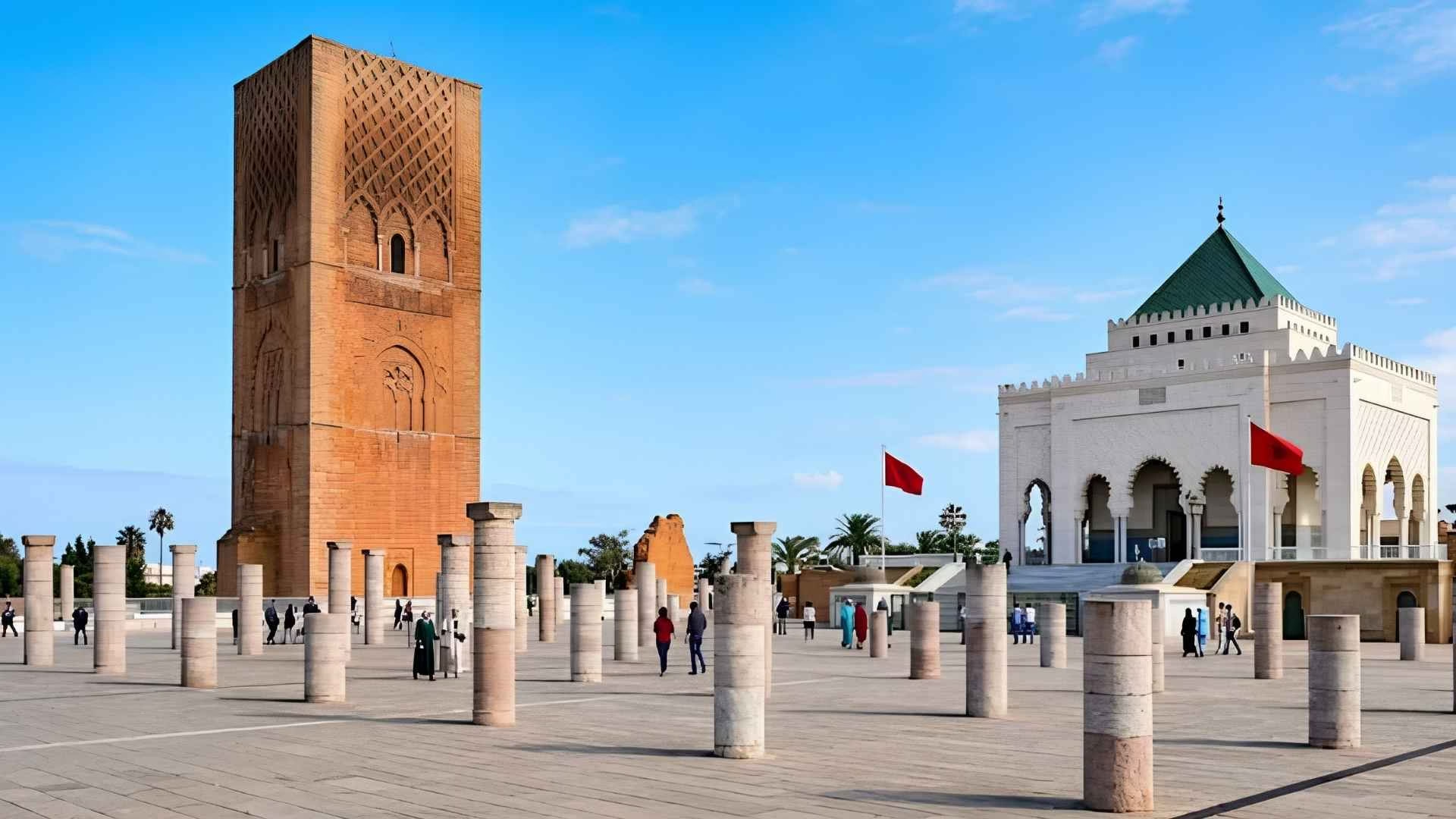
A minaret started in 1195 and never finished, meant to be the largest in the world. Across the esplanade, the mausoleum holds Mohammed V and Hassan II under a green-tiled roof, guarded around the clock.
Chellah Necropolis
A walled complex south of the centre, layering Roman ruins from Sala Colonia under a later Marinid royal burial ground. Storks nest on the highest walls each winter.
The Medina & Rue des Consuls
Smaller and calmer than the medinas in Fez or Marrakech. Rue des Consuls once housed foreign embassies; now it’s an artisan street known for handwoven Rabati rugs.
Andalusian Gardens & Mohammed VI Museum
Gardens planted by the French in the 1910s, a short walk from the Mohammed VI Museum of Modern and Contemporary Art, the country’s most significant contemporary art collection.
Rabat Beach & The Corniche
The city’s working beach, lined by a promenade where Rabat watches Salé light up across the river at sunset. Surf lessons run most mornings.
Tours That Visit Rabat
Itineraries below all include Rabat, whether as a single-day stop or part of a longer route through Morocco.
Planning Your Visit
Best Time To Go
March to June and September to November give the most comfortable weather. Summer turns hot, though the Atlantic breeze keeps it more bearable than inland cities. Winter stays mild during the day with cooler, wetter nights.
Getting To Rabat
Most international flights land in Casablanca, about an hour from Rabat by ONCF train or taxi. Rabat-Salé Airport handles regional and some European routes directly. CTM buses also connect Rabat to most major cities.
Getting Around
The Kasbah, medina and Hassan Tower area are all walkable from each other. A small tram links Rabat and Salé across the river, and metered petit taxis are cheap for longer hops.
What To Wear & Bring
Dress modestly, especially near the mausoleum and mosque exteriors. Comfortable shoes matter more than usual on the kasbah’s worn cobblestones, and a light layer helps once the sea breeze picks up in the evening.
Frequently Asked Questions About Rabat
Quick answers to what people ask us most before adding Rabat to their Morocco itinerary.
Is Rabat worth visiting?
Yes, particularly if you’ve already seen Marrakech or Fes and want a calmer comparison. Rabat’s medina is far less intense, and the kasbah’s clifftop setting over the Atlantic doesn’t really have an equivalent elsewhere in the country.
How many days do you need in Rabat?
One full day covers the main sights comfortably: the Kasbah, Hassan Tower, the mausoleum and the medina. Two days gives you room to add Chellah, the museum and a slower walk along the Corniche without rushing.
Is Rabat a good day trip from Casablanca?
Yes. The journey is roughly 1 hour each way, which makes Rabat one of the easiest and most rewarding day trips available from Casablanca, with enough sights to fill a full day without feeling rushed.
Can you visit Rabat and Casablanca in the same day?
It’s possible but tight, and most travelers prefer splitting them instead. A number of Casablanca-based tours combine both cities in a single long day if your schedule genuinely requires it.
What is Rabat known for?
Being Morocco’s political capital since 1912, the Kasbah of the Udayas, the unfinished Hassan Tower, and its 2012 UNESCO World Heritage listing recognizing the city’s blend of Almohad-era walls and French colonial planning.
Is Rabat safe for tourists?
Yes. As the seat of government and home to most foreign embassies, Rabat is heavily policed and generally considered one of the calmer, more orderly cities in Morocco. Normal travel precautions still apply, especially around bags and phones in busy medina lanes.
What’s the best time of year to visit Rabat?
Spring and autumn, roughly March through June and September through November, give the most comfortable mix of warm days and mild evenings, without the summer heat or the wetter stretches of winter.
Can you go inside the Royal Palace?
No, the Royal Palace itself is not open to visitors. You can view its gates and grounds from the public square outside, which is usually enough for photos and a sense of its scale.
Plan Your Trip To Rabat
Tell us your dates, group size and what you’d like to see, and we’ll suggest a route or work Rabat into a longer Morocco itinerary. Continuing on from here? We also run tours to Marrakech, Fes, Casablanca, Tangier and the Sahara.