
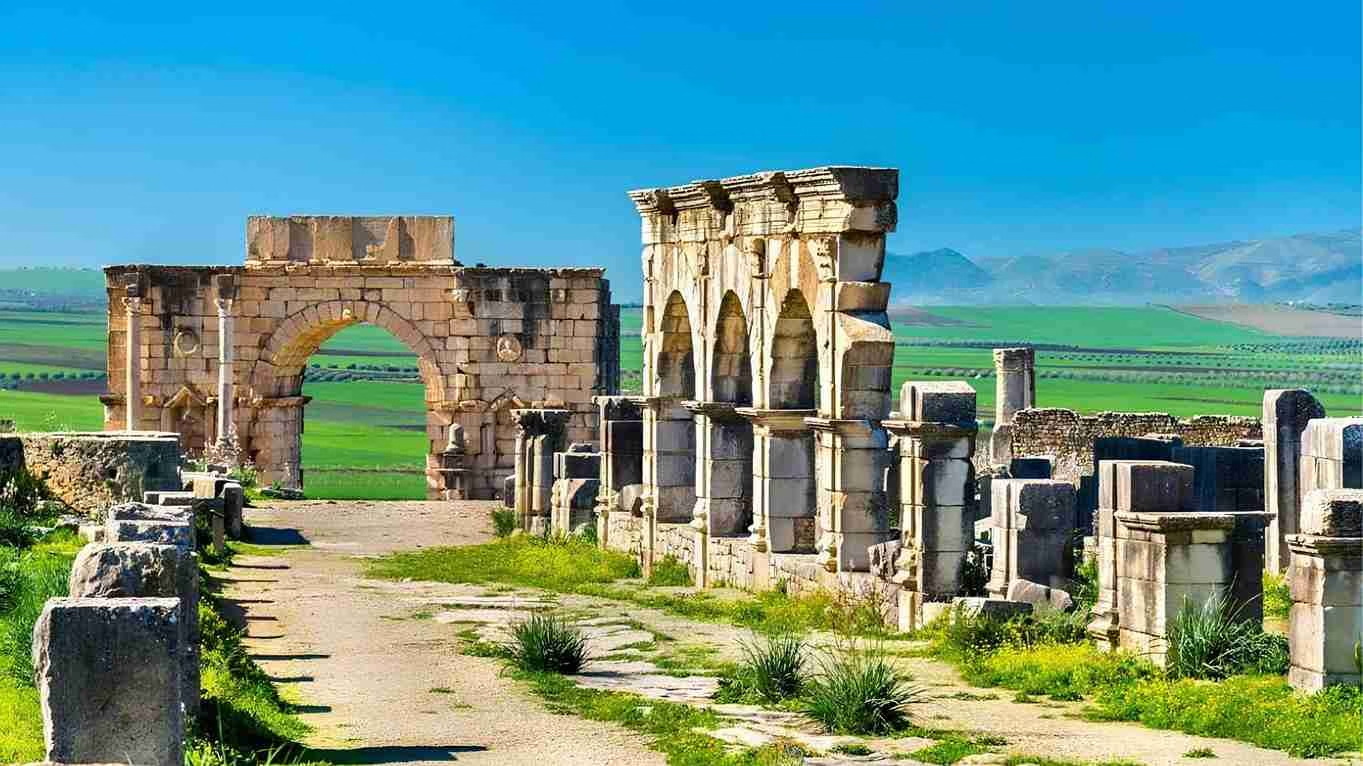
Volubilis
Cleopatra’s daughter ruled here. Cleopatra Selene II, born to Cleopatra VII and Mark Antony and raised in Rome after her parents’ defeat, was sent to govern Mauretania alongside her husband Juba II, and together they turned Volubilis into a capital good enough that Rome later made it the seat of an entire province. What’s left today is one of the best-preserved Roman cities anywhere in Africa: floor mosaics still in their original rooms, a triumphal arch built for an emperor who actually visited, and the outline of a city built for 20,000 people at the edge of an empire that, for two centuries, considered this corner of Morocco worth the effort.
The Roman City Cleopatra’s Daughter Helped Build
Volubilis existed as a Berber settlement for centuries before Rome ever took an interest, dating back to at least the 3rd century BC. Everything changed in 25 BC, when the emperor Augustus installed Juba II, a Romanized Berber prince, as king of Mauretania. Juba’s wife was Cleopatra Selene II, the only surviving daughter of Cleopatra VII and Mark Antony, raised in Rome after her parents’ defeat and married off to consolidate Roman influence over North Africa. Together they turned Volubilis into something closer to a second capital than a provincial town, importing Hellenistic art and Roman architecture into a city whose population remained overwhelmingly Berber.
Rome formally annexed Mauretania in 44 AD, after Juba and Cleopatra Selene’s son was assassinated under suspicious circumstances, and Volubilis became capital of the new province of Mauretania Tingitana. For the next two centuries the city prospered on olive oil, exporting it across the empire from more than thirty presses whose stone basins still sit where workers left them. At its height, Volubilis covered 42 hectares behind 2.6 kilometres of wall, home to perhaps 20,000 people, an unusually large and wealthy outpost for a city this far from Rome itself. Emperor Caracalla visited in person in 217, and the triumphal arch built to mark the occasion still stands near the city’s main street.
Roman administration collapsed here around 280, under pressure from local tribes, but the city didn’t empty out the way the date might suggest. People kept living among the ruins for centuries, and Idris I, the founder of Morocco’s first Islamic dynasty, actually based his headquarters at Volubilis itself in the late 700s before the dynasty’s capital moved a few kilometres away to what became Fes. The site’s real damage came later: an earthquake in the mid-1700s brought down what centuries of habitation hadn’t, and the Alaouite sultan Moulay Ismail had much of the remaining stone hauled off to build his palaces in Meknes, the same fate that befell parts of Marrakech’s El Badi Palace around the same period.
What survived the looting: the mosaics. Because most of them were floors rather than wall stone, they stayed buried under centuries of soil rather than getting hauled away, and many are still in their original rooms today. French archaeologists began serious excavation in 1915, using German prisoners of war as labour during the First World War, work that continued on and off for decades afterward.
What To See At Volubilis
Six places that move from a Berber settlement to a Roman province to an early Islamic capital, all on the same patch of ground.
The Triumphal Arch Of Caracalla
Built in 217 AD to mark an actual imperial visit, this is the structure most visitors picture when they think of Volubilis. Its original dedication honoured Caracalla and his mother, Julia Domna.
The House Of Orpheus
The largest residence on site, named for a mosaic of Orpheus charming animals with his lyre. A separate dolphin mosaic in the dining room and a private bathhouse with surviving plumbing hint at how wealthy this household was.
The Capitol & Basilica
The civic heart of the Roman city: a temple to Jupiter, Juno and Minerva alongside the basilica that once handled local justice and administration, both restored enough to suggest their original scale.
The Olive Presses
Stone basins and channels from the industry that actually paid for the city’s wealth. Volubilis exported olive oil across the empire, and the presses are easy to miss if a guide doesn’t point them out.
The House Of Venus
Mosaics here depict Diana surprised at her bath by the hunter Acteon, and the abduction of Hylas by water nymphs, two stories most visitors won’t recognise without a guide’s explanation, and won’t forget once they hear it.
Idris I’s Headquarters
A complex just outside the Roman walls identified as the base of Idris I, founder of Morocco’s first Islamic dynasty, in the late 8th century. It includes a private hammam, evidence that the site stayed in active use long after Rome left.
Tours That Visit Volubilis
Itineraries below all include Volubilis, whether as a half-day add-on or part of a longer Imperial Cities route.


Planning Your Visit
Best Time To Go
March through May and September through November bring mild temperatures for walking the largely unshaded site. Summer regularly passes 35°C with almost no shelter from the sun across most of the ruins; winter brings cold, occasionally rainy days.
Getting To Volubilis
About thirty minutes from Meknes and just over an hour from Fes by road, making it an easy half-day add-on to either city. There’s no train or bus service directly to the site, so most visitors arrive by taxi, rental car, or as part of a guided tour.
Visiting The Site
A marked path loops through the main excavated areas in about ninety minutes at a relaxed pace; a guide adds real value here, since unlabelled mosaics and ruins are easy to walk past without context. There’s little natural shade, so plan around the midday heat in summer.
What To Wear & Bring
Sturdy, closed shoes handle the uneven stone paths better than sandals. Sun protection is essential year-round given how exposed the site is, and water is worth carrying since options to buy more on-site are limited.
Frequently Asked Questions About Volubilis
What travelers actually search before adding Volubilis to a Morocco itinerary.
Is Volubilis worth visiting?
Yes, especially for travelers curious about Morocco’s history before Islam arrived. It’s the best-preserved Roman site in this part of Africa, with mosaics still in their original rooms rather than relocated to a museum.
Who was Cleopatra Selene II, and what is her connection to Volubilis?
She was the daughter of Cleopatra VII and Mark Antony, raised in Rome after her parents’ defeat and later sent to co-rule Mauretania with her husband, Juba II. Together they made Volubilis their capital in the late 1st century BC.
How far is Volubilis from Fes and Meknes?
About thirty minutes from Meknes and just over an hour from Fes, making it a common half-day add-on to a visit to either city rather than a destination travelled to on its own.
What happened to Volubilis after the Romans left?
People kept living among the ruins for centuries, and Idris I, founder of Morocco’s first Islamic dynasty, actually based his headquarters there in the late 700s before the dynasty’s capital moved on to Fes. An earthquake in the mid-1700s caused serious damage, and much of the remaining stone was later hauled away to build Meknes.
Why are the mosaics at Volubilis still in such good condition?
Because they were floors rather than standing stone, they stayed buried under centuries of soil instead of being looted for building material the way walls and columns were. Many remain in their original rooms today.
How long does it take to visit Volubilis?
Around ninety minutes covers the main excavated areas at a relaxed pace. A guide is worth hiring, since the mosaics and ruins carry little on-site labelling and lose most of their meaning without context.
Is there shade or shelter at Volubilis?
Very little. The site is largely open and exposed, so visiting outside the hottest midday hours in summer, or bringing sun protection regardless of season, makes a real difference.
What’s the best time of year to visit Volubilis?
March through May and September through November, avoiding summer heat that regularly passes 35°C across a site with almost no natural shade.