
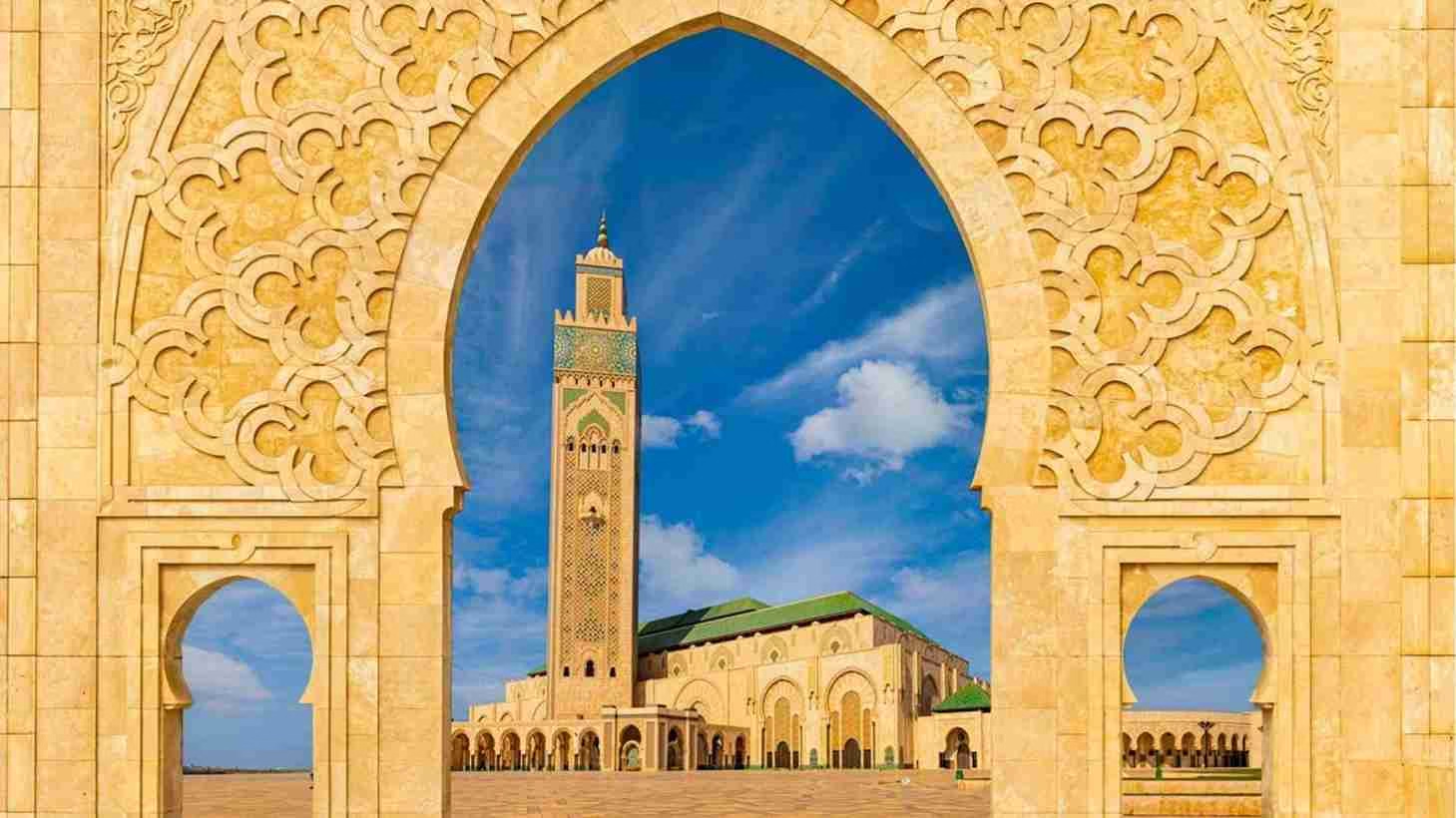
Casablanca
The 1942 film that made this city’s name famous worldwide was shot entirely on a Warner Bros. studio lot in California, not a single frame anywhere near the Atlantic coast it claims to show. The real Casablanca built its own legend anyway: French colonial planners laid out Art Deco boulevards here in the 1920s and 30s, and decades later King Hassan II built a mosque with a minaret taller than anything else in the country, part of it standing directly over the ocean. Morocco’s largest city and its main economic engine rarely tops anyone’s reason to visit, mostly because nobody told them what’s actually here.
The Youngest Old City In Morocco
Casablanca sits on the site of Anfa, a trading port that Berber and later Portuguese settlers occupied for centuries before earthquakes and conflict left most of it in ruins by the 1700s. Sultan Mohammed III rebuilt the town not long after and gave it the name it still carries in Arabic, Dar al-Baida, the white house, a near-exact match for the Spanish and Portuguese name, Casa Blanca, that traders had already been using. For more than a century afterward it stayed a modest port town, smaller than Tangier, Essaouira or Fes.
Everything changed once the French protectorate began in 1912. Resident-General Hubert Lyautey and urban planner Henri Prost picked Casablanca, not Rabat or Fes, to become the protectorate’s commercial showcase, and over the next four decades French and Moroccan architects filled it with wide boulevards, Art Deco apartment blocks, and a deliberately built “new medina,” the Habous Quarter, designed in the 1920s to look traditional while running on modern plumbing and electricity from day one. By the time Morocco regained independence in 1956, Casablanca had grown from a town of a few thousand people into the country’s largest city and its financial centre, a transformation that happened almost entirely within one lifetime.
The Hassan II Mosque, finished in 1993, is the clearest sign of what Casablanca became: its 210-metre minaret is the second tallest in the world, part of the structure stands directly over the Atlantic, and the project was paid for partly through a nationwide public subscription that asked ordinary Moroccans across the country to contribute. None of this has much to do with the film that made the city’s name internationally famous. Casablanca, the 1942 Bogart and Bergman classic, was shot entirely on a Warner Bros. studio lot in California; nobody involved in making it ever set foot here.
A small footnote: Rick’s Café, the bar from the film, never existed in real life either. The restaurant operating under that name in Casablanca’s medina today opened in 2004, deliberately built to resemble a set that was itself built on a Burbank backlot. Most visitors treat Casablanca as a one- or two-night stop before heading on to Marrakech or Fes, often because it’s also where their flight lands.
What To See In Casablanca
Six places that show what the city actually built for itself, separate from anything a 1940s film studio imagined.
Hassan II Mosque
One of the only mosques in Morocco open to non-Muslim visitors, with a prayer hall large enough to hold 25,000 people and a retractable roof that opens in about five minutes. Part of the floor is glass, looking straight down into the Atlantic underneath.
Habous Quarter (Nouvelle Medina)
A medina the French built from scratch in the 1920s, designed to look centuries old while running on modern infrastructure from day one. It now functions like any other old quarter, complete with spice stalls and a genuinely good weekend antiques market.
Place Mohammed V & The Art Deco District
The administrative heart of French-era Casablanca, ringed by Art Deco and Mauresque buildings put up in the 1920s and 30s. The Cinema Rialto, a few streets over, once hosted live performances by Édith Piaf and is still in operation today.
The Corniche & Ain Diab
A long Atlantic seafront promenade lined with beach clubs, seafood restaurants and a lighthouse, El Hank, that guided Allied ships into the harbour during the Second World War. Locals treat it as the city’s evening living room.
Rick’s Café
A restaurant that opened in 2004, deliberately built to resemble the bar from a film that was never actually shot here. The piano, the archways and the bar itself were all designed to match the Hollywood set rather than anything that existed in the real city.
Casablanca Cathedral (Sacré-Cœur)
A former Catholic cathedral built in 1930 in Art Deco style, deconsecrated after independence and now used for cultural exhibitions. Its bare concrete towers and geometric stained glass are some of the most photographed Art Deco details in the city.
Tours That Visit Casablanca
Itineraries below all include Casablanca, whether as a single-day stop or the start of a longer route through Morocco.


Planning Your Visit
Best Time To Go
March through June and September through November bring the most comfortable weather, though Casablanca’s Atlantic coastline keeps it milder year-round than inland cities like Marrakech or Fes. Summer rarely turns punishing here, and winter stays wet rather than genuinely cold.
Getting To Casablanca
Mohammed V International Airport is Morocco’s busiest, with more long-haul international routes than any other city in the country, which makes Casablanca the first and last stop for a large share of visitors regardless of where else they’re headed. Trains connect directly to Rabat, Marrakech, Fes and Tangier.
Getting Around
Casablanca is too spread out to walk between most sights; a tram line covers part of the centre, but taxis or arranged transport handle the rest. The Hassan II Mosque, the Corniche and the old medina each sit in different parts of the city, not within casual walking distance of each other.
What To Wear & Bring
Modest dress matters for the Hassan II Mosque tour the same as any religious site in Morocco. A light jacket helps along the Corniche even in summer, since the Atlantic breeze runs steadier and cooler here than inland.
Frequently Asked Questions About Casablanca
Quick answers to what people ask us most before adding Casablanca to a Morocco itinerary.
Is Casablanca worth visiting, or just a layover?
More than its reputation suggests, though it’s genuinely different from Morocco’s heritage cities. There’s no medina maze or ancient kasbah to chase here; the appeal is Art Deco streets, the Hassan II Mosque, and a modern, working city most visitors only pass through on the way somewhere else.
Was the movie Casablanca actually filmed in Casablanca?
No. The entire 1942 film was shot on a Warner Bros. studio lot in Burbank, California. Not one scene was filmed in Morocco, and the production team never visited the city.
Can non-Muslims visit the Hassan II Mosque?
Yes, on a guided tour, one of the few arrangements of its kind in Morocco. Tours run several times daily except during prayer times and the holy month of Ramadan, when the schedule changes.
Is Casablanca the capital of Morocco?
No, Rabat is. Casablanca is Morocco’s largest city and its economic capital, home to the country’s main port, stock exchange and busiest airport, but the seat of government has been in Rabat since 1912.
What is Casablanca known for?
The Hassan II Mosque, one of the largest in the world; a French-era Art Deco city centre built almost entirely in the 1920s and 30s; and, internationally, a 1942 film of the same name that was never actually shot there.
Is Rick’s Café from the movie a real place?
It is now. The original bar existed only on a Hollywood set, but a restaurant called Rick’s Café opened in Casablanca’s medina in 2004, built specifically to recreate the film’s atmosphere for visitors.
How many days do you need in Casablanca?
One full day covers the mosque, the Art Deco centre and the Corniche comfortably. Most multi-city itineraries treat it as a one-night stop, given how close Rabat and Marrakech both are.
What’s the best time of year to visit Casablanca?
March through June and September through November, though the Atlantic coastline keeps temperatures milder year-round than Morocco’s inland cities, making Casablanca a reasonably comfortable stop in most seasons.
Plan Your Trip To Casablanca
Tell us your dates and how much time you have around your flight, and we’ll suggest a route built around Casablanca or a longer tour. Continuing on from here? We also cover Rabat up the coast, Marrakech further south, and Fes and Tangier to the north.