
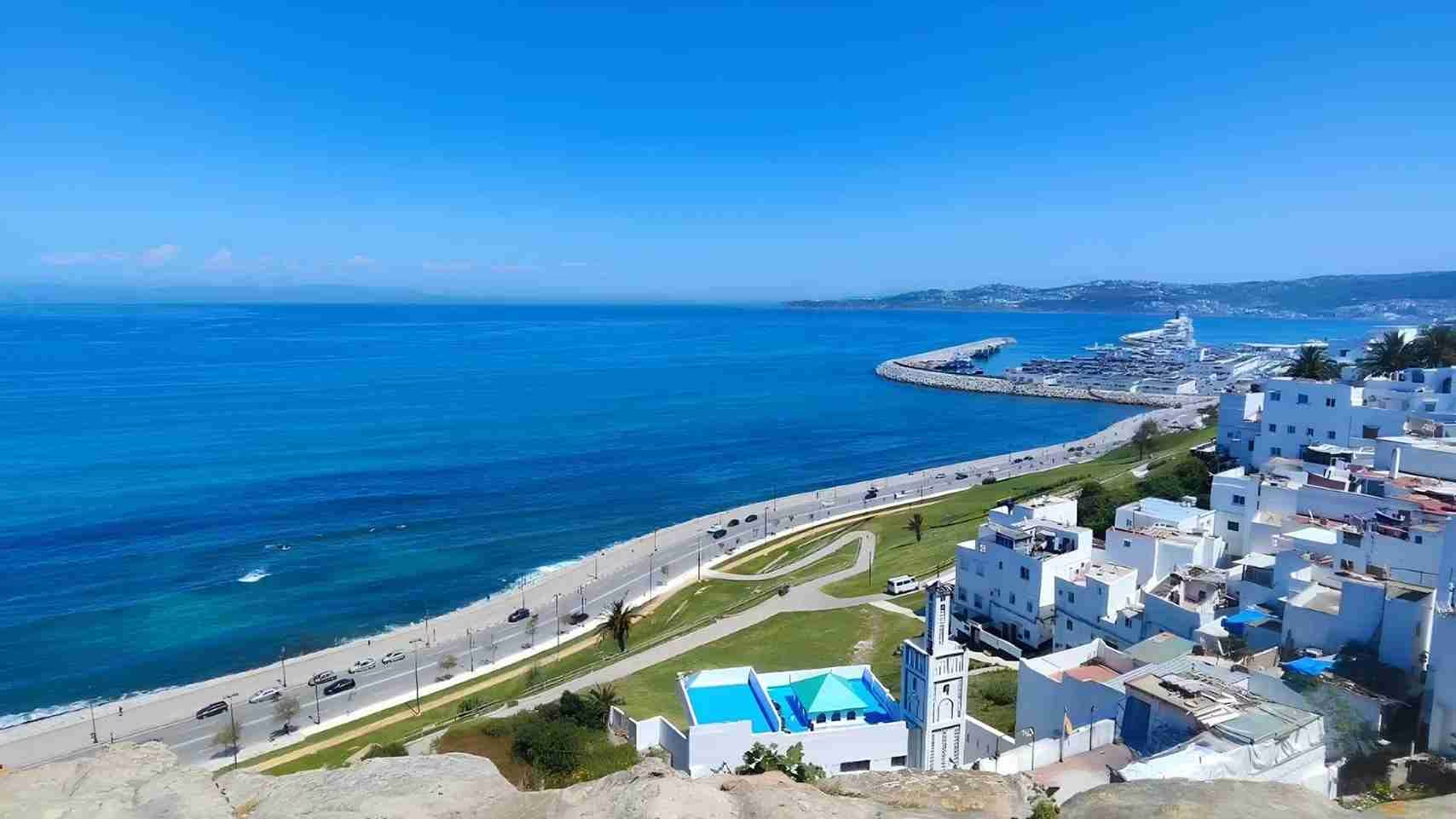
Tangier
Tangier sits at the one place in Morocco where the Atlantic and the Mediterranean meet, fourteen kilometres of water away from Spain on a clear day. That position made it impossible to leave alone: Phoenicians, Romans, Portuguese, Spanish and, for two decades in the 17th century, the English crown itself all held the city before Morocco took it back for good. Ibn Battuta, the most-travelled explorer of the medieval world, was born here in 1304 and still ranks ahead of Marco Polo on distance covered. By the 1950s, Tangier had become something else entirely: a tax-free international zone with no single government, drawing in writers, spies and bank accounts from everywhere.
The Only Moroccan City The English Ever Owned
Tangier has changed hands more times than almost any other city in Morocco. Phoenician traders founded it as Tingis around the 10th century BC; Romans, Vandals, Byzantines and Umayyad Arabs each held it in turn, and the Portuguese captured it outright in 1471. In 1662, it passed to England as part of Catherine of Braganza’s dowry when she married King Charles II, making Tangier briefly an English possession, garrisoned and fortified at considerable expense. The arrangement didn’t last: persistent sieges and the cost of holding a city Parliament had little real use for led England to abandon and partly demolish it in 1684, after which Morocco took the city back for good.
Tangier’s strangest chapter came centuries later. From 1923 to 1956, the city operated as an International Zone, administered jointly by a rotating committee of foreign powers rather than by Morocco or any single colonial authority, with no consistent tax code and famously loose enforcement of almost everything. That status turned it into a magnet for capital, smugglers and writers in roughly equal measure. Paul Bowles lived here for more than fifty years and set The Sheltering Sky in the desert beyond it; William S. Burroughs wrote much of Naked Lunch in a Tangier hotel room; Henri Matisse painted the city’s light in 1912 and 1913, years before any of that began. The American Legation, a building gifted to the United States by a Moroccan sultan in 1821, is still the only National Historic Landmark the US maintains outside its own borders.
What Tangier lost when the International Zone ended in 1956, decades of underinvestment, it’s spent the 21st century trying to win back. Tanger-Med, a deep-water port complex built largely after 2007, now ranks among the busiest container ports anywhere on the Mediterranean or in Africa. The Al Boraq line, launched in 2018, connects Tangier to Casablanca in just over two hours, the first high-speed rail service anywhere on the African continent. The combined effect has made Tangier, once treated as a smuggler’s afterthought, one of Morocco’s fastest-growing cities again.
Useful to know: Tangier is the only city on this site where a day trip to Europe is genuinely realistic; ferries to Tarifa, Spain take about an hour. Most multi-city itineraries pair it with Chefchaouen a couple of hours south, or use it as the start or end point for a longer route through Fes.
What To See In Tangier
Six places that cover nine centuries of foreign interest in one walkable city, plus the cape where Morocco runs out.
The Kasbah & Dar el Makhzen
The old fortified hilltop quarter, home to a 17th-century sultan’s palace turned museum that was once used by Portuguese and then English governors before Morocco reclaimed the city for good.
Hercules Caves & Cape Spartel
A cave mouth shaped, almost too neatly, like the outline of Africa, at the point where the Atlantic meets the Mediterranean. Legend places Hercules here resting before his final labour; geography places it at the continent’s northwesternmost tip.
The American Legation
A building gifted to the United States by a Moroccan sultan in 1821 and still the only National Historic Landmark the US government maintains outside its own borders. Inside, the rooms double as a quiet art and history museum tucked into the medina.
Ibn Battuta’s Tomb
A modest chamber in the medina marking where the most-travelled explorer of the medieval world is said to be buried, having covered more ground across Africa and Asia than Marco Polo ever did.
Grand Socco & The Medina
The wide square where the old walled city meets the modern one, ringed by cafés that have watched diplomats, spies and writers pass through for a century. The medina beyond it is compact enough to cover without a guide.
The Strait Of Gibraltar Viewpoint
On a clear day, the coast of Spain is visible across roughly fourteen kilometres of water, close enough that a ferry crossing takes about an hour. It’s one of the few spots in Morocco where another continent is genuinely in view.
Tours That Visit Tangier
Itineraries below all include Tangier, whether as a single-day stop or part of a longer route through northern Morocco.


Planning Your Visit
Best Time To Go
April through June and September through October bring mild temperatures without the strait’s strongest winds. Summer stays cooler than inland Morocco thanks to the Atlantic, though it can also turn windy enough to disrupt ferry schedules.
Getting To Tangier
The Al Boraq high-speed train connects Tangier to Casablanca in just over two hours, with stops in Rabat and Kenitra along the way. Tangier Ibn Battouta Airport handles domestic and European routes, and ferries from Tarifa or Algeciras in Spain take roughly an hour.
Getting Around
The medina and kasbah are walkable on their own, but Cape Spartel and the Hercules Caves sit far enough outside the centre to need a taxi or arranged transport. Petit taxis cover most in-town distances cheaply.
What To Wear & Bring
Bring a windbreaker regardless of season; the strait generates a steadier breeze than almost anywhere else in Morocco. A passport is worth carrying even for a short stay, given how easy it is to add a same-day ferry crossing to Spain.
Frequently Asked Questions About Tangier
What travelers actually search before adding Tangier to a Morocco itinerary.
Is Tangier worth visiting?
Yes, and for reasons that have little to do with the rest of Morocco’s heritage circuit. The appeal here is geography and history: the literal meeting point of two seas, a city that passed through more foreign hands than any other in the country, and a literary legacy most Moroccan cities can’t claim.
Was Tangier ever controlled by a European country?
Several, at different times. Portugal held it from 1471, Spain briefly through a dynastic union, and England from 1662 to 1684 after receiving it as part of a royal dowry. From 1923 to 1956 it operated as an international zone administered jointly by multiple foreign powers.
Can you visit Spain from Tangier as a day trip?
Yes, easily. Ferries to Tarifa take about an hour, making a same-day crossing to mainland Europe one of the more unusual day trips available anywhere in Morocco.
Why is Tangier associated with writers like Paul Bowles and William S. Burroughs?
Because of its status as an International Zone from 1923 to 1956, a period with loose laws and no single government, which drew artists, writers and exiles looking for a place outside normal rules. Paul Bowles alone lived there for more than fifty years.
Who was Ibn Battuta, and why does Tangier claim him?
He was born in Tangier in 1304 and went on to travel further than any other explorer of the medieval world, covering more ground across Africa and Asia than Marco Polo. His tomb, modest and easy to miss, sits in the medina he set out from at twenty-one.
How far is Tangier from Casablanca?
About 340 kilometres, covered in just over two hours by the Al Boraq high-speed train, the fastest rail service anywhere in Africa. By road, the same trip takes closer to five hours.
Is Tangier safe for tourists?
Generally yes, and noticeably calmer today than its old smuggling-port reputation suggests. The medina draws the usual city precautions around bags and persistent vendors, much like any of Morocco’s larger cities.
What’s the best time of year to visit Tangier?
April through June and September through October, avoiding both the strait’s strongest winter winds and the busiest summer ferry crossings.
Plan Your Trip To Tangier
Tell us your dates and whether a Spain day trip interests you, and we’ll suggest a route built around Tangier or a longer circuit. Continuing on from here? We also cover Chefchaouen a couple of hours south, Fes further inland, and Rabat and Marrakech down the coast.