
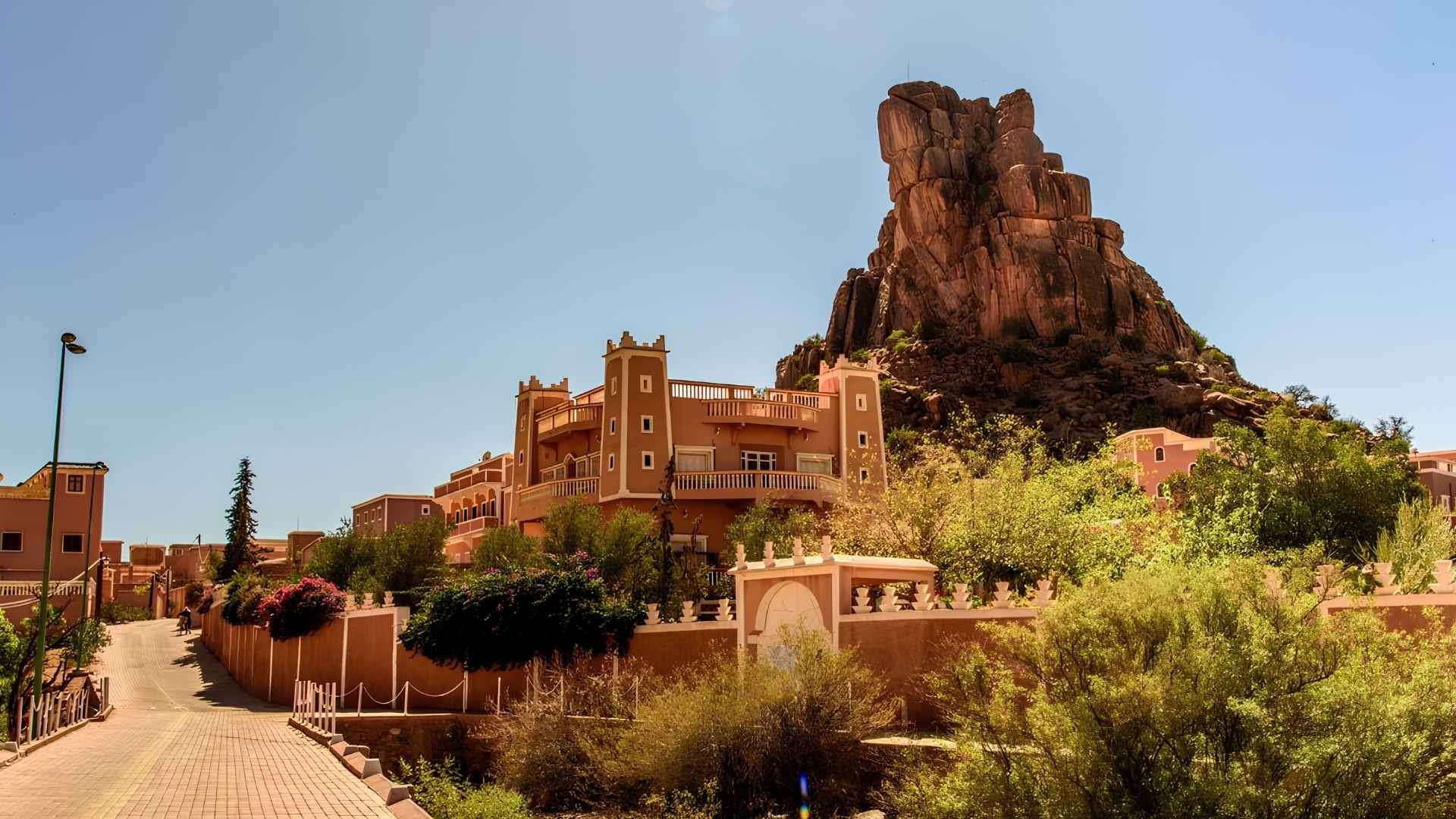
Taroudant
Long before Marrakech belonged to the Saadian dynasty, Taroudant did. The same rulers who would go on to build palaces and conquer most of Morocco used this walled town in the Souss Valley as their first capital in the early 1500s, ringing it in more than seven kilometres of rammed-earth walls before they ever turned their attention north. Locals still call it the grandmother of Marrakech, older, quieter, and largely passed over by the tour buses that fill its more famous descendant’s medina every day.
The Capital That Came Before Marrakech
Taroudant’s role in Moroccan history starts earlier than most visitors expect. Almoravid forces held the town from the 11th century, but it was the Saadian dynasty, in the early 1500s, that turned Taroudant into something more than a regional outpost: a base from which to organize resistance against Portuguese forces holding the Atlantic coast, and briefly, before the Saadians moved on to Marrakech, an actual capital. Sultan Mohammed ash-Sheikh had the current walls built during that period, more than seven kilometres of rammed earth punctuated by nine gates, among the oldest and best-preserved circuits of its kind anywhere in Morocco.
Taroudant’s fortunes faded once the Saadians relocated north, and the centuries that followed were rougher than the postcard version suggests; the Alaouite sultan Moulay Ismail emptied much of the town in 1687 after its residents resisted his rule from Meknes. The walls kept their defensive purpose well into the 20th century: Ahmed al-Hiba, a religious leader who refused to accept the French protectorate, used Taroudant as a base of resistance before his death there in 1919. None of that turbulence shows much on the surface today. What remains is a working agricultural market town that never developed the sprawling new city Marrakech built up outside its own walls, which is most of why Taroudant still looks the way it does.
Two souks run the daily rhythm of the medina: an Arab souk built around leather, jewelry and metalwork, and a Berber souk centred on food and household goods, each anchored to its own square. Getting here from Marrakech the dramatic way means crossing the Tizi n’Test pass, a narrower, steeper, far less travelled alternative to the Tizi n’Tichka route most desert-bound tours take, winding past Berber villages and walnut groves rather than the open plateau on the other side of the mountains.
A practical note: climbing onto the ramparts themselves is no longer permitted for safety reasons, and the September 2023 earthquake damaged sections of the wall that are still being repaired in places. Most visitors see Taroudant as a day trip from Agadir, about ninety minutes away, though staying a night lets the quieter evening medina show itself properly.
What To See In Taroudant
Six places that show why locals call this the grandmother of Marrakech, not a smaller copy of it.
The City Ramparts
More than seven kilometres of 16th-century rammed-earth wall with nine gates, among the best-preserved defensive circuits in Morocco. Walking the full loop takes about two hours; a horse-drawn calèche covers it at a more relaxed pace.
Place Assarag
The medina’s main square and the easiest place to sit with mint tea and watch the day unfold. Storytellers and musicians still gather here some evenings, the same way they have for generations.
The Arab Souk
Built around Taroudant’s reputation for fine metalwork, this souk specializes in silver jewelry, leather goods and carpets, with noticeably less pressure to buy than the equivalent souks in Marrakech.
The Berber Souk
A working market for spices, vegetables and household items, centred on Place Talmoklate. It’s the souk locals actually shop in day to day, rather than one shaped primarily around visitors.
The Kasbah Quarter
The former residence of the Saadian rulers, now a quieter residential district of crumbling walls and narrow lanes that hint at the scale of what stood here when Taroudant briefly governed Morocco.
A Local Hammam
Small neighbourhood bathhouses inside the medina, used by residents rather than built for visitors, offering a far less polished but more genuine version of the hammam experience sold in spa packages elsewhere.
Tours That Visit Taroudant
Itineraries below all include Taroudant, whether as a day trip from the coast or part of a longer southern route.


Planning Your Visit
Best Time To Go
March through May and September through November bring comfortable temperatures for walking the ramparts and souks at length. Summer in the Souss Valley regularly passes 40°C, with little relief until evening.
Getting To Taroudant
Agadir, about ninety minutes away on the N10, is the practical gateway, since Taroudant has no airport or train station of its own. The dramatic alternative from Marrakech crosses the Tizi n’Test pass, a narrower and slower mountain road than the more commonly used route further east.
Getting Around
The medina is compact enough to cover on foot, and a calèche ride around the rampart circuit is a popular, relatively inexpensive way to see the full scale of the walls without walking the entire two-hour loop.
What To Wear & Bring
Modest dress is appreciated in this more conservative, less tourist-oriented town than Marrakech or Agadir. Comfortable shoes help on the medina’s uneven surfaces, and small bills are useful for the souks and a calèche fare.
Frequently Asked Questions About Taroudant
What travelers actually search before adding Taroudant to a Morocco itinerary.
Why is Taroudant called the grandmother of Marrakech?
Because the Saadian dynasty used Taroudant as its first capital in the early 1500s, before relocating to Marrakech and building the city most visitors associate with that period. Taroudant came first, and looks the part: similar red ramparts, on a smaller and quieter scale.
Is Taroudant worth visiting?
Yes, particularly for travelers who’ve already seen Marrakech and want a calmer version of the same architectural style. There’s less to specifically check off here, but considerably less pressure from vendors and tour groups too.
How far is Taroudant from Agadir and Marrakech?
About ninety minutes from Agadir on a straightforward road, or roughly four hours from Marrakech via the Tizi n’Test pass, a slower and more dramatic mountain crossing than the route most desert tours use.
Can you walk on top of Taroudant’s city walls?
No, not anymore. Climbing the ramparts was once possible but has been restricted for safety reasons, and parts of the wall were damaged in the September 2023 earthquake. Viewing them from ground level or by calèche remains the standard way to see them.
What’s the difference between Taroudant’s two souks?
The Arab souk, near Place Assarag, focuses on jewelry, leather and metalwork; the Berber souk, near Place Talmoklate, handles everyday food and household goods. Locals use both regularly, unlike souks built mainly for visitors.
Who was Ahmed al-Hiba, and why is he connected to Taroudant?
A religious and political leader who refused to accept the French protectorate in the early 20th century, using Taroudant as a base of resistance until his death there in 1919. His story is a less-told chapter of Morocco’s colonial-era history.
Is Taroudant a good day trip from Agadir?
Yes, it’s one of the most common day trips from the coast, easily covered in a day with time for the ramparts, both souks and a meal in the medina.
What’s the best time of year to visit Taroudant?
March through May and September through November, avoiding Souss Valley summer heat that regularly passes 40°C.
Plan Your Trip To Taroudant
Tell us your dates and whether you’re coming from the coast or over the mountains, and we’ll fold Taroudant into a day trip or a longer southern route. Continuing on from here? We also cover Agadir on the coast and Marrakech across the Tizi n’Test pass.