
What a Night in a Sahara Desert Camp Is Really Like
Most articles about sleeping in the Moroccan Sahara are written by someone who did it once, on a press trip, in perfect October weather. They cover the stars, the tagine and the drums, and leave out the cold, the generator, and the walk to the toilet block at three in the morning. None of those things ruin the experience. At Morocco Best Trips we have taken several hundred guests through their first night in a desert camp.
Ready to book? Start from your arrival city
Every route below includes at least one night in a Sahara camp.
From Marrakech
- Merzouga Sahara Tour3 days · 2 nights›
- Sahara & Atlas Mountains6 days · 1 night in the dunes›
- Luxury Desert Trip4 days · 3 nights›
Where the Camps Actually Sit
The biggest gap between expectation and reality, and the one that colours everything else: the camps are not deep in the dunes. They sit along the western edge of Erg Chebbi, most within a few hundred metres of each other. From your tent door you will see a neighbouring camp. On a still night you may hear its music.
This is geology and logistics rather than deception. Water is trucked in daily, staff have to reach the site, and the dunes themselves move. If you arrive expecting to be alone within fifty kilometres, that expectation breaks in the first ten minutes and takes some of the magic with it. Let it break now, and what remains is remarkable for entirely different reasons.
One practical note before you go: everything past the meeting point runs on cash. There is no ATM, and cards are not accepted at camp for tips or extras.
The Camel, and the Best Hour of the Day
Nobody prepares you for the standing up. The camel is seated when you mount, and it rises back-end first, pitching you forward at an angle that briefly feels like the start of an accident. Hold the front bar, lean back, and it is over in three seconds.
The ride takes an hour to ninety minutes and it is not comfortable. The rhythm is a slow lateral roll, and by the fortieth minute most people’s inner thighs are making themselves known. Wear jeans or thick leggings, never shorts.
It is also the best hour of the trip. The late afternoon light is why photographers come to this part of Morocco at all, and the dunes shift from beige to apricot to a deep rust that no phone camera captures accurately.
If the Camel Is Not for You
Ask to go by 4×4 instead. Fifteen minutes, no extra cost, and you still arrive in time for sunset. We suggest this to anyone with back, hip or knee problems, anyone with small children, and anyone who simply does not fancy it. Tell us when you book and it is arranged quietly.
See That Light for Yourself
Our 3-day route from Marrakech reaches Erg Chebbi while the good light is still happening, not after dark, which is what happens when a driver sets off late.
View the 3-Day Private Sahara Trip, from €380 pp →Arriving, and the Dune Behind the Camp
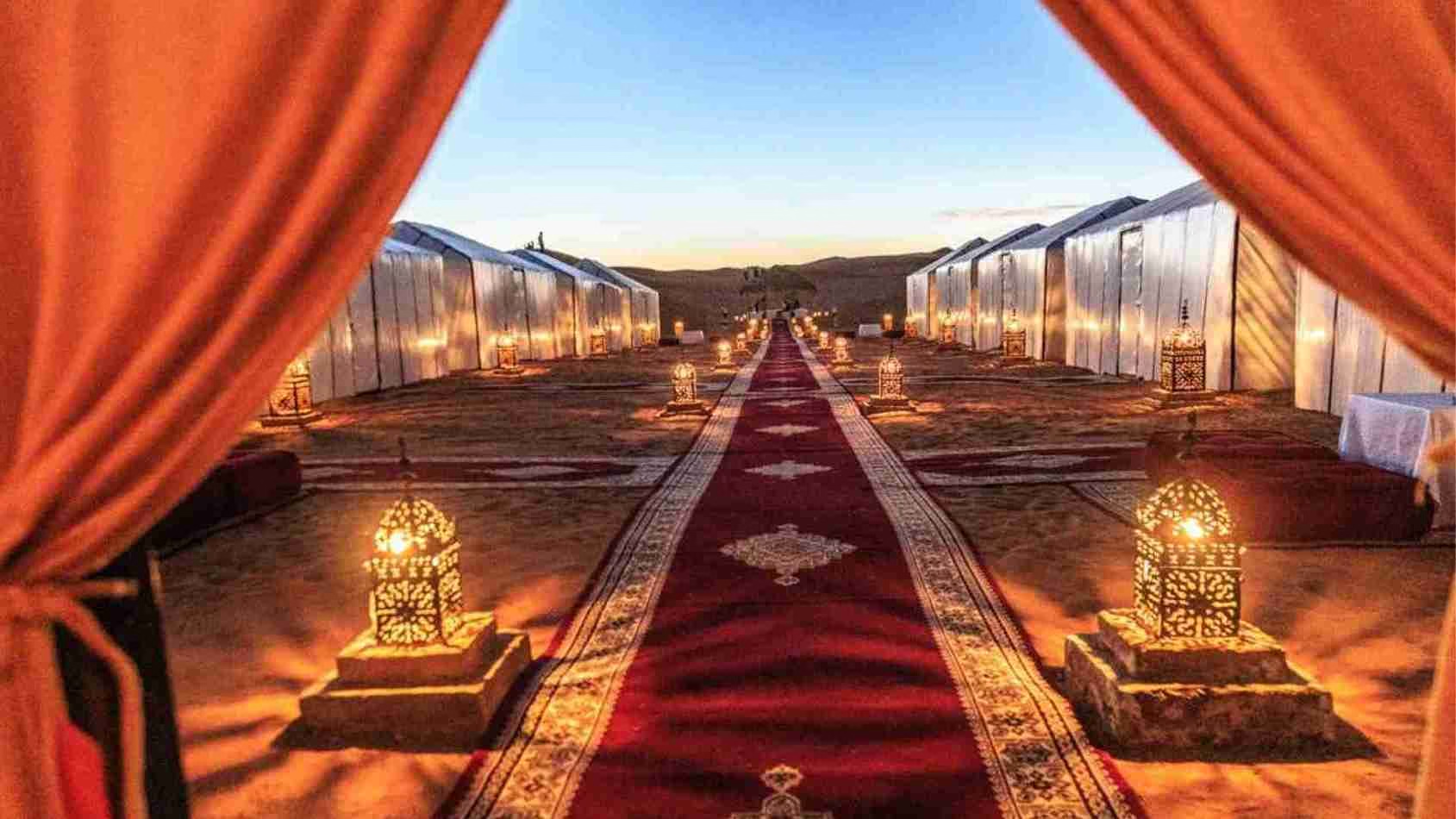
You come over a ridge and the camp is below: a horseshoe of canvas tents around swept sand, a dining tent at one end, a fire pit in the middle. Someone takes your bag, someone else pours mint tea from an improbable height. The pouring is partly performance and the tea is very sweet. Drink it anyway.
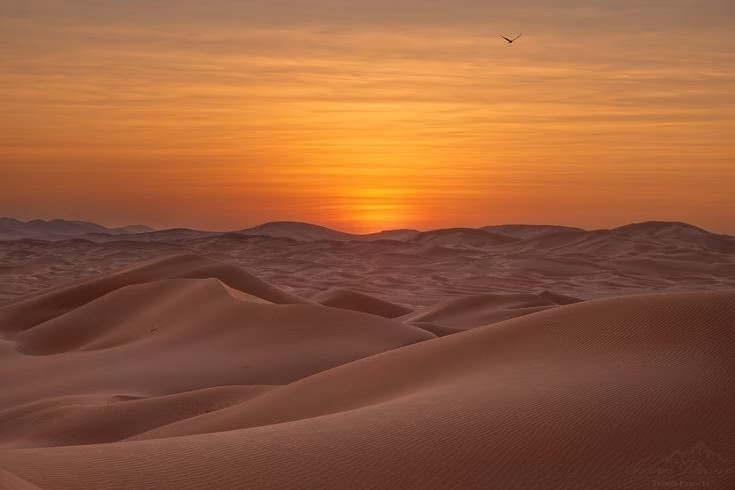
Then climb the dune behind the camp before you do anything else. Go barefoot, which is easier than shoes filling with sand. From the top, Erg Chebbi runs east toward Algeria in ridges that turn the colour of hot metal, then rose, then violet. The wind drops as the sun goes down and everyone goes quiet. Stay up there after the sun has gone, the fifteen minutes after sunset are better than sunset, and almost everybody walks down too early.
Dinner, and How Much of the Music Is Real
Dinner is served in the big tent on low tables and is almost always the same shape: soup, bread, a chicken or vegetable tagine, then melon or orange slices with cinnamon. It is good, and it is not gourmet. Anyone selling fine dining in the middle of a sand sea is selling you something that arrived in a cool box four hours earlier. Tell us about dietary requirements when you book.
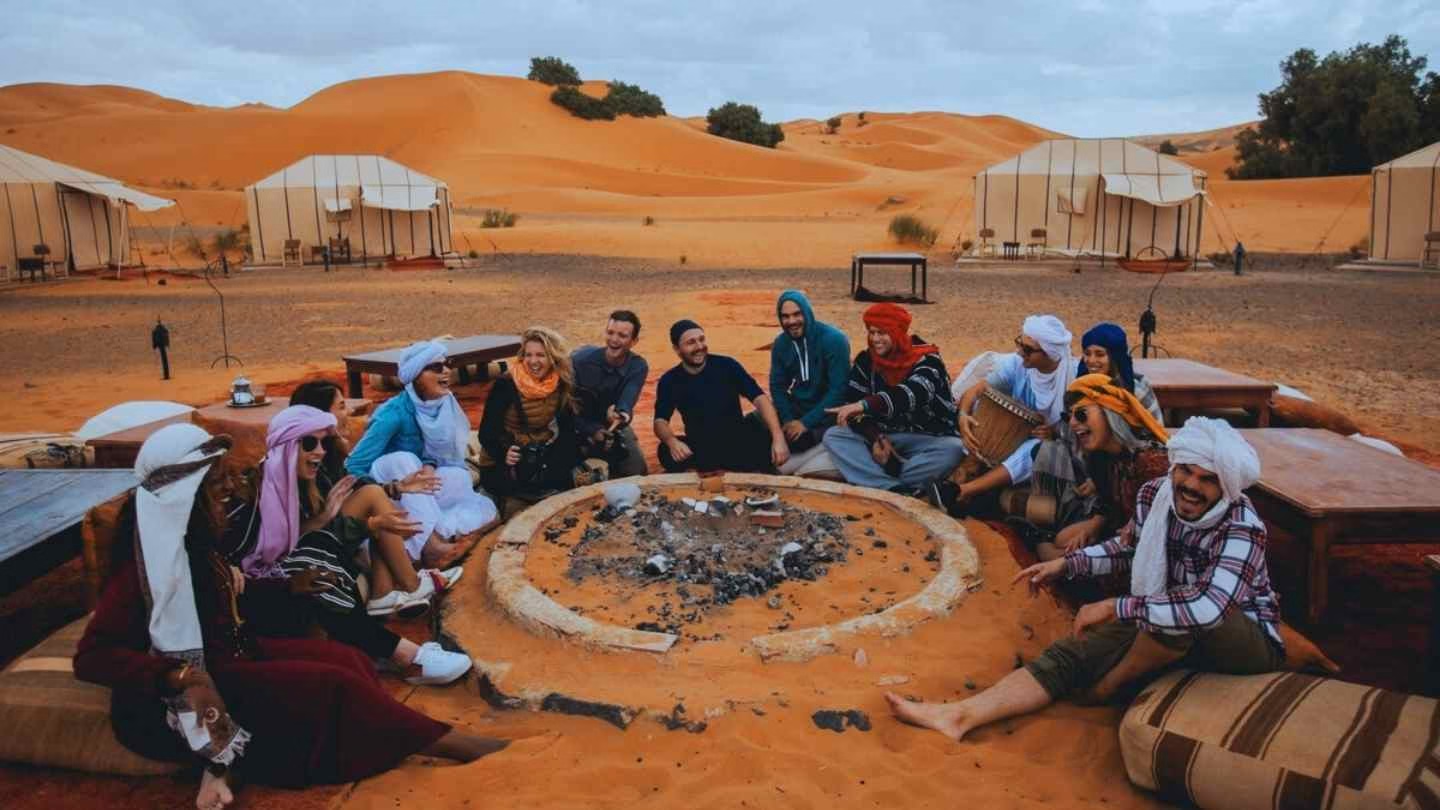
Afterwards the staff play drums around the fire. Is it staged for guests? Partly, yes, since it happens every night because you are here. Is it also real? Also yes. These are Gnawa and Amazigh rhythms the men grew up inside, and around the second or third song they stop performing and start playing for themselves. That is the part worth waiting for.
The Sky, and the One Thing to Check Before Booking
Walk five minutes out of camp, away from the lanterns, and lie down on the sand. Give your eyes a full fifteen minutes to adjust, and do not look at your phone during them, one glance at a screen resets the process. On a moonless night the Milky Way appears as a textured band with visible dark lanes running through it. Most guests have never seen this.
Check the moon phase before you book your dates. This is the most controllable variable in the whole trip and almost nobody thinks about it. A full moon lights the dunes silver and lets you walk without a torch, but it erases the stars entirely. If the sky matters to you, travel within a few days either side of a new moon.
Tell Us Your Dates, We Will Check the Moon
Send us the nights you are considering and we will tell you what the sky will look like, how cold it will be, and which camp we would put our own family in. No obligation.
Check My Dates →The Cold Nobody Warns You About
The desert gets cold at night. Every month of the year. A summer day at 45°C can fall to the high teens before dawn, and the swing feels more dramatic than the numbers suggest. Between December and February, nights at Erg Chebbi routinely drop to a few degrees above freezing.
Every camp provides heavy blankets and you will need them. Sleep in your clothes, socks included, and keep tomorrow’s layers inside the bed so they are not freezing when you put them on.
The other thing: at many camps the generator shuts off, often around eleven. Lights go out and charging stops. Ask before booking whether your camp runs power through the night. If you use a CPAP machine or need to charge medical equipment, tell us and we will place you at a camp with continuous power.
The Middle of the Night
You will probably wake up. Almost everybody does the first night. If your tent has no en-suite, this means finding your head torch and crossing a hundred metres of cold sand in properly dark conditions.
Go anyway, and stand still for a minute before heading back in. The silence in the Sahara in the small hours is unlike anywhere else. It is not quiet in the ordinary sense. There is no traffic hum, no aircraft, no insects, no leaves, nothing for sound to reflect off in any direction. Some people find it unnerving for the first minute. Most count it as the thing they remember longest.
Then you go back to bed, and it is cold, and you sleep badly, and it is worth it.
Sunrise
Sunrise ranges from around half past five in June to nearly eight in late December. The ridge directly behind camp is enough, a ten-minute climb with coffee in hand. The light comes up cold and blue-grey first and the colour arrives late, so do not give up after five minutes.
While you are up there, look at the sand near your feet. Overnight, beetles, foxes and lizards write tracks across the dunes that the wind erases by mid-morning. You are looking at a page that exists for about four hours a day.
Choosing Your Camp: What Actually Changes
This decision determines your night, and most people make it on price alone without knowing what they are trading. Prices are per person, per night, sharing.
Standard, from €25
Shared toilet block a short walk from the tents. Mattress on rugs with heavy blankets. Cold water only. Generator cuts in the evening. Fine for one night if you are reasonably robust, and the sky is identical from every tent in the erg.
Comfort, from €45
Raised bed, shared facilities closer to the tents, hot water during set hours, longer generator run. The middle option most couples choose, and what we recommend if you are staying two nights.
Luxury, from €95
Private en-suite inside your tent with hot water, proper bed frame and linen, power all night, heater in winter. Worth it if you are travelling with children, over sixty, or coming between December and February.
Our honest recommendation: one night, good health, Standard does the job. If any condition in the Luxury box applies to you, pay for the en-suite. That walk across cold sand in the dark is the whole difference, and it is bigger than the price gap suggests.
Two Nights in the Dunes
The first night goes on adjusting. The second is the one people describe to friends afterwards. Our 4-day route builds in both, with a full day in the erg between them.
View the 4-Day Two-Night Trip →Five Things Worth Knowing Before You Go
Sand gets into everything. Zip-lock bags for camera gear and chargers, and a scarf across your face on a windy day is equipment, not costume.
Wi-Fi may not really work. Some camps advertise it. What they have is a patchy phone signal and an optimistic router. Plan to be offline until midday tomorrow. Ask before booking if staying online is important to you.
Baby wipes. If your camp has no hot shower, these are your shower.
Two nights beats one. The first night is spent adjusting. The second is when you relax, and the difference is larger than the price gap.
July and August are hard. Daytime heat above 45°C is not an exaggeration. March to May and late September to November are the good months.
Who Should Not Do This
We would rather lose a booking than have somebody miserable in the dunes at midnight. Skip the overnight camp if you cannot sleep away from a bathroom, if a mobility issue makes uneven sand genuinely unsafe, or if you are travelling with an infant in December or January.
There is a good alternative and we will arrange it happily. Stay in a hotel in Merzouga with solid walls and heating, and do a sunset dune excursion with dinner before returning for the night. Same dunes, same light, same camel trek and fire, then a real bed. Ask us and we will not try to upsell you into a tent.
Sahara Desert Camp FAQ
How cold does a desert camp get at night?
Summer nights fall to the high teens Celsius, and December and January nights sit close to freezing. Heavy blankets are provided at every camp and better tents have heating in winter, but bring a warm layer whatever month you travel.
Are there real toilets at a Sahara camp?
Yes. Standard camps have a shared block with flush toilets a short walk from the tents. Luxury tents have a private en-suite with hot water inside the tent, which matters more than you would expect at three in the morning.
Can I skip the camel ride to camp?
Yes, and plenty of guests do. We can drive you in by 4×4 in around fifteen minutes at no extra cost, and you will still arrive in time for sunset. Tell us when you book rather than on the day.
Is there Wi-Fi or phone signal in the desert?
Assume not. Mobile signal at the camps is patchy and disappears entirely in parts of the erg. Some camps have Wi-Fi, but it is unreliable at best. Plan to be offline overnight.
Is sleeping in a desert camp safe?
Yes. Camps are staffed throughout the night and guides sleep on site. The genuine risks are sunburn, dehydration and cold nights, all avoidable with the right preparation.
Should we stay one night or two?
Two, if your schedule allows. The first night is spent adjusting to the environment and the journey. The second is the one guests describe to friends when they get home.
More Stories from MBT
Talk To The People Actually Running The Trip
Send us the nights you’re considering and we’ll come back with the moon phase, how cold it will actually get, and which camp tier we’d put our own family in. If a hotel in Merzouga suits you better than a tent, we’ll say so.