
What Is a Riad in Morocco?
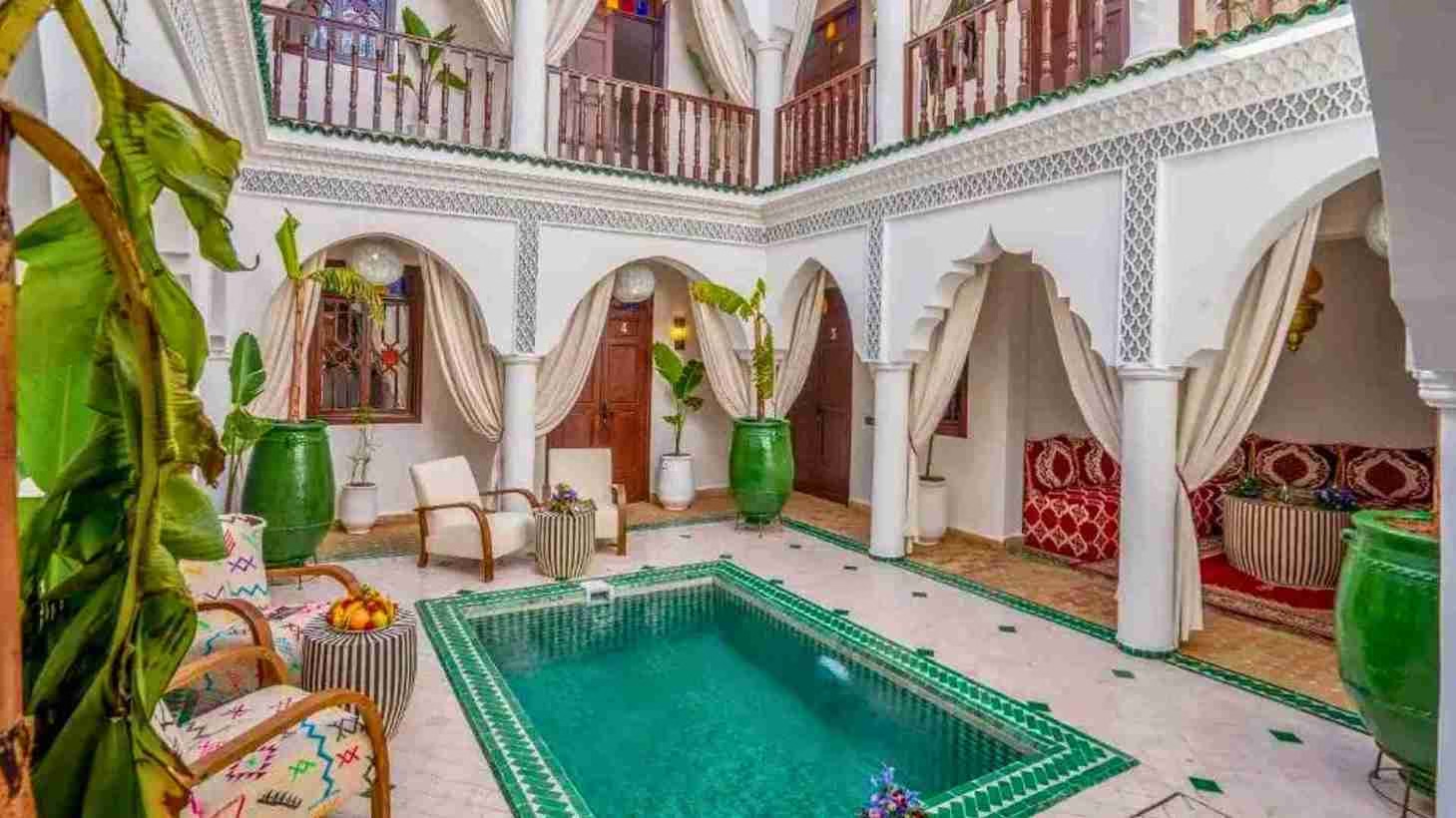
A riad is a Moroccan house built around an open central courtyard, with all the rooms facing inward and almost no windows onto the street. Most of the ones you can stay in are old family homes inside the walled medinas of Marrakech, Fes and Essaouira, restored and run as small guesthouses.
That is the whole definition, and every other page on this topic will now tell you about Andalusian influence and the word meaning garden in Arabic. Useful, but it will not help you decide anything. What follows is the part travellers actually need: what a riad stay feels like from the inside, and whether it is the right choice for your trip.
Our tours include riad stays in the medinas
Private routes with hand-picked riads in Marrakech, Fes and along the way.
From Marrakech
- Merzouga Sahara Tour3 days · 2 nights›
- Luxury Desert Trip4 days · 3 nights›
- Sahara & Atlas Mountains6 days · 1 night in the dunes›
The Door Is the Whole Point
Riads were built inward because the street was never meant to see in. From the alley you get a blank ochre wall and a wooden door, sometimes with a knocker, usually with nothing else. Nothing suggests what is behind it.
Then the door opens and you are standing in a courtyard open to the sky, with a fountain, orange trees, and four floors of carved plaster going up around you. That contrast is not a design flourish. It is the entire architectural idea, and it is why people remember their first riad years later.
It also means you cannot judge a riad from the outside, and photographs of the door tell you nothing. Judge them on the courtyard, the terrace and the room.
Riad or Dar? The Distinction Most Listings Ignore
Strictly, a riad has a planted garden courtyard, trees, greenery, usually a fountain. A Dar is the same inward-facing house without the garden, often with a smaller tiled patio instead.
In practice, almost every medina guesthouse now markets itself as a riad regardless. It is not worth arguing about, but it is worth knowing what to look for in the photos. A courtyard with mature orange or banana trees behaves differently from a bare tiled patio: it is cooler in July, quieter, and it is the difference between a courtyard you sit in and one you walk through.
We Choose the Riads Ourselves
Every riad on our routes is one we have stayed in. If you tell us you need a ground-floor room, a quiet corner, or somewhere a car can actually reach, we place you accordingly.
Tell Us What You Need →Four Things That Catch People Out
Your taxi cannot reach the door
Medina alleys are too narrow for cars. You are dropped at the nearest gate and walk the last stretch, sometimes five minutes, sometimes fifteen, over uneven ground with your luggage. Most riads will send someone with a handcart if you tell them your arrival time. Almost nobody thinks to ask. Pack lighter than you planned, and pick a bag with wheels you trust or straps you can carry.
They are genuinely cold from December to February
Thick walls and an open courtyard keep a riad beautifully cool in August. The same physics works against you in January, when the courtyard is open to the night sky and there is no central heating anywhere in the building. Good riads provide heaters, thick blankets and hot water bottles. Ask before booking rather than discovering it at midnight.
Sound travels straight up the courtyard
An open central well is an excellent amplifier. Breakfast conversation on the ground floor reaches the top floor clearly, and so does a group returning at one in the morning. If you sleep lightly, ask for a room away from the courtyard edge, and be aware that the smallest riads, six or eight rooms, are usually the quietest.
Stairs, and a lot of them
Riads are vertical: narrow, often steep staircases, uneven treads, rarely a lift. The best rooms are usually near the top and the roof terrace is above those. If anyone in your party has knees, hips or a heart that would rather not, say so when booking.
The Roof Terrace Is the Best Room in the House
Nobody puts this in the listing photos and it is the thing regulars book for. Almost every riad has a terrace, and in the hour before sunset it is the best place in any Moroccan city: swifts overhead, the Atlas visible from Marrakech on a clear day, the whole medina turning gold, and the call to prayer moving across the rooftops from one mosque to the next.
Riads, Kasbahs and a Night Under the Stars
Our routes move you from a medina riad to a valley kasbah to a Sahara camp, so you sleep somewhere different every night rather than in the same chain hotel three times.
See the 3-Day Private Route →Riad or Hotel?
Choose a riad if you want to be inside the medina and wake up in it, if you like small places where the staff learn your name by the second morning, and if the building itself is part of why you came to Morocco.
Choose a hotel in the Gueliz or Hivernage districts if you need a lift, a car at the door, a pool you can swim lengths in, or a gym. There is no shame in it, and for families with very young children or anyone with mobility limits it is often the better call.
Or do both. Two nights in a riad at the start and a hotel at the end is a common and sensible pattern, especially if you are flying out early, a taxi can reach a hotel door at four in the morning.
How to Read a Riad Listing Properly
Four checks before you book, whether you are booking through us or yourself.
Count the rooms. Six to ten is a riad. Thirty is a hotel that has borrowed the word.
Find the walking distance from the nearest vehicle access, not the distance from Jemaa el-Fnaa. Those are different numbers and only one of them matters with a suitcase.
Look for a photo of the actual room, not four angles of the courtyard. Courtyards are always beautiful. Rooms vary enormously within the same building.
Check for winter heating if you are travelling between November and March. If the listing does not mention it, ask.
If you are still deciding how the rest of the trip fits together, our guides to what a night in a Sahara desert camp is really like and what changes between a €95 and a €470 desert tour cover the two nights that follow.
Riad FAQ
What does riad mean?
It comes from the Arabic for garden, and refers to the planted courtyard at the centre of the house. In everyday use in Morocco today it simply means a medina guesthouse built around a courtyard.
What is the difference between a riad and a dar?
A riad has a garden courtyard with trees and planting. A dar is the same inward-facing house with a plain patio instead. Most guesthouses use the word riad either way.
Are riads good value?
Generally yes, because breakfast is almost always included, the staff-to-guest ratio is high, and many will cook dinner on request. What you are trading is space, lifts and pool size.
Are riads suitable for families?
Small children and steep open staircases need thought, and few riads have cots as standard. Many have family suites or will let you book the whole house, which works very well for a group.
Is it safe to walk to a riad at night?
The medinas are generally safe, but the alleys are dark and confusing on your first evening. Have the riad meet you on arrival, and take their card so you can show it to anyone if you lose your bearings.
Do riads have Wi-Fi and air conditioning?
Wi-Fi almost always, though thick walls weaken it away from the courtyard. Air conditioning is common but not universal, and worth confirming specifically if you are visiting in July or August.
More Stories from MBT
We’ll Match The Riad To The Traveller
Tell us your dates and who’s coming, and we’ll place you somewhere that fits, ground floor if stairs are a problem, a quiet corner if you sleep lightly, heating if you’re travelling in winter. We’ve stayed in all of them.