
Agadir
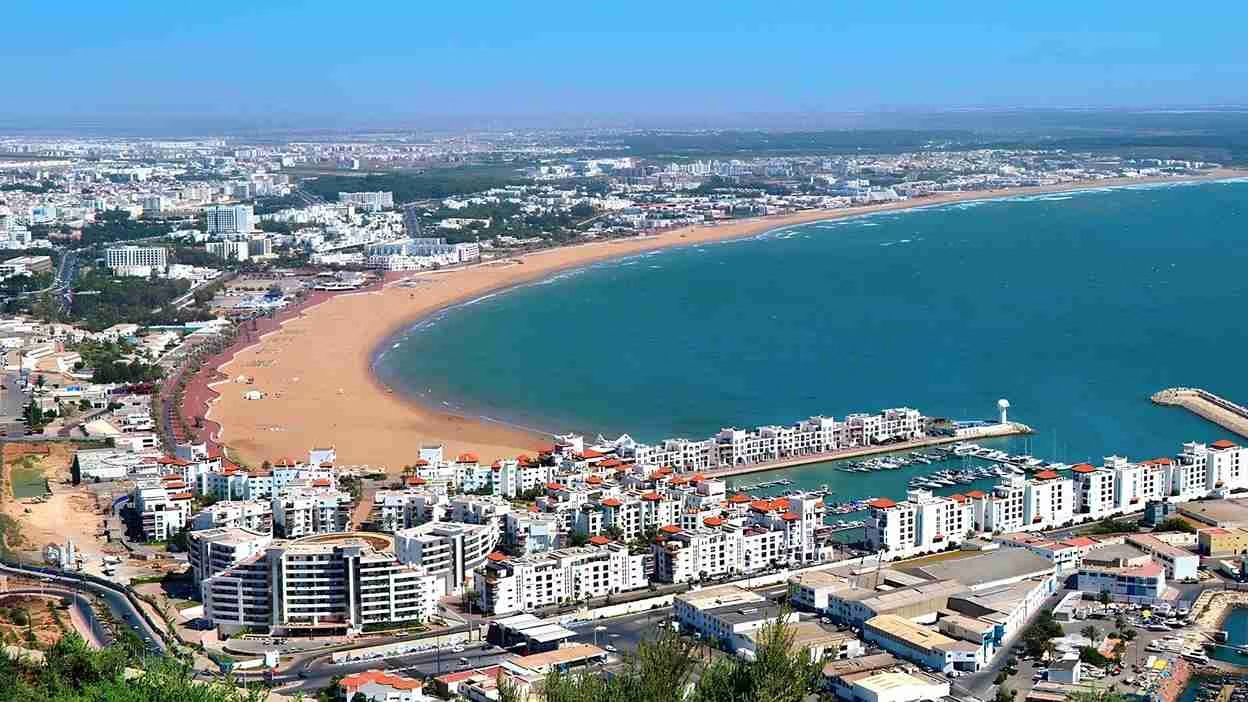
On the night of February 29, 1960, a moderate earthquake lasting about fifteen seconds killed somewhere between 12,000 and 15,000 people in Agadir city, close to a third of the city’s population at the time. King Mohammed V made the decision not to rebuild on the same ground: a new Agadir went up a short distance away, laid out with some of the first seismic-resistant building codes used anywhere in Africa, while the old hilltop kasbah was left standing in ruins as a memorial rather than restored. What exists today is essentially a city built from scratch in the 1960s, around a ten-kilometre beach and a climate mild enough that European visitors treat it as a winter sun destination almost as much as a summer one.
The Morning After Changed Everything Here
Agadir city before 1960 was a fishing port with a centuries-old kasbah on the hill above it, built by the Saadians in the 16th century to watch the bay. On the night of February 29, a magnitude 5.8 earthquake centred almost directly beneath the city collapsed roughly seventy percent of its buildings in under a minute. Most structures had never been built to withstand seismic shaking, and the death toll, estimated between twelve and fifteen thousand people, amounted to close to a third of the population at the time. It remains the deadliest earthquake in Moroccan history.
King Mohammed V made an unusual decision in the aftermath: rather than rebuild on the same ground, Agadir went up again a short distance south, designed from the start with seismic-resistant codes among the first applied anywhere in Africa. Wide boulevards, low-rise concrete buildings and a deliberate absence of the dense, narrow medina layout found elsewhere in Morocco were all safety choices as much as aesthetic ones. The result is a city that looks and functions differently from anywhere else on this site, closer in feel to a planned European resort town than to Fes or Marrakech.
The old kasbah was never rebuilt. Its ruins still stand on the hilltop above the new city, left deliberately untouched for six decades before a 2020–2024 restoration project stabilised the walls and added a raised walkway, so visitors can move through the site without setting foot on ground that, in places, is still considered a mass grave. What’s grown up around that memorial since is a different kind of city entirely: a ten-kilometre Atlantic beach, a climate mild enough to draw European visitors through the winter, and a surrounding region that produces nearly all the world’s argan oil, protected since 1998 as a UNESCO Biosphere Reserve.
Worth pausing on: the cable car up to Agadir Oufella is the easiest way to see the kasbah ruins and the bay below in one trip. Most visitors pair Agadir city with a day trip up the coast to Essaouira, about two and a half hours north.
What To See In Agadir City
Six places that explain a city built twice: once by the Saadians, once more by necessity.
Agadir Oufella & The Kasbah Ruins
What’s left of the 16th-century fortress that collapsed in 1960, restored between 2020 and 2024 with a raised walkway so visitors can move through the site respectfully. The view over the bay from the hilltop is the best in the city.
Souk El Had
One of Morocco’s largest markets, rebuilt after the earthquake and now spread across roughly six thousand stalls selling everything from argan oil to fresh produce. Locals shop here as routinely as tourists browse it.
Agadir Beach & The Marina
A ten-kilometre stretch of Atlantic sand calmer than the surf breaks further up the coast, backed by a promenade, cafés and a modern marina lined with yachts. It’s the reason most visitors come in the first place.
An Argan Oil Cooperative
Women-run cooperatives outside the city press argan oil using methods passed down for generations, inside a biosphere reserve that protects the only place on Earth the tree grows wild. Most cooperatives welcome visitors to watch the process firsthand.
Paradise Valley
A palm-lined gorge with natural rock pools about forty-five minutes inland, popular for swimming and cliff-jumping in warmer months. It’s a different kind of landscape than the coast just down the road.
Taghazout
A former fishing village turned surf destination twenty minutes north, with breaks suited to beginners and experienced surfers alike. It’s noticeably more laid-back than Agadir’s resort strip.
Tours That Visit Agadir City
Itineraries below all include Agadir, whether as a beach base or part of a longer route along the south coast.


Planning Your Visit
Best Time To Go
Agadir city stays mild enough to visit comfortably almost year-round, which is most of its appeal as a winter destination for European visitors. April through June and September through October avoid both the busiest summer beach crowds and the rare cooler winter evenings.
Getting To Agadir
Agadir Al Massira Airport runs direct seasonal routes from much of Europe, often cheaper and more frequent than flights to Marrakech in winter. The drive from Marrakech takes roughly four hours; from Essaouira, closer to two and a half.
Getting Around
The city centre, beach and marina are walkable from most hotels, but Souk El Had, Agadir Oufella and day-trip destinations like Paradise Valley or Taghazout all require a taxi or arranged transport.
What To Wear & Bring
Beachwear is fine along the seafront and in hotels, but cover up for Souk El Had and any inland village visit. Reef shoes help at Paradise Valley’s rock pools, and sunscreen matters here even in what counts locally as winter.
Frequently Asked Questions About Agadir
What travelers actually search before adding Agadir city to a Morocco itinerary.
Is Agadir city worth visiting?
Yes, though for different reasons than Morocco’s heritage cities. There’s little medieval architecture left to see here; the appeal is a long sandy beach, a mild year-round climate, and easy access to surf towns and argan oil country along the coast.
Why was Agadir rebuilt somewhere else after the earthquake?
King Mohammed V chose to rebuild the city a short distance from the original site rather than reconstruct directly over the ruins, partly for safety and partly out of respect for the scale of loss at the original location.
Can you visit the old kasbah ruins in Agadir?
Yes, Agadir Oufella reopened to visitors after a 2020 to 2024 restoration project. A raised walkway lets you move through the site without walking directly on ground still considered, in places, a mass grave.
What’s the best way to get up to the kasbah?
A cable car runs from the city up to Agadir Oufella, a quicker and easier option than the hiking trail, which also reaches the top but takes considerably longer in the heat.
Is Agadir a good base for visiting other parts of Morocco?
It works well for the coast and the south: Essaouira, Taghazout, Paradise Valley and Taroudant are all reachable as day trips. It’s less central for reaching Marrakech, Fes or the Sahara, which all sit several hours away.
What is argan oil, and why is it associated with Agadir?
Argan oil comes from the kernels of a tree that grows wild almost nowhere outside southwestern Morocco. The region around Agadir holds most of the world’s argan forest, protected since 1998 as a UNESCO Biosphere Reserve, and several women-run cooperatives near the city press and sell it.
Is Agadir good for surfing?
Agadir’s own beach is calmer and better suited to swimming than surfing. Taghazout, about twenty minutes north, is the region’s real surf destination, with breaks for both beginners and experienced surfers.
What’s the best time of year to visit Agadir?
Almost any time works, which is the city’s main selling point. April through June and September through October balance warm days against smaller crowds, while even winter stays mild enough for a beach holiday.