
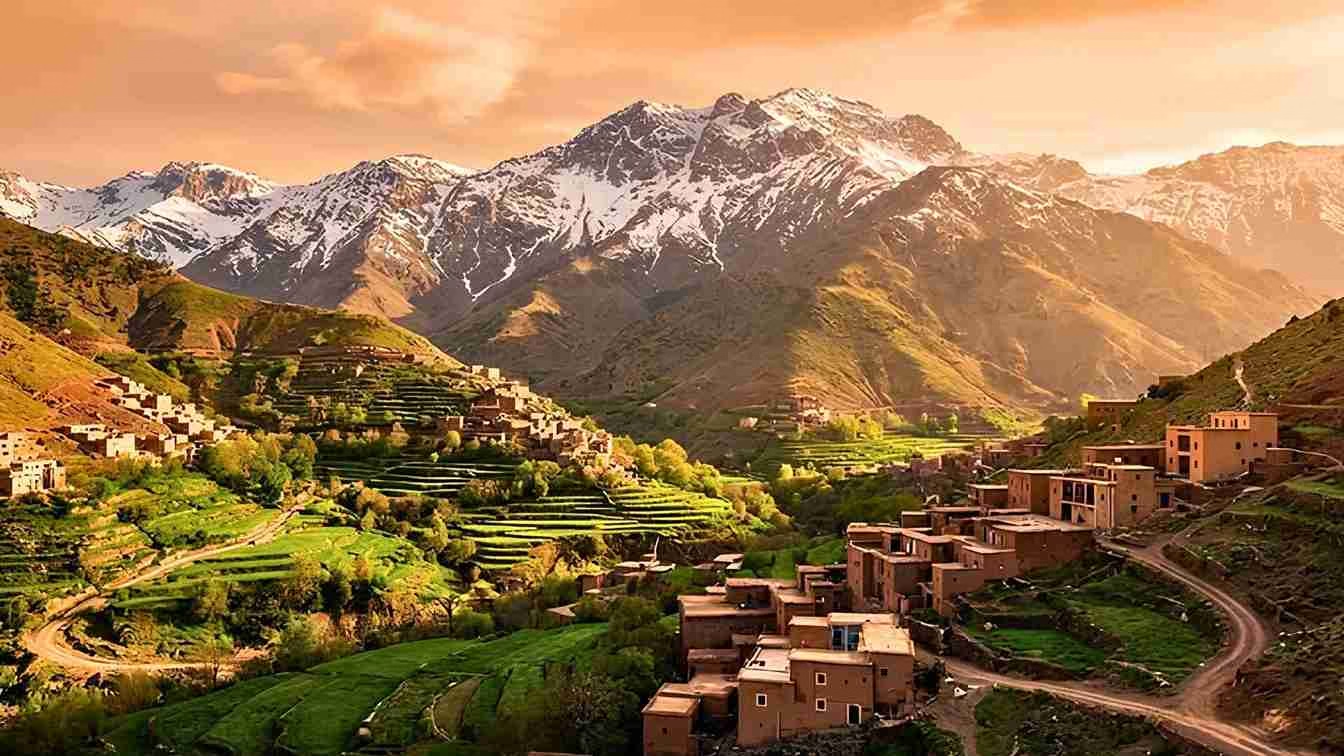
Atlas Mountains
The High Atlas is the wall that decides what Morocco looks like on either side of it: green valleys and snowmelt rivers to the north, the start of the Sahara to the south. Jebel Toubkal, at 4,167 metres, is the highest point in North Africa and sits less than two hours from Marrakech by road, close enough that a morning in the medina and an afternoon among walnut orchards and Amazigh stone villages happen on the same day for a lot of travelers. The mountains have their own architecture, their own language, and, since a 2023 earthquake struck the region hard, their own ongoing rebuilding, separate from anything happening in Morocco’s cities.
The Range That Splits Morocco In Two
The High Atlas runs roughly east to west across central Morocco, the tallest stretch of a range that continues another two thousand kilometres into Algeria and Tunisia. It formed from the same collision of tectonic plates that pushed up the Alps, and the result is abrupt: snow-capped granite peaks rising directly out of valleys that, a few hours’ drive south, give way to the edge of the Sahara. Jebel Toubkal, at 4,167 metres, is the highest point not just in Morocco but in North Africa, and it sits inside Toubkal National Park, a protected zone of glacial valleys, juniper forest and scree slopes that few visitors ever associate with a country better known for its coastline and deserts.
What lives in these valleys has stayed distinct from the rest of the country for a reason: until paved roads reached villages like Imlil in the late 20th century, much of the High Atlas was reachable only on foot or by mule. That isolation preserved Tashelhit, the Amazigh language spoken here rather than Arabic, along with building methods suited to steep ground and limited material, stone and packed earth houses stacked one above another up a hillside, flat roofs doubling as a neighbour’s terrace, and seguias, hand-dug irrigation channels, still carrying snowmelt to terraced barley fields and walnut orchards the way they have for generations.
Imlil, about ninety minutes south of Marrakech by road, has grown into the main staging point for all of this: mule rental, mountain guides and gear shops cluster around a village that, a generation ago, had none of it. A 6.8-magnitude earthquake struck this part of the High Atlas in September 2023, hitting stone villages across the Al Haouz region hardest. Rebuilding is still visible in places, and it’s worth knowing the mountains you’re walking through are recovering from something recent, not just photogenic.
Worth flagging: a licensed mountain guide has been mandatory for the Toubkal ascent since 2010. Most visitors arrange both the guide and the route as part of a day trip or trek from Marrakech rather than independently at the trailhead.
What To Do In The Atlas Mountains
Six ways to experience the range, from an easy valley walk to the summit push, none requiring more than a day from Marrakech to begin.
Day Hikes Around Imlil
Loop trails through walnut groves to villages like Aroumd or Tamatert, manageable without trekking experience and usually done with a local guide hired on arrival rather than booked in advance.
The Toubkal Summit Trek
The standard route to North Africa’s highest point, overnighting at a refuge near 3,200 metres before a pre-dawn push to the summit. No technical climbing is required in summer, though crampons matter in winter snow.
Ourika Valley
A river valley closer to Marrakech than Imlil, known for roadside walnut stalls, a Berber pottery cooperative, and a set of waterfalls near Setti Fatma reached by a short scramble upriver.
Tizi n’Tichka Pass
The main road over the High Atlas toward Ouarzazate, climbing past 2,260 metres through hairpin bends and roadside Berber markets. Most overland trips toward the desert cross it without stopping long enough to take it in.
Staying In A Berber Guesthouse
Family-run gîtes in villages like Imlil or Aroumd, where a home-cooked meal and a terrace view replace anything resembling a hotel. Most mountain stays are arranged this way rather than through standard hotel booking.
Oukaimeden Ski Resort
Africa’s highest ski resort, roughly an hour and a half from Marrakech, with a short season usually running from December through March depending on snowfall. Outside ski season, the same slopes draw hikers and mountain bikers.
Tours That Visit The Atlas Mountains
Itineraries below all include the Atlas Mountains, whether as a single day from Marrakech or a multi-day trek.


Planning Your Visit
Best Time To Go
April through October suits the Toubkal summit trek, once winter snow and ice clear from the upper trails. Lower valleys like Ourika and Imlil are walkable year-round, though winter brings snow above roughly 2,500 metres and the coldest nights anywhere in Morocco.
Getting To The Atlas Mountains
Imlil is about ninety minutes from Marrakech by grand taxi or private transfer; there’s no direct bus to the village itself, only to Asni, seventeen kilometres short. Ourika Valley and the Tizi n’Tichka pass are both reachable by the same routes used for day trips and onward desert travel.
Guides & Permits
A licensed mountain guide has been mandatory for the Toubkal ascent since 2010, arranged in Imlil or in advance through a tour operator. Lower valley walks don’t legally require a guide, though hiring one locally is standard practice and supports village economies directly.
What To Pack
Layers matter more here than almost anywhere else in Morocco, since the temperature swing between a sunny afternoon and a 3,000-metre night can exceed 20°C. Sturdy footwear is essential on the rocky trails, and winter trekkers need crampons and warm gear regardless of how mild Marrakech feels below.
Frequently Asked Questions About The Atlas Mountains
Quick answers to what people ask us most before adding the Atlas Mountains to their Morocco trip.
Do you need to be an experienced hiker to visit the Atlas Mountains?
No. Valley walks around Imlil and Ourika suit almost any fitness level, and even the Toubkal summit trek requires no technical climbing skills in summer, just solid stamina and a guide. Winter ascents are a different matter and demand real mountaineering experience.
How long does it take to climb Mount Toubkal?
Most people climb it over two or three days: a first day’s walk to a refuge near 3,200 metres, then a pre-dawn summit push and descent the next morning. Adding a third day spreads the effort out and leaves room for bad weather.
Is a guide required to hike in the Atlas Mountains?
For Toubkal specifically, yes, a licensed guide has been mandatory since 2010. For lower valley walks around Imlil or Ourika, a guide isn’t legally required, though most visitors hire one locally anyway for navigation and language.
What language do people speak in the Atlas Mountains?
Tashelhit, an Amazigh (Berber) language distinct from the Arabic spoken in Morocco’s cities. Many guides and guesthouse owners also speak French and basic English, but Tashelhit remains the everyday language in most mountain villages.
Were the Atlas Mountains affected by the 2023 earthquake?
Yes, significantly. The September 2023 earthquake was centred in the High Atlas and hit villages across the Al Haouz region particularly hard. Tourism in the main trekking areas has continued, though rebuilding is still visible in places.
Can you visit the Atlas Mountains as a day trip from Marrakech?
Yes, both Imlil and the Ourika Valley work well as single-day excursions, roughly ninety minutes each way. Staying overnight adds time for a longer hike or simply a quieter mountain evening without the return drive.
Is there skiing in Morocco?
Yes, at Oukaimeden, Africa’s highest ski resort, about ninety minutes from Marrakech. The season is short and depends heavily on snowfall, typically running from December through March.
What’s the best time of year to visit the Atlas Mountains?
April through October for the Toubkal summit trek, once the upper trails clear of ice. Lower valleys are accessible year-round, though winter brings snow above roughly 2,500 metres and the coldest temperatures anywhere in Morocco.
Plan Your Trip To The Atlas Mountains
Tell us your fitness level and how many days you have, and we’ll suggest a valley walk, a Toubkal trek, or a route that folds the mountains into a longer trip. Continuing on from here? We also cover Marrakech, the road onward to Ouarzazate and Ait Ben Haddou, and the Sahara itself at Merzouga.