
Ifrane
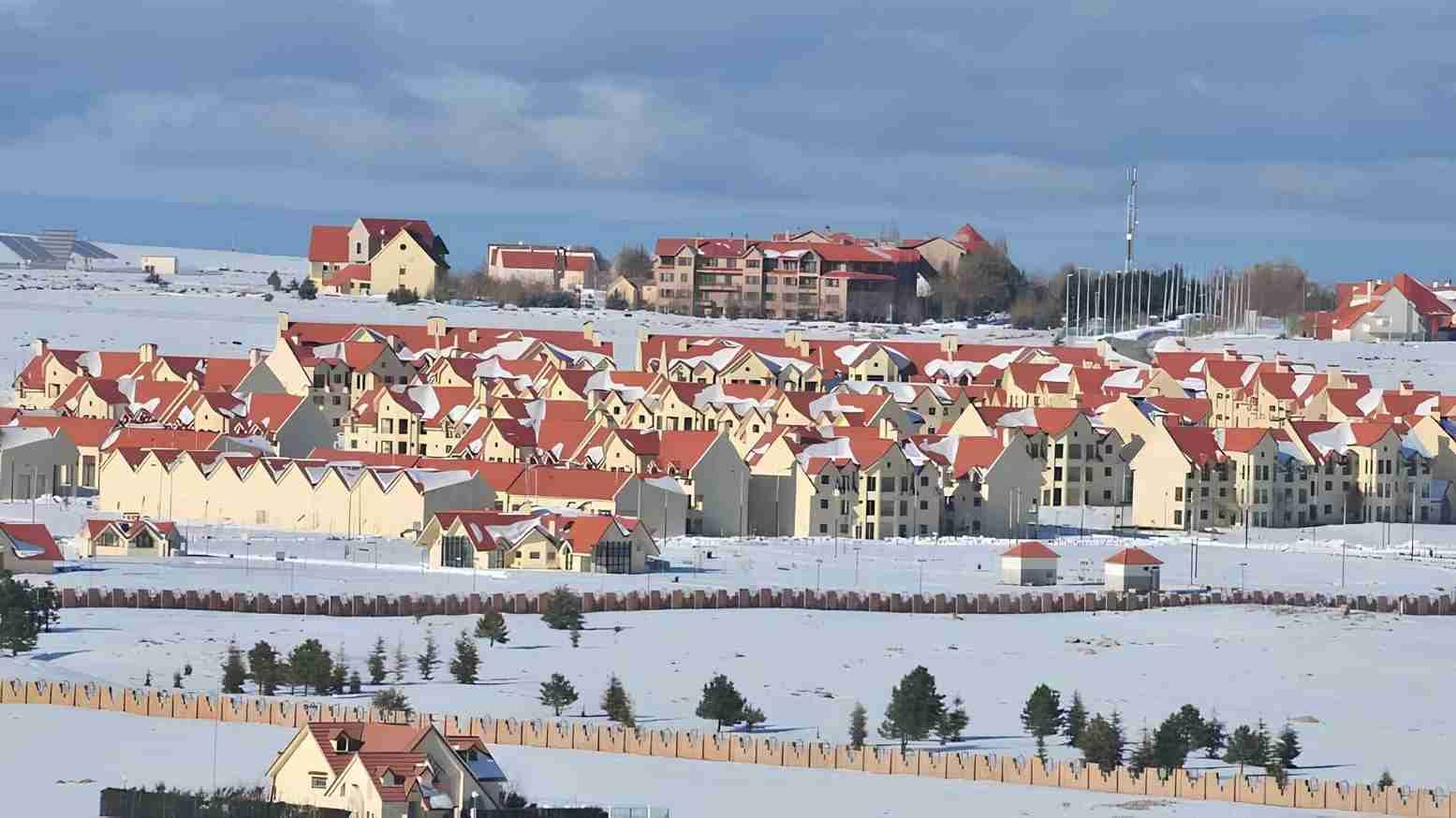
Ifrane holds Africa’s coldest temperature on record, -23.9°C, set one February night in 1935, in a country most people picture as permanently hot. French administrators built the town from scratch starting in the late 1920s as a hill station, a deliberate retreat from summer heat modeled on European garden cities, with sloped red-tile roofs and stone chalets that look almost nothing like a Moroccan medina on purpose. The name itself predates any of that: Ifrane comes from the Amazigh word for caves, after dwellings carved into the valley walls long before the French ever arrived. What’s grown up since is part ski town, part university campus, and part royal retreat, a genuinely different kind of Moroccan town built around being cold rather than hiding from heat.
The Moroccan Town That Looks Nowhere Else In Morocco
People lived in this part of the Middle Atlas long before Ifrane existed as a planned town. The name comes from the Amazigh word ifri, meaning cave, and a community known as Zaouiat Sidi Abdeslam settled in the valley below the current town centre as early as the 16th century, living in dwellings carved directly into the limestone. Those caves are still there today, repurposed over the generations as storage and animal shelters once people eventually built houses above ground.
The Ifrane most visitors actually see started in the late 1920s, when the French protectorate built it from nothing as a hill station, a planned retreat where colonial administrators could escape the summer heat of Fes and Meknes. Mandated green space, curving tree-lined streets and sloped, red-tiled stone chalets gave the town a deliberately European look, the opposite approach to the deliberately “old-looking” planned medina the French built around the same era in Casablanca. The result still reads as unmistakably foreign at first glance: wide avenues and alpine rooflines in a country mostly known for dense, ochre-walled medinas.
Ifrane’s elevation, just over 1,665 metres, gives it a climate genuinely unlike anywhere else in Morocco: heavy winter snow, a nearby ski resort at Michlifen, and the coldest temperature ever recorded in Africa, -23.9°C, measured here one night in February 1935. The town has stayed a retreat in the decades since, home to a royal palace used by the Moroccan monarchy and, since the 1990s, Al Akhawayn University, an English-language, American-style university funded jointly by Morocco and Saudi Arabia that brings a noticeably international, academic crowd to a town this small most of the school year.
About that lion: Ifrane’s stone lion, the town’s most photographed landmark, is usually credited to a French sculptor named Henri Jean Moreau around 1930, though older local legends insist it was carved by a prisoner of war, a story that doesn’t quite hold up since the lion appears on postcards from 1933, years before either World War’s POW camps existed here. Either way, it’s meant to commemorate the Atlas lion, a subspecies shot to extinction in the wild in this region not long before the statue went up.
What To See In Ifrane
Six places that explain why this town looks, feels and sounds nothing like the rest of Morocco.
The Stone Lion
Ifrane’s unofficial mascot and most photographed landmark, its actual origin debated for decades. Most Moroccan visitors stop for a photo here as a matter of tradition rather than genuine mystery-solving.
Avenue Mohamed V & The Chalet Architecture
The town centre’s sloped roofs, stone facades and curving tree-lined streets, laid out by French planners in the late 1920s to resemble a European mountain resort rather than a Moroccan town.
Al Akhawayn University
An English-language, American-style university that brings a genuinely international, academic energy to Ifrane during term time. The campus itself isn’t generally open to casual visitors, but its cafés around town fill with students.
Michlifen Ski Resort
A Middle Atlas ski area distinct from the bigger, higher-profile resort near Marrakech, with a shorter season and more modest runs, but real snow most winters and considerably less crowding.
Ain Vittel Springs
A set of small waterfalls and natural springs a few kilometres outside town, where locals fill bottles with mountain water straight from the source. It’s a quiet picnic spot more than a major attraction.
The Cedar Forest & Gouraud Cedar
Middle Atlas cedar woodland a short drive from town, home to an estimated 800-year-old tree and resident Barbary macaques. Watching from a distance rather than buying food from roadside vendors keeps the animals genuinely wild rather than dependent.
Tours That Visit Ifrane
Itineraries below all include Ifrane, whether as a half-day add-on or part of a longer Middle Atlas route.


Planning Your Visit
Best Time To Go
April through June and September through October bring mild days and genuinely cool evenings, the whole reason the French built the town here. Winter brings reliable snow and skiing at Michlifen, while summer draws Moroccan families escaping coastal and inland heat.
Getting To Ifrane
About forty-five minutes from Fes and just over an hour from Meknes by road, making it an easy half-day or full-day add-on to either city. Grand taxis run regularly from both, and there’s no airport or train station in Ifrane itself.
Getting Around
The town centre is compact and walkable, but Michlifen, the cedar forest and Ain Vittel all sit several kilometres outside town and require a taxi or rental car. There’s little public transport built for short hops between these sites.
What To Wear & Bring
Layers matter here more than almost anywhere else in Morocco; even summer evenings cool down fast at this elevation. Winter visitors need genuine cold-weather gear, not just a light jacket, given temperatures that regularly drop below freezing.
Frequently Asked Questions About Ifrane
What travelers actually search before adding Ifrane to a Morocco itinerary.
Is Ifrane worth visiting?
Yes, especially as a contrast to the rest of Morocco. It’s the closest thing the country has to a European mountain town, with genuinely cold winters, alpine architecture, and a noticeably calmer pace than Fes or Marrakech.
Why is Ifrane called the Switzerland of Morocco?
Because of its alpine-style chalets, cedar forests, cool climate and ski resort, all deliberately built or shaped by French planners in the late 1920s to resemble a European mountain retreat rather than a typical Moroccan town.
Does it really snow in Ifrane?
Yes, reliably most winters, enough to support skiing at the nearby Michlifen resort. Ifrane also holds the record for Africa’s coldest recorded temperature, -23.9°C, set in February 1935.
Who carved the famous lion statue in Ifrane?
It’s genuinely disputed. The most credible research points to French sculptor Henri Jean Moreau around 1930, though older local legend credits a prisoner of war, a story that doesn’t quite match the timeline since the statue appears on postcards from 1933.
What is Al Akhawayn University, and can you visit it?
An English-language, American-style university founded in the 1990s with funding from Morocco and Saudi Arabia. The campus itself isn’t generally open to casual visitors, but its cafés around town are easy to drop into.
How far is Ifrane from Fes?
About forty-five minutes by road, making it one of the easiest half-day or full-day trips available from the city.
Is Ifrane a good base for skiing in Morocco?
Yes, for the Michlifen resort about twenty minutes away, a smaller and less developed option than the High Atlas resort near Marrakech, but with real snow most winters and far fewer crowds.
What’s the best time of year to visit Ifrane?
April through June and September through October for mild weather, or winter specifically for snow and skiing. Summer draws the most Moroccan visitors escaping coastal and inland heat.