
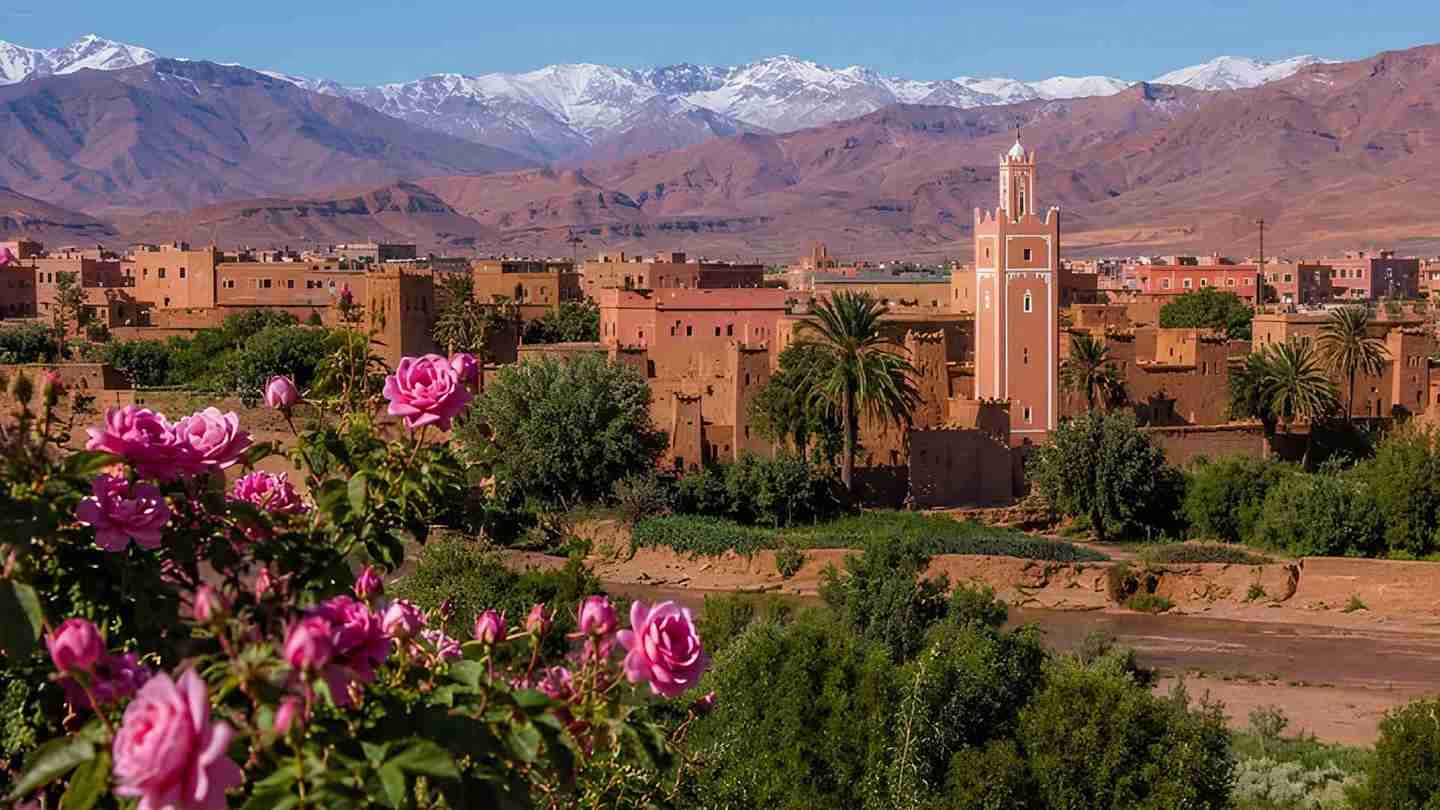
Roses Valley
Local tradition says pilgrims returning from Mecca centuries ago dropped rose cuttings along this valley’s irrigation channels, and whether or not that’s literally true, Rosa damascena has grown here long enough to define the place. What’s better documented is 1938, when a French-built distillery and the first organized Rose Festival turned scattered hedgerows into an actual industry. Every spring for about three weeks, women still harvest the blooms by hand before sunrise, since heat burns off the oil that makes Damascus roses worth roughly four tons of fresh petals for a single litre of essence.
A Valley That Smells Different For Three Weeks A Year
Local tradition holds that pilgrims returning from Mecca sometime around the 10th or 11th century carried cuttings of Rosa damascena, the Damask rose, and let them take root along the irrigation channels of this valley. Nobody can confirm the story, but the rose itself is real enough: a variety native to the Middle East that somehow found ideal conditions here, at roughly 1,400 metres elevation between Kelaat M’Gouna and Boumalne Dadès, where hot days, cool nights and meltwater off the M’Goun massif, Morocco’s second-highest peak at 4,071 metres, combine to produce flowers perfumers describe as having honey, spice and citrus notes all at once.
What’s documented with more certainty is 1938, when a French-built distillery opened in Kelaat M’Gouna and turned scattered roadside hedgerows into an organized industry. The valley now produces somewhere between three and four thousand tonnes of petals most years, almost all of it harvested over a window of about three weeks. The work happens at dawn, since the flowers lose their essential oil to evaporation as soon as the sun warms them; a single picker gathers maybe ten to fifteen kilograms a day, and it takes roughly four tonnes of fresh petals, hundreds of thousands of individual flowers, to distill one litre of pure rose oil, which is part of why that oil sells for thousands of euros and ranks among the most expensive liquids made anywhere.
All of that activity builds toward the Festival of Roses, held in Kelaat M’Gouna for two or three days most years in early May, timed to the end of the harvest. It is, by most accounts, one of Morocco’s more genuinely local moussems rather than an event staged for visitors: a parade of flower-covered floats, Amazigh music and dance, and the crowning of a Rose Queen who spends the following year representing the valley’s harvest. Outside festival dates, the valley still rewards a visit, rose cooperatives, kasbahs built from the same red earth as the surrounding hills, and a landscape that looks markedly different in May than in any other month.
Timing matters here: visit outside the harvest window, roughly mid-April to mid-May, and you’ll see a quiet agricultural valley rather than the place described above. Most visitors combine Roses Valley with a stop at Ait Ben Haddou or continue on toward Todra Gorge, both part of the same N10 route east from Ouarzazate.
What To Do In Roses Valley
Six ways to experience the valley, several of which only make full sense during the spring harvest.
Walk The Rose Fields At Dawn
The harvest itself runs only a few hours each morning, before the heat takes the oil out of the air. Arriving early to watch pickers work the hedgerows is, for many visitors, more memorable than the festival itself.
Tour A Rose Distillery
Roughly forty cooperatives and small distilleries operate in the valley, most willing to show visitors the copper stills and steam process that turns petals into rosewater and oil. Buying directly from a cooperative usually means a fairer price than a roadside stall.
The Festival Of Roses
A parade of flower-covered floats, Amazigh music and dance, and the crowning of a Rose Queen who represents the valley’s harvest for the following year. It draws a genuinely local crowd, not just visitors.
Kelaat M’Gouna’s Kasbahs
Earthen fortified buildings built from the same red soil as the surrounding hills, scattered through town and along the valley road. Several have fallen into picturesque disrepair; a few still function as private homes.
Drive The Road To Boumalne Dadès
The stretch of valley between Kelaat M’Gouna and Boumalne Dadès is where most of the rose cultivation happens, a roadside corridor of hedgerows backed by the High Atlas. It’s worth the slow drive even outside bloom season.
Buy Rose Products Direct From Growers
Rosewater for cooking, pure essential oil, dried buds and handmade soaps, all produced within the valley rather than shipped in. Prices and quality both tend to be better away from the main tourist stops on the highway.
Tours That Visit Roses Valley
Itineraries below all include Roses Valley, whether as a scenic stop or built around the spring harvest.


Planning Your Visit
Best Time To Go
Mid-April through mid-May is the only window that shows the valley in bloom, and the Festival of Roses usually falls in the first half of May. Outside that period, the scenery is still attractive but distinctly less floral; September through November offers the most comfortable weather for a general visit.
Getting To Roses Valley
Kelaat M’Gouna sits on the N10 road about ninety minutes from Ouarzazate and roughly five to six hours from Marrakech via the Tizi n’Tichka pass. Most visitors arrive by private car or as part of a tour rather than public transport, since the harvest action happens early and away from main bus stops.
Visiting During Harvest
Early starts matter if you want to see picking happen rather than just empty fields; most harvesting wraps up by mid-morning once the heat sets in. A local guide or cooperative contact makes it far easier to actually watch the process rather than just drive past it.
What To Wear & Bring
Layers help for the early morning cold that’s common even in late spring at this elevation. If visiting during the festival, expect crowds and book accommodation in Kelaat M’Gouna or Boumalne Dadès well in advance.
Frequently Asked Questions About Roses Valley
What travelers actually search before timing a visit to Roses Valley.
Is Roses Valley worth visiting?
During the bloom window, yes, decisively; the combination of scent, colour and an active harvest is genuinely distinctive. Outside that window, it’s a pleasant but fairly ordinary valley, worth a brief stop on the way to Todra Gorge more than a dedicated trip.
When exactly do the roses bloom in Roses Valley?
Roughly mid-April to mid-May, though the precise dates shift slightly year to year depending on weather. The Festival of Roses, held in Kelaat M’Gouna, usually falls in the first or second week of May.
How did roses end up growing in this part of Morocco?
Local tradition credits pilgrims returning from Mecca around the 10th or 11th century, who supposedly planted Damask rose cuttings along the valley’s irrigation channels. The documented industry is more recent: a French-built distillery opened in Kelaat M’Gouna in 1938.
What is the Rose Festival, and can tourists attend?
A two- to three-day moussem in Kelaat M’Gouna celebrating the end of the harvest, with a parade, music, dancing and the crowning of a Rose Queen. Tourists are welcome and attend in growing numbers, though it remains primarily a local celebration.
Why is rose oil from this region so expensive?
Because the yield is tiny relative to the input: it takes roughly four tonnes of fresh petals, hundreds of thousands of individual flowers, to distill a single litre of pure rose oil, which is part of why it ranks among the most expensive liquids produced anywhere.
Can you buy rose products directly from the valley?
Yes, dozens of small cooperatives and distilleries in and around Kelaat M’Gouna sell rosewater, oil, dried buds and soap directly, generally at better prices and quality than products sold further away.
How far is Roses Valley from Ouarzazate and Todra Gorge?
About ninety minutes from Ouarzazate and roughly two hours on to Todra Gorge, making it a natural midpoint stop on that route rather than a separate detour.
What’s the best time of year to visit Roses Valley?
Mid-April through mid-May for the bloom and harvest, or September through November for comfortable weather if the roses themselves aren’t the priority.
Plan Your Visit To Roses Valley
Tell us your dates, especially if you’re hoping to catch the bloom, and we’ll fold Roses Valley into a day trip or a longer route east. Continuing on from here? We also cover Ouarzazate and Ait Ben Haddou on one side, and Todra Gorge further along the same road.