
Solo Female Travel on a Morocco Desert Tour: What It’s Actually Like
Morocco is not a dangerous country for women. It is a tiring one. The thing most solo female travellers actually report is not fear, it is the steady, grinding attention of being looked at, called after and approached, several times a day, in a way that wears you down by the third afternoon.
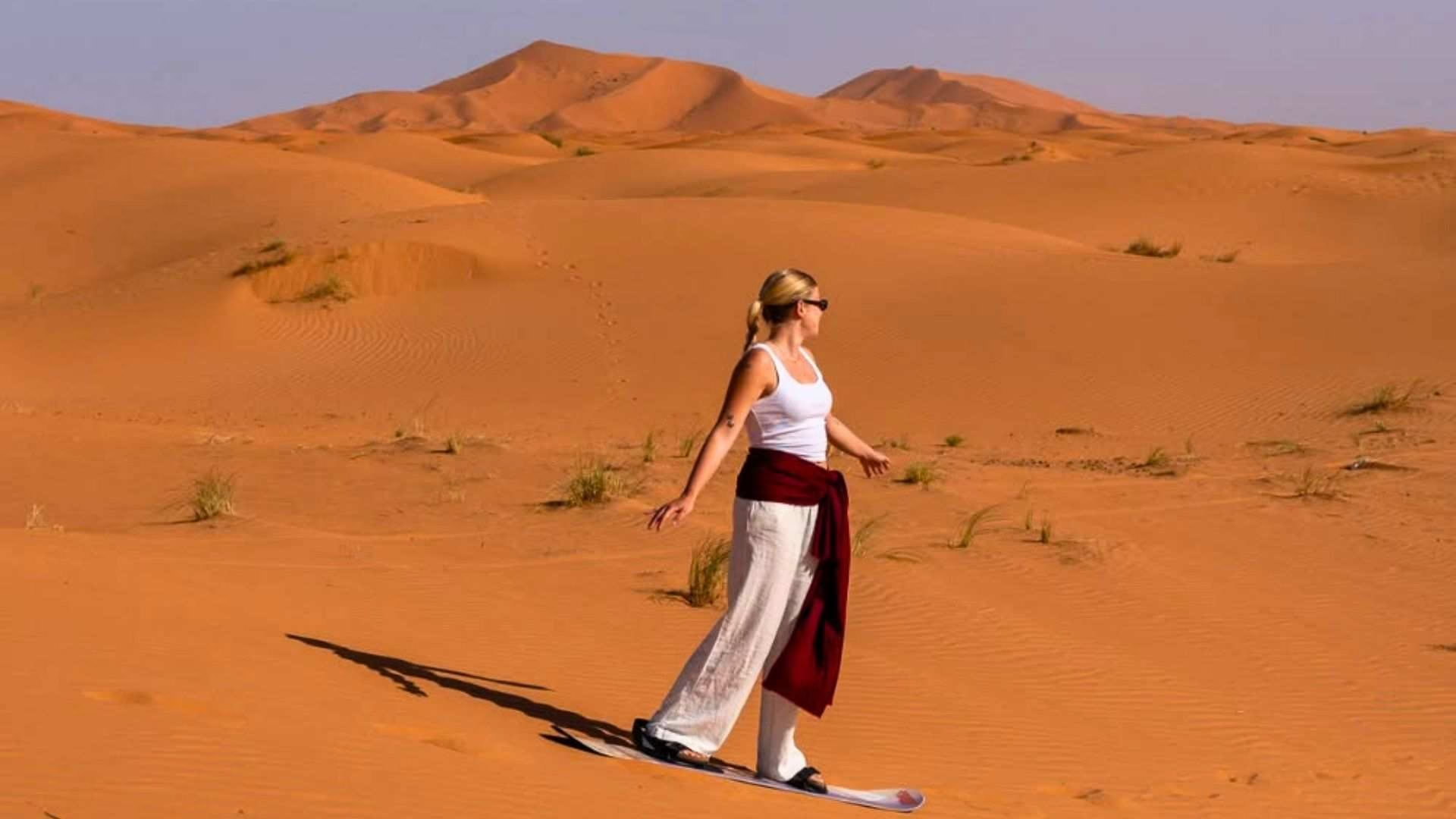
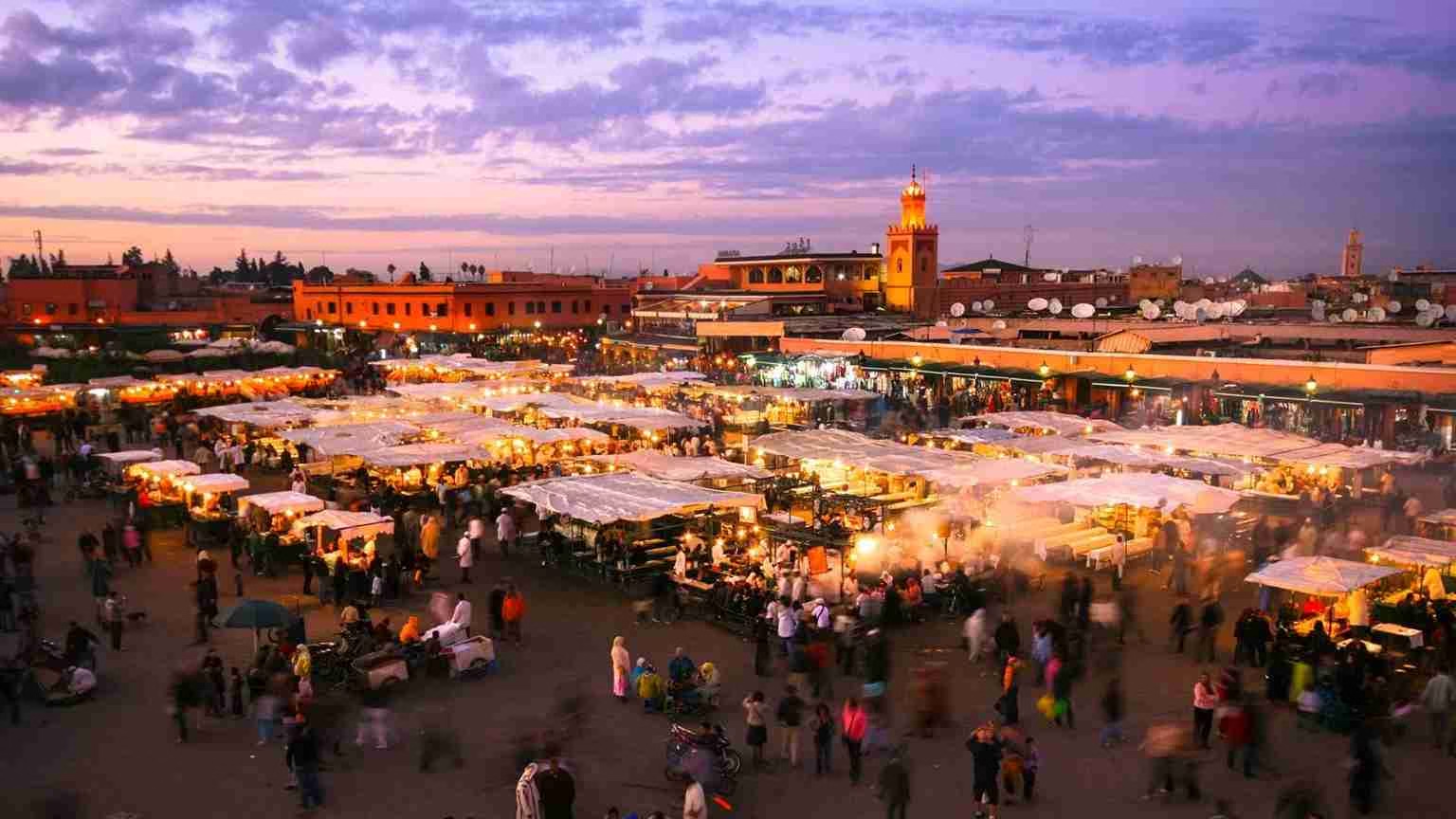
And here is the part almost nobody writes: the desert is the easiest part of Morocco for a woman travelling alone. Almost everything people warn you about happens in the Marrakech medina, not two hundred kilometres south of it. This post is about what actually changes once you leave the city, and what to ask before you book.
Private desert routes
Your own vehicle and driver, named in advance, with a camp tier you choose.
From Marrakech
- Merzouga Sahara Tour3 days · 2 nights›
- Luxury Desert Trip4 days · en-suite camp›
- Sahara & Atlas Mountains6 days · 1 night in the dunes›
What the Attention Actually Looks Like
Being specific is more useful than reassurance, so here it is.
In Marrakech and Fes you will be looked at. You will hear comments, sometimes complimentary, sometimes not, often in French or English specifically so you understand them. Men will approach offering directions, a guide, a shop, a tannery. Some will walk alongside you for a while. It is persistent, it happens in daylight on busy streets, and it is far more about being visibly a foreign tourist than about what you are wearing.
What it very rarely involves is physical contact or threat. The overwhelming pattern is verbal, public and non-violent, which does not make it pleasant but does make it manageable.
One piece of structural context that helps enormously: public space in much of Morocco is male by default. Cafés are full of men. Streets are mostly men. That is a feature of how social life is arranged rather than something aimed at you, and understanding it changes how it feels. Moroccan women largely socialise in homes and in each other’s company, not in pavement cafés.
It is also worth saying plainly that none of this is unique to Morocco. Women who have travelled widely tend to report the same thing in a dozen other countries, including their own.
Why the Desert Is Different
Once you are south of the Atlas, most of the above stops.
The reason is economic rather than cultural. In the Marrakech medina you are a commercial opportunity, a potential sale, a commission, a guiding fee, and the approaches follow from that. In a village in the Dades Valley or a town like Rissani, nobody is working you. People are curious, sometimes they will want to talk, children will say hello. It is a different register entirely.
Women who have done both consistently describe the southern leg of their trip as the part where they relaxed. Several have told us the desert was the first place in Morocco they stopped scanning the street.
Ask Us Anything Before You Book
If you have questions you would rather ask directly — who your driver will be, how the camp is arranged, whether anyone else is travelling, message us and we will answer properly. No pressure to book afterwards.
Send Us a Question →The Two Questions Nobody Answers Honestly
If you are considering a desert tour alone, two specific things are probably on your mind, and most operator websites step around both.
Hours in a vehicle with a male driver
On a private tour this is the reality: you and one man, for six or seven hours a day, on roads with long empty stretches. It is a reasonable thing to think about and you should not feel awkward raising it.
What makes it fine in practice is that your driver is a professional whose livelihood depends entirely on reviews and repeat business, working for a company that is traceable and accountable. What makes it demonstrably fine is knowing his name and his registration before you travel, having the office number, and sharing your itinerary with someone at home. Any operator should provide all of that without being asked twice.
A remote camp with all-male staff
Desert camp staff are usually men. They are also usually the same small group of people working the same camp all season, known to the operator, sleeping on site and doing a job.
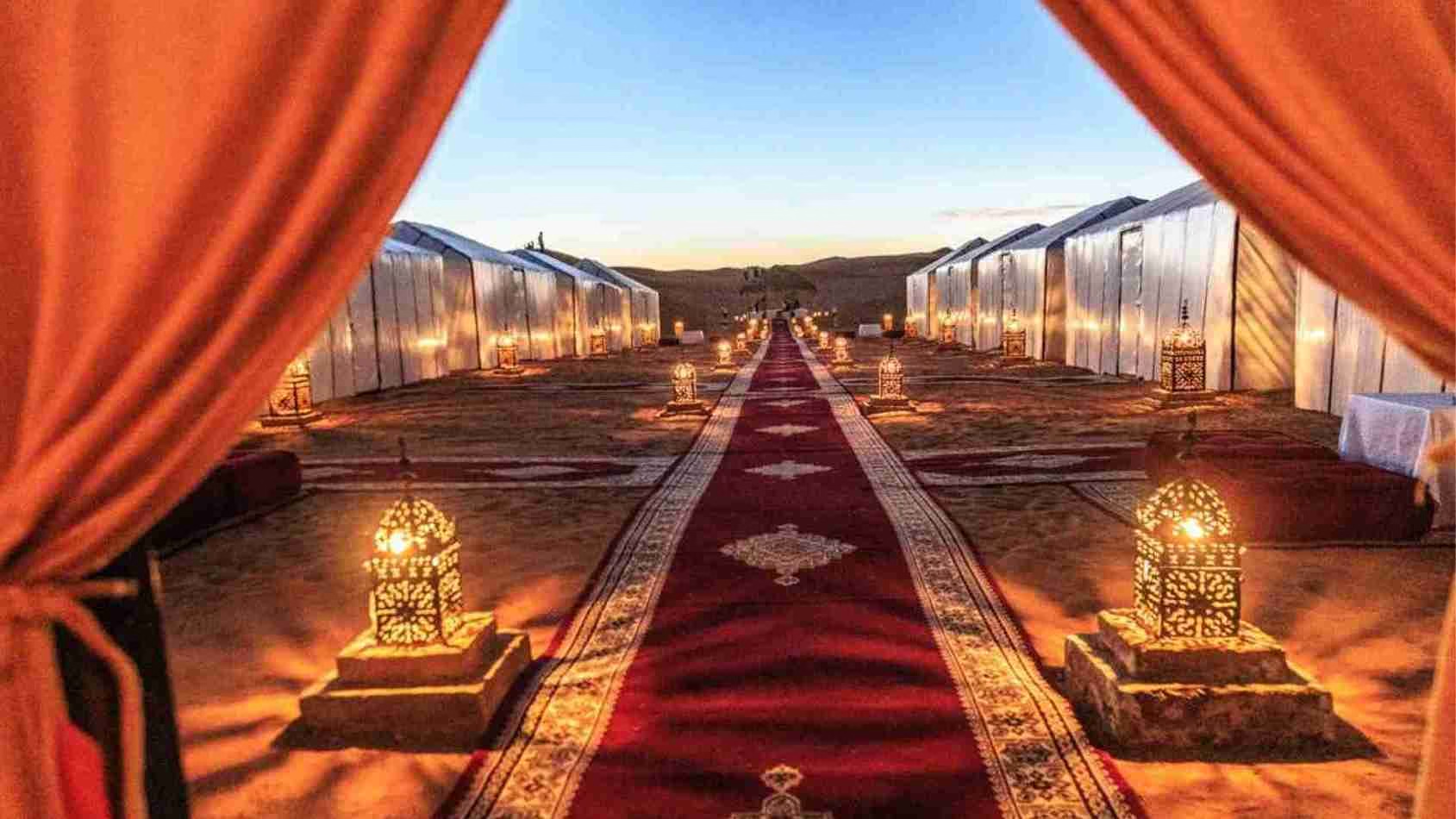
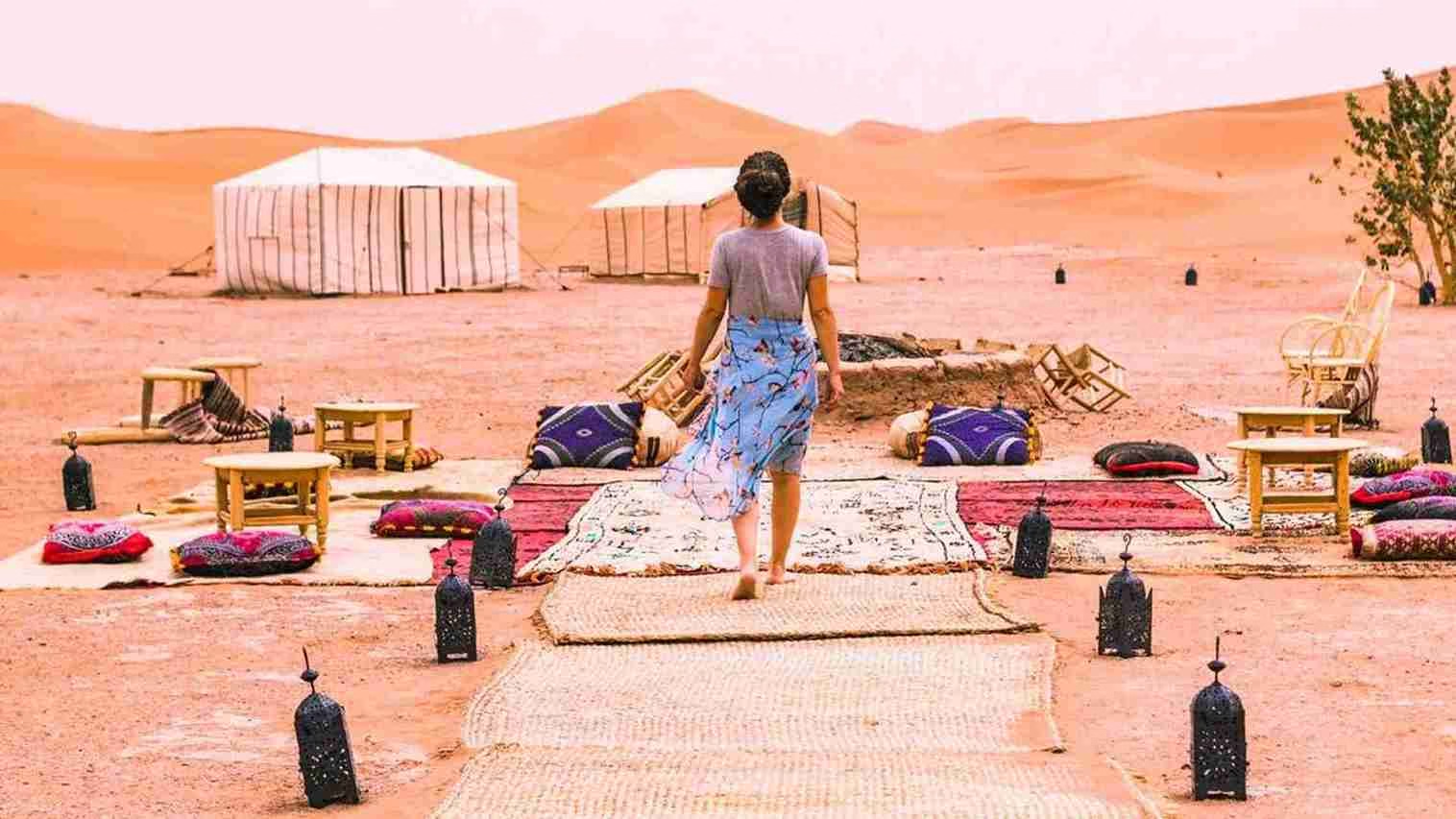
The practical things that matter: camps are staffed through the night, tents have a real door that fastens, and you can ask to be placed near other guests rather than at the far end of the horseshoe. In an en-suite tent you do not need to cross the camp at night at all, which for a lot of solo women is the single thing most worth paying for.
What to Ask Before You Book — Any Operator
These seven questions sort serious operators from the rest. Ask them by message so you have the answers in writing.
1. What is my driver’s name, and can I have it before I travel? A company that will not name your driver in advance is not one to send a deposit to.
2. Is there an office number I can reach if something goes wrong? Not just the driver’s mobile.
3. Will anyone else be on the tour? On a shared departure, ask about group size and composition.
4. Which camp, by name, and is it staffed overnight?
5. Can I request a tent near other guests? The answer should be an immediate yes.
6. Is there a woman at the company I can speak to? Not every operator has one. It is a fair thing to ask.
7. What happens if I am uncomfortable and want to change something mid-trip? The answer to this tells you more than the other six combined.
Private, or a Small Group?
Some solo travellers prefer their own vehicle and total control of the day. Others would rather have other travellers around. Both are valid and we run both — tell us which you would be more comfortable with.
Talk Through the Options →What to Wear, Practically
Not a moral instruction, a practical one. What you wear will not stop harassment, and women in full coverage report the same attention. But some clothing makes the trip easier for reasons that have little to do with modesty.
In towns: covered shoulders and knees attract less notice and mean you can enter mosque courtyards and more conservative areas without thinking about it. Loose cotton, long sleeves, wide trousers.
In the desert: this is about sun and temperature anyway. Long sleeves are cooler than bare arms at midday, and the same clothes handle the cold once the sun goes down. A scarf does four jobs, sun, wind, sand, and covering your head when it is useful.
At camp: whatever you like. Nobody is monitoring it.
A number of women wear a plain band on their left hand and mention a husband who is joining them later. We mention it because it is common and it shortens conversations, not because you should have to.
Things That Genuinely Help
Book the first night before you arrive and have someone meet you. Arriving into a medina after dark with a bag is the hardest moment of most trips, and it is entirely avoidable.
A firm “la, shukran”, no, thank you, and continued walking ends most approaches. Engaging politely tends to extend them.
Share your itinerary and your driver’s details with someone at home before you set off.
Trust the feeling, not the logic. If a situation is uncomfortable, you do not owe anyone an explanation for leaving it. Any operator worth booking with will back you without argument.
Consider starting in Rabat or Essaouira. Both are noticeably calmer than Marrakech and make a gentler first few days. We have written about why Rabat is the easiest Moroccan city to walk around if that appeals.
The Honest Summary
Thousands of women travel alone in Morocco every month and the overwhelming majority have a good time. The attention is real, it is mostly verbal, and it thins out dramatically the further you get from the tourist centres.
If the medina sounds exhausting and the desert sounds like the good part, that instinct is correct. Build the trip that way, less time in Marrakech, more time south — and you will enjoy it considerably more than an itinerary that does the opposite.
Solo Female Travel in Morocco: FAQ
Is Morocco safe for solo female travellers?
Broadly yes. Violent crime against tourists is rare. What is common is persistent verbal attention in tourist cities, which is wearing rather than dangerous and reduces sharply outside them.
Is Marrakech safe for women?
Yes, but it is the most demanding city in Morocco for unwanted attention because of the sheer volume of tourism. Many women find Rabat, Essaouira and the south far more relaxing.
Can women travel to Morocco alone?
Yes, and many thousands do every year. It helps to book accommodation and transfers in advance, stay in touch with someone at home, and expect the first day to be the hardest.
Do I have to cover my hair?
No. Non-Muslim visitors are not expected to. A scarf is practical for sun, wind and sand, and useful to have if you visit a religious site, but it is not a requirement.
Is a desert camp safe for a woman alone?
Yes. Camps are staffed overnight and guides sleep on site. Ask to be placed near other guests, and consider an en-suite tent so you do not need to cross the camp at night.
Private tour or shared group as a solo woman?
Either works. Private gives you control of the day; a shared departure means other travellers around. Choose on which would make you more comfortable, not on which sounds braver.
More Stories from MBT
Ask Us The Awkward Questions First
Who your driver will be, how the camp is arranged, whether anyone else is on the tour, what happens if you want to change something halfway. Ask all of it before you commit to anything. We would rather answer twenty questions than have you book something you are not comfortable with.